February 27, 2026

Why Eastern Orthodoxy remains unconvincing

Clement Harrold
More
Related
Min read
share

Something my younger brother and I enjoy sparring over is the validity of the claims of Eastern Orthodoxy. Like me, my brother is Catholic, but he does an admirable job of engaging sympathetically with the best Orthodox arguments. He also happens to know a lot more about the topic than I do. In an effort to remedy this disparity, I recently embarked on reading Erick Ybarra’s recent book The Papacy: Revisiting the Debate Between Catholics and Orthodox.

Some 750 pages later, I certainly feel more educated than I did before. Ybarra writes with clarity and precision and he has done the Church a great service in producing such an erudite and detailed tome. He also provides a model for ecumenical dialogue between Christians. His tone is unfailingly generous and humble, and he always gives his interlocutors a fair hearing.
Perhaps the biggest takeaway from Ybarra’s work is just how complex the debate between Catholics and Orthodox can quickly become. Many hundreds of pages are devoted to dissecting the correspondence of early popes, the writings of the Church Fathers (some of them quite obscure: I had never encountered St Optatus of Milevis before), and the official documents of ancient Church councils.

At times this sea of information was bewildering, and it was a little disheartening to be reminded near the end of the long slog that Ybarra still does not consider the case for Catholicism a slam dunk. In the closing chapters, he explains his reasons for thinking that the Catholic position prevails, but only by a narrow margin.

Be that as it may, I came away from this reading project feeling more secure in my own conviction that Eastern Orthodoxy is theologically unpersuasive. My reasoning for this boils down to three basic points. First, the Orthodox fail to take seriously the extensive New Testament evidence for Petrine primacy. This is a topic I have written on elsewhere, and I was surprised that Ybarra did not devote more attention to it.

Both the Gospels and the Acts of the Apostles repeatedly affirm that Peter is given a unique level of authority and honour compared with the other apostles. While all the apostles play a teaching and governing role in the Church, Peter is clearly appointed by Christ as the head over those same apostles. From a Scriptural perspective, he is not merely the “first among equals”, as the Orthodox like to claim (seemingly without ever defining what the phrase actually means). Rather, in Matthew 10:2 he is described simply as prōtos, or “first” — a word indicating not just numerical placement, but precedence of rank within a given hierarchy.

Second, there is the large body of patristic texts that testify both to the primacy and to the singularly binding authority of the Bishop of Rome, the successor of Peter. This is one of the areas where Ybarra excels. As he rightly points out, for the first millennium of Church history there is no formal divide between East and West. This means that the Orthodox today need to take seriously the strong papal claims of early Western Fathers, Doctors and popes, since these holy men are an integral part of the Orthodox (as well as Catholic) heritage.

It is surely significant, then, that in the first few centuries Doctors of the Church such as St Irenaeus and St Augustine provided a robust theological framework for Petrine supremacy, which was then spelled out explicitly in the teachings of early popes such as St Damasus I, St Innocent I, St Celestine I, St Leo the Great and St Agatho. What makes these papal interventions especially noteworthy is that we have recorded instances of their being formally accepted by Eastern and Western bishops alike. At the Third Council of Constantinople, for example, the council fathers solemnly accepted a letter from Pope St Agatho which affirmed the unique authority and unwavering orthodoxy of the Church of Rome.

A third reason I think Eastern Orthodoxy fails is that it lacks a coherent epistemology for discerning what is and is not orthodox. This admittedly falls into the category of what Ybarra terms “a priori” objections to Eastern Orthodoxy, but that does not render the objection invalid. On the contrary, it remains a fundamental problem for our Eastern Orthodox brothers and sisters that, according to their own ecclesiology, Christ established a Church whose members would be incapable of knowing the truths of the faith with certainty.

Without the stability and authority that the papacy provides, it is extremely difficult to see how the Orthodox can be certain of the truth of their own position. Who is to say that the Orthodox have it right while prominent patriarchs such as Nestorius, Dioscorus and Leo IX are all guilty of heresy? The Orthodox have no good mechanism for explaining how the truth is determined when the world’s patriarchs and bishops are split over a particular issue. How many bishops does it take to arrive at an infallible judgment — 51 per cent? Two-thirds? And how exactly do we know what that number is supposed to be?

In the final analysis, there is no criterion or rule to which the Eastern Orthodox can point that proves why they are right while the Assyrian Church of the East, the Oriental Orthodox and the Catholics are all wrong. In this respect the Orthodox are, to borrow Scott Hahn’s phrase, like brothers without a father. Since they possess no supreme authority to differentiate truth from error, even some of the most fundamental tenets of the Christian faith (such as the dogma of dyophysitism) are reduced to an intellectual free-for-all.

Here the Catholic ecclesiology seems to me to be far more intuitive. From a Catholic perspective, all of the Church’s bishops have an essential role to play in her governance and teaching. Nevertheless, Christ gave a special headship role to the successors of St Peter – the Bishops of Rome – in order that truth could be known with clarity and disputes could be settled with finality. In this respect, we might well ask: if the human being, the family, the parish church, the diocesan church and the metropolitan church all require a head, then why should the universal Church be a headless body?

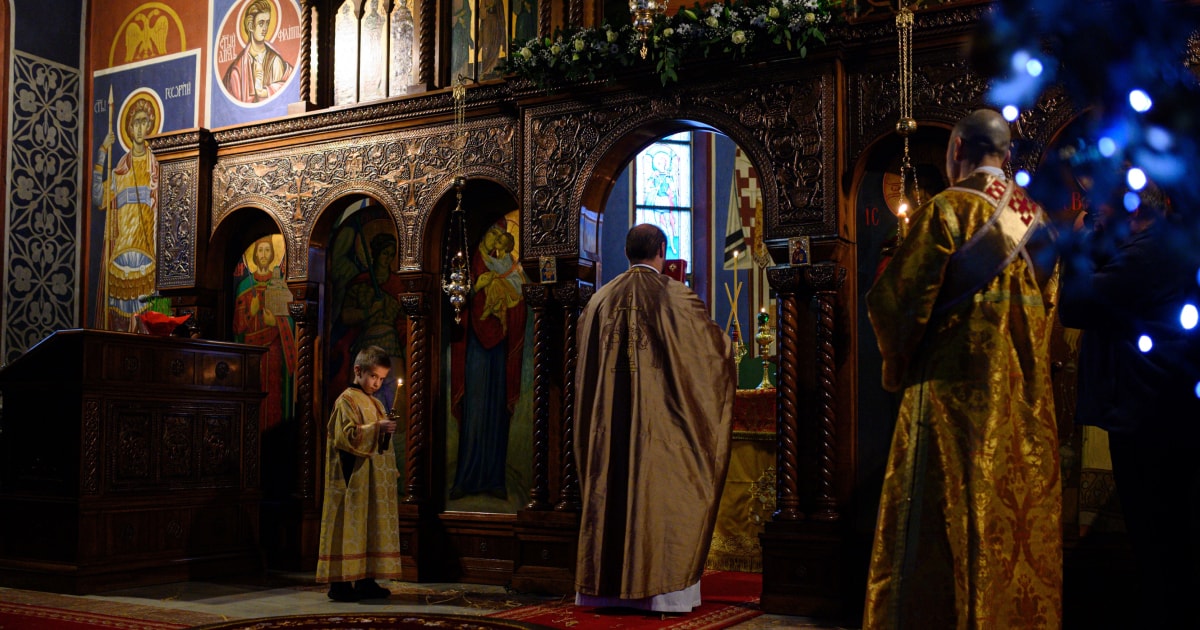
The detrimental effects of a decapitated ecclesiology are not difficult to see. For the past thousand years, the Eastern Orthodox have been incapable of real governance or theological development. The sad reality is that the Orthodox have not been able to hold an ecumenical council since the eighth century, and recent events such as the 2018 schism between Moscow and Constantinople show them to be more divided than ever. The result is that the Orthodox Church feels more like an ornate museum than a living body. They have done a commendable job of preserving the beautiful treasures of the ancient faith, but by severing themselves from their head they have cut off their access to the life source.

Of course, the Catholic Church also has its problems. Ybarra is upfront about the places where Orthodox critiques of Catholicism are at their most potent. Nevertheless, the fact that the Roman Church was universally recognised as the bedrock of orthodox teaching throughout the first millennium should give our Orthodox friends pause. And has that orthodox teaching really been surrendered in the second millennium?

The historical facts show that disputes over the filioque or the use of unleavened bread in the liturgy are not defining issues in the split between East and West. Across the theological spectrum, the Catholic Church today continues to uphold and defend the same teachings found in the pages of the New Testament and the writings of the Church Fathers. And she does so, despite the many flaws of her human members, with unity and clarity.

Nevertheless, there is something missing in her witness. The scar left by the Great Schism is deep and tragic. If Ybarra’s book reinforced my confidence in my Catholic faith, it also refuelled my desire to see Catholics and Orthodox once again marching under the same banner, and worshipping God “with one accord” (Acts 1:14). Pope Leo XIV has identified unity as one of the hallmarks of his pontificate. Let us pray that his efforts can move the Bride of Christ closer to a lasting reconciliation with our separated Eastern brethren.

Something my younger brother and I enjoy sparring over is the validity of the claims of Eastern Orthodoxy. Like me, my brother is Catholic, but he does an admirable job of engaging sympathetically with the best Orthodox arguments. He also happens to know a lot more about the topic than I do. In an effort to remedy this disparity, I recently embarked on reading Erick Ybarra’s recent book The Papacy: Revisiting the Debate Between Catholics and Orthodox.

Some 750 pages later, I certainly feel more educated than I did before. Ybarra writes with clarity and precision and he has done the Church a great service in producing such an erudite and detailed tome. He also provides a model for ecumenical dialogue between Christians. His tone is unfailingly generous and humble, and he always gives his interlocutors a fair hearing.
Perhaps the biggest takeaway from Ybarra’s work is just how complex the debate between Catholics and Orthodox can quickly become. Many hundreds of pages are devoted to dissecting the correspondence of early popes, the writings of the Church Fathers (some of them quite obscure: I had never encountered St Optatus of Milevis before), and the official documents of ancient Church councils.

At times this sea of information was bewildering, and it was a little disheartening to be reminded near the end of the long slog that Ybarra still does not consider the case for Catholicism a slam dunk. In the closing chapters, he explains his reasons for thinking that the Catholic position prevails, but only by a narrow margin.

Be that as it may, I came away from this reading project feeling more secure in my own conviction that Eastern Orthodoxy is theologically unpersuasive. My reasoning for this boils down to three basic points. First, the Orthodox fail to take seriously the extensive New Testament evidence for Petrine primacy. This is a topic I have written on elsewhere, and I was surprised that Ybarra did not devote more attention to it.

Both the Gospels and the Acts of the Apostles repeatedly affirm that Peter is given a unique level of authority and honour compared with the other apostles. While all the apostles play a teaching and governing role in the Church, Peter is clearly appointed by Christ as the head over those same apostles. From a Scriptural perspective, he is not merely the “first among equals”, as the Orthodox like to claim (seemingly without ever defining what the phrase actually means). Rather, in Matthew 10:2 he is described simply as prōtos, or “first” — a word indicating not just numerical placement, but precedence of rank within a given hierarchy.

Second, there is the large body of patristic texts that testify both to the primacy and to the singularly binding authority of the Bishop of Rome, the successor of Peter. This is one of the areas where Ybarra excels. As he rightly points out, for the first millennium of Church history there is no formal divide between East and West. This means that the Orthodox today need to take seriously the strong papal claims of early Western Fathers, Doctors and popes, since these holy men are an integral part of the Orthodox (as well as Catholic) heritage.

It is surely significant, then, that in the first few centuries Doctors of the Church such as St Irenaeus and St Augustine provided a robust theological framework for Petrine supremacy, which was then spelled out explicitly in the teachings of early popes such as St Damasus I, St Innocent I, St Celestine I, St Leo the Great and St Agatho. What makes these papal interventions especially noteworthy is that we have recorded instances of their being formally accepted by Eastern and Western bishops alike. At the Third Council of Constantinople, for example, the council fathers solemnly accepted a letter from Pope St Agatho which affirmed the unique authority and unwavering orthodoxy of the Church of Rome.

A third reason I think Eastern Orthodoxy fails is that it lacks a coherent epistemology for discerning what is and is not orthodox. This admittedly falls into the category of what Ybarra terms “a priori” objections to Eastern Orthodoxy, but that does not render the objection invalid. On the contrary, it remains a fundamental problem for our Eastern Orthodox brothers and sisters that, according to their own ecclesiology, Christ established a Church whose members would be incapable of knowing the truths of the faith with certainty.

Without the stability and authority that the papacy provides, it is extremely difficult to see how the Orthodox can be certain of the truth of their own position. Who is to say that the Orthodox have it right while prominent patriarchs such as Nestorius, Dioscorus and Leo IX are all guilty of heresy? The Orthodox have no good mechanism for explaining how the truth is determined when the world’s patriarchs and bishops are split over a particular issue. How many bishops does it take to arrive at an infallible judgment — 51 per cent? Two-thirds? And how exactly do we know what that number is supposed to be?

In the final analysis, there is no criterion or rule to which the Eastern Orthodox can point that proves why they are right while the Assyrian Church of the East, the Oriental Orthodox and the Catholics are all wrong. In this respect the Orthodox are, to borrow Scott Hahn’s phrase, like brothers without a father. Since they possess no supreme authority to differentiate truth from error, even some of the most fundamental tenets of the Christian faith (such as the dogma of dyophysitism) are reduced to an intellectual free-for-all.

Here the Catholic ecclesiology seems to me to be far more intuitive. From a Catholic perspective, all of the Church’s bishops have an essential role to play in her governance and teaching. Nevertheless, Christ gave a special headship role to the successors of St Peter – the Bishops of Rome – in order that truth could be known with clarity and disputes could be settled with finality. In this respect, we might well ask: if the human being, the family, the parish church, the diocesan church and the metropolitan church all require a head, then why should the universal Church be a headless body?

The detrimental effects of a decapitated ecclesiology are not difficult to see. For the past thousand years, the Eastern Orthodox have been incapable of real governance or theological development. The sad reality is that the Orthodox have not been able to hold an ecumenical council since the eighth century, and recent events such as the 2018 schism between Moscow and Constantinople show them to be more divided than ever. The result is that the Orthodox Church feels more like an ornate museum than a living body. They have done a commendable job of preserving the beautiful treasures of the ancient faith, but by severing themselves from their head they have cut off their access to the life source.

Of course, the Catholic Church also has its problems. Ybarra is upfront about the places where Orthodox critiques of Catholicism are at their most potent. Nevertheless, the fact that the Roman Church was universally recognised as the bedrock of orthodox teaching throughout the first millennium should give our Orthodox friends pause. And has that orthodox teaching really been surrendered in the second millennium?

The historical facts show that disputes over the filioque or the use of unleavened bread in the liturgy are not defining issues in the split between East and West. Across the theological spectrum, the Catholic Church today continues to uphold and defend the same teachings found in the pages of the New Testament and the writings of the Church Fathers. And she does so, despite the many flaws of her human members, with unity and clarity.

Nevertheless, there is something missing in her witness. The scar left by the Great Schism is deep and tragic. If Ybarra’s book reinforced my confidence in my Catholic faith, it also refuelled my desire to see Catholics and Orthodox once again marching under the same banner, and worshipping God “with one accord” (Acts 1:14). Pope Leo XIV has identified unity as one of the hallmarks of his pontificate. Let us pray that his efforts can move the Bride of Christ closer to a lasting reconciliation with our separated Eastern brethren.

subscribe to
the catholic herald

Continue reading your article with a subscription.
Read 5 articles with our free plan.
Subscribe

subscribe to the catholic herald today

Our best content is exclusively available to our subscribers. Subscribe today and gain instant access to expert analysis, in-depth articles, and thought-provoking insights—anytime, anywhere. Don’t miss out on the conversations that matter most.
Subscribe