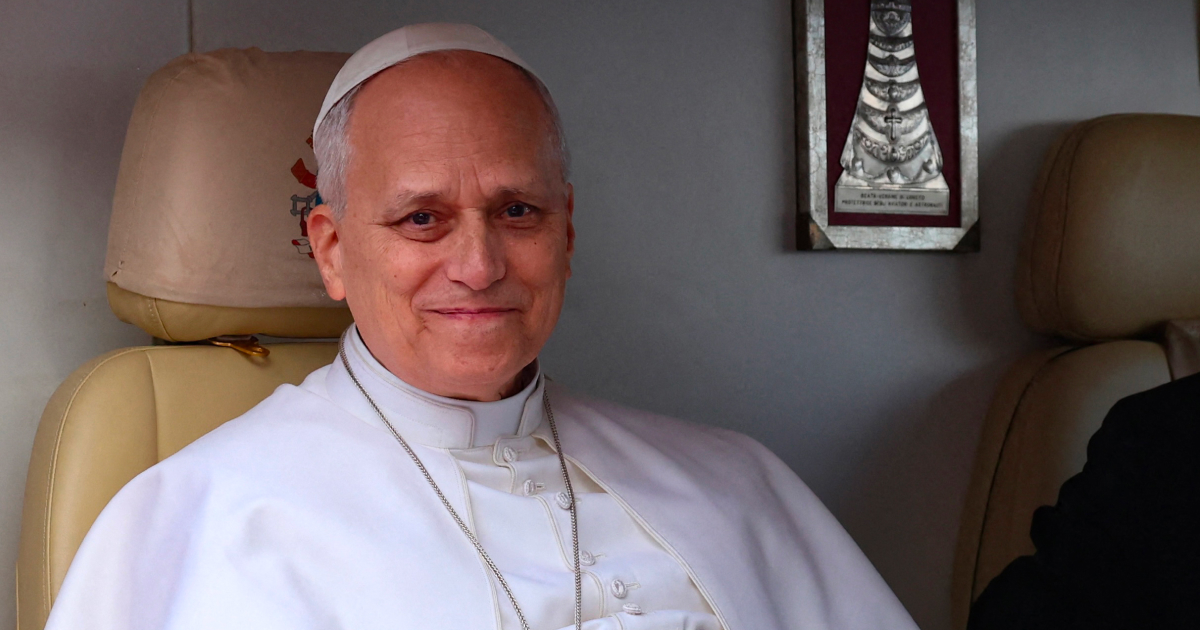


The relationship between the Holy See and the Trump administration has come under renewed scrutiny in recent days, following reports of a January meeting between the Holy See’s Apostolic Nuncio to the United States and senior Pentagon officials.
A report from the Free Press claimed that the Pentagon summoned the Holy See’s then Apostolic Nuncio to the United States, Cardinal Christophe Pierre, and warned him that the Catholic Church should align itself with American military policy. During the meeting, officials are said to have delivered what was described as “a bitter lecture warning that the United States has the military power to do whatever it wants”.
According to the report, Elbridge Colby, serving as Undersecretary of Defense for Policy, told the nuncio: “America has the military power to do whatever it wants in the world. The Catholic Church had better take its side.”
The meeting is understood to have followed remarks by the Pope to members of the diplomatic corps in his first “State of the World” address. In the 40-minute speech, which also touched on the persecution of Christians worldwide and freedom of conscience, he warned against “the imperialist occupation of the world” and called on leaders to abandon the “desire to dominate others”. US officials reportedly interpreted the speech as a direct criticism of American foreign policy.
However, the Pentagon has rejected the characterisation of the meeting. A spokesman said the report was “highly exaggerated and distorted” and insisted that the discussion had been “a respectful and reasonable” exchange. He added: “We have nothing but the highest regard and welcome continued dialogue with the Holy See.”
The Holy See has yet to comment, with Cardinal Pierre telling the Catholic Herald: “I would prefer not to speak.” Holy See Press Office director Matteo Bruni has also refused to comment on the matter.
The meeting is said to have caused concern among some Vatican officials, with reports suggesting that plans for a 2026 US papal visit were shelved.
Speculation about a US visit by the first American Pope had been circulating for some time. Less than two weeks after his election, JD Vance handed the Pope a letter from President Donald Trump asking him to visit the United States. Pope Leo was later heard in a video released by Vatican Media saying “at some point”.
It had been thought that the Pope might visit in 2026, possibly to appear at the United Nations General Assembly in New York in September. Some had also suggested that he might combine this with wider travels across the Americas. By February, it had become apparent that those plans would not materialise, with the proximity to the US midterm elections suggested as a likely reason.
However, it is now believed that foreign and domestic policy disputes also played a significant part. The US bishops had for some time been openly critical of the mass deportations of migrants, and the Pope’s criticisms of US action abroad had become increasingly explicit.
The Vatican has also announced that on July 4, US Independence Day, which will see the United States host events marking the 250th anniversary of the country’s founding, the Pope will travel to Lampedusa. The southernmost Italian island is where North African migrants arrive in large numbers.
It now appears increasingly unlikely, and diplomatically difficult, that the first American Pope will visit the United States anytime soon.
Some have pointed to Atlanta’s bid for the 2030 World Youth Day as a possible occasion for Pope Leo to return home. However, this would depart from the pattern of recent World Youth Days, which have been held alternately in European and non-European countries.
Should Pope Leo choose not to return home, it would be in keeping with his predecessor, Pope Francis, who declined invitations to Argentina in order to avoid appearing partisan towards his native land.
Pope Leo has also been described as “the least American of the American cardinals”, and the 70-year-old Augustinian missionary holds dual citizenship of the United States and Peru. He has spent significant periods of his life outside the US, and a return to the Peruvian diocese of Chiclayo, where he served as bishop until 2023, will likely take place at the end of the year and may serve as a form of homecoming.