

"Say to all faint hearts; courage! Do not be afraid. Look, your God is coming, he is coming to save you.” These words of the Prophet Isaiah were spoken first to a broken people. The passing generations had seen Israel’s faith undermined by an inexorable decline into moral indifference and national impotence. Repeatedly the prophets had called the people to repentance, but their voices, for the main part, had gone unheeded. The catastrophic destruction of Jerusalem, and consequent exile, had seemed to be the end of a once proud people. The poetry of Isaiah summoned the people to a hope that they had long thought dead. With the promised coming of the Lord eyes that could not see beyond the prevailing darkness would be opened to the light of dawning salvation. Ears that had long ceased to hear words of consolation would be unsealed. A people crippled by guilt and the burden of past infidelity would once again walk with confidence. Tongues that had been silenced and overwhelmed would once again sing for joy. “Then the eyes of the blind shall be opened, the ears of the deaf unsealed, then the lame shall leap like a deer and the tongues of the dumb sing for joy.” Isaiah went on to describe the opulence of a desert brought to life with gushing water, streams that would feed the wasteland, scorched earth that would become a lake. He was describing the soul of a people. Every generation, every individual, will inevitably experience those times when God’s presence seems far removed. Then we shall know what it is to have eyes that cannot see, ears that cannot hear, tongues that cannot find the words for prayer. Then we become the dry, weary land that longs for water, that must await the revealing of God’s presence. When we can neither see nor hear, our poverty, humbly embraced, becomes our prayer. “It is the Lord who keeps faith for ever, the Lord who sets prisoners free. It is the Lord who gives sight to the blind, who raises up those who are bowed down.” Jesus came as the fulfilment of Isaiah’s promise that a sinful people would be set free, that the eyes and ears of faith would be opened, that God’s grace would revive the wasteland. Faith today faces many discouragements and will often feel itself to be in a wasteland of indifference. Like the Jerusalem addressed by Isaiah, we must look to a hope that lies beyond us. “Courage, do not be afraid!” Those who witnessed Jesus healing the man born deaf and dumb saw a healing whose significance reached far beyond the individual concerned. Through this healing Jesus proclaimed to a sinful world that through his ministry the words of a loving Father would again be heard, that the voice of faith would again sing with joy. “Their admiration was unbounded. ‘He has done all things well, he makes the deaf hear and the dumb speak.’” The Church begins its prayer each day with the invocation: “Lord, open my lips, and my heart shall sing your praise.” May we always remember that, without the Spirit that prays in us, we are like the man born deaf and dumb. Without the Spirit we have eyes but cannot see and have lips but cannot speak.
12:55 PM
Without the Spirit within us we are like the man born deaf and dumb
Twenty-third Sunday in Ordinary Time: Is 35:4-7; Ps 146; Js 2:1-5; Mk 7:31-37
Bishop David McGough

3 min read



Already a subscriber? Sign in
5freearticles every month
Continue reading with a free account. No card needed.
- Five free articles every thirty days, on any device you sign in on
- The Catholic Herald newsletter, every morning
- Subscribe whenever you like for everything: every article and the magazine
Related articles
 Newsroom
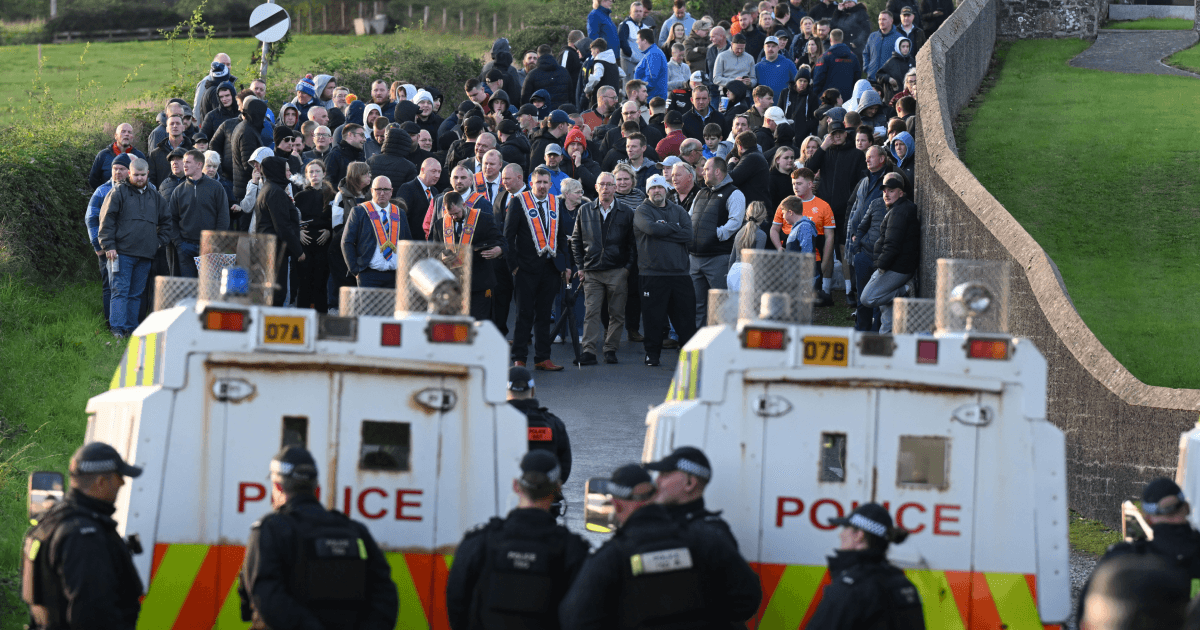
Church leaders urge Drumcree dialogue: ‘Too much is at stake’
The Catholic and Church of Ireland Archbishops of Armagh have urged a renewed commitment to peace and reconciliation amid the Drumcree stand-off
Corrie Douglas-Young Newsroom
Thousands of Irish children to join global Rosary campaign
Corrie Douglas-Young Newsroom
TikTok priest urges young people to stand with persecuted Christians
Nathalie Raffray Newsroom
Baby born at 25 weeks reunites with neonatologist two years after leaving hospital
The Catholic Herald Newsroom
Joe Biden honoured by Planned Parenthood after defending abortion rights
Christine Rousselle
subscribe to the catholic herald today
Our best content is exclusively available to our subscribers. Subscribe today and gain instant access to expert analysis, in-depth articles, and thought-provoking insights—anytime, anywhere. Don’t miss out on the conversations that matter most.
Subscribe



