


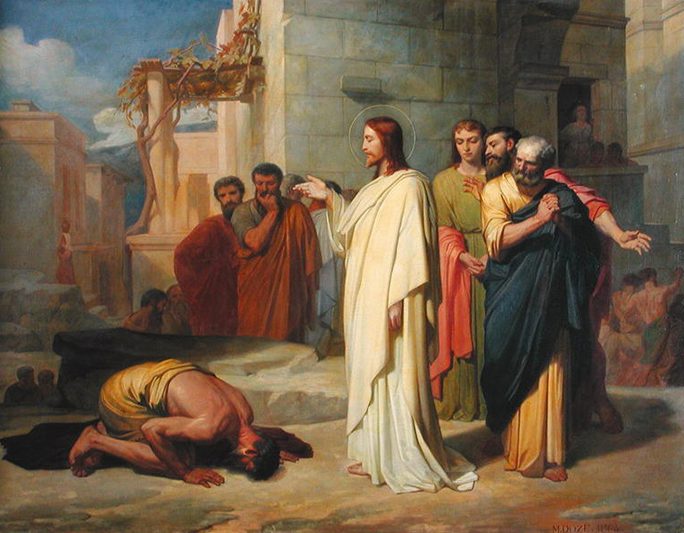
Sixth Sunday of the Year Lev 13:1-2 & 44-46; 1 Cor 10:3 –11:1; Mk 1:40-45 (Year B) "It is not good that the man should be alone. I will make him a helpmate.” The words spoken by the Creator underline what is at the heart of our humanity. However self-sufficient we consider ourselves to be, we cannot achieve the fullness of our humanity in isolation. This is only achievable when we are at peace with God, with each other and the whole of his creation. Sin is rooted in the rebellion of the will against God, and its consequences disrupt the harmony that safeguards our humanity. The destruction of our relationship with God ultimately destroys every other relationship. The breakdown of family life and the selfish exploitation of peoples and the earth’s resources soon follow with disastrous consequences. Many would argue, with justification, that this is the situation facing our world today. The Book of Leviticus sets down the Mosaic legislation regulating the quarantine of those afflicted with leprosy in an ancient society. Harsh though it seems, the total isolation of the sufferer was the only means of stemming the spread of this dread disease. Throughout the Scriptures leprosy becomes something more than a medical condition; it becomes an image of sinful humanity, isolated as a consequence of sin, yet longing for the healing that will restore lost relationships. As we approach Lent, we should consider the ways in which sin undermines our relationships with God and each other. There is a sense in which sin renders us all what Leviticus describes as “unclean”, and condemns us to increasing isolation. The encounter of Jesus with the leper at the beginning of his ministry was more than a single healing; it was the proclamation that in Jesus a loving Father breaks through the isolation of a sinful world. Faith enabled the leper to reach beyond his isolation. “A leper came to Jesus and pleaded on his knees: ‘If you want to you can cure me.’ ” As sinners, we have all experienced the disharmony that follows sin. We sense a distancing from God and, with time, from each other. We cannot change the past, but we can, with the leper, reach out in faith and sincere contrition. We can pray for healing. “Feeling sorry for him, Jesus stretched out his hand and touched him. ‘Of course I want to. Be cured.’ And the leprosy left him and at once he was cured.” Let us believe that in Christ a broken, isolated creation is made whole. In the words of St Paul, “for anyone who is in Christ, there is a new creation. The old creation has gone, and the new one is here. It is all God’s work. It was God who reconciled us to himself through Christ.”
12:00 PM
Word this week
Bishop David McGough

3 min read



Already a subscriber? Sign in
5freearticles every month
Continue reading with a free account. No card needed.
- Five free articles every thirty days, on any device you sign in on
- The Catholic Herald newsletter, every morning
- Subscribe whenever you like for everything: every article and the magazine
Related articles
 Newsroom
Church leaders urge Drumcree dialogue: ‘Too much is at stake’
The Catholic and Church of Ireland Archbishops of Armagh have urged a renewed commitment to peace and reconciliation amid the Drumcree stand-off
Corrie Douglas-Young Newsroom
Thousands of Irish children to join global Rosary campaign
Corrie Douglas-Young Newsroom
TikTok priest urges young people to stand with persecuted Christians
Nathalie Raffray Newsroom
Baby born at 25 weeks reunites with neonatologist two years after leaving hospital
The Catholic Herald Newsroom
Joe Biden honoured by Planned Parenthood after defending abortion rights
Christine Rousselle
subscribe to the catholic herald today
Our best content is exclusively available to our subscribers. Subscribe today and gain instant access to expert analysis, in-depth articles, and thought-provoking insights—anytime, anywhere. Don’t miss out on the conversations that matter most.
Subscribe



