




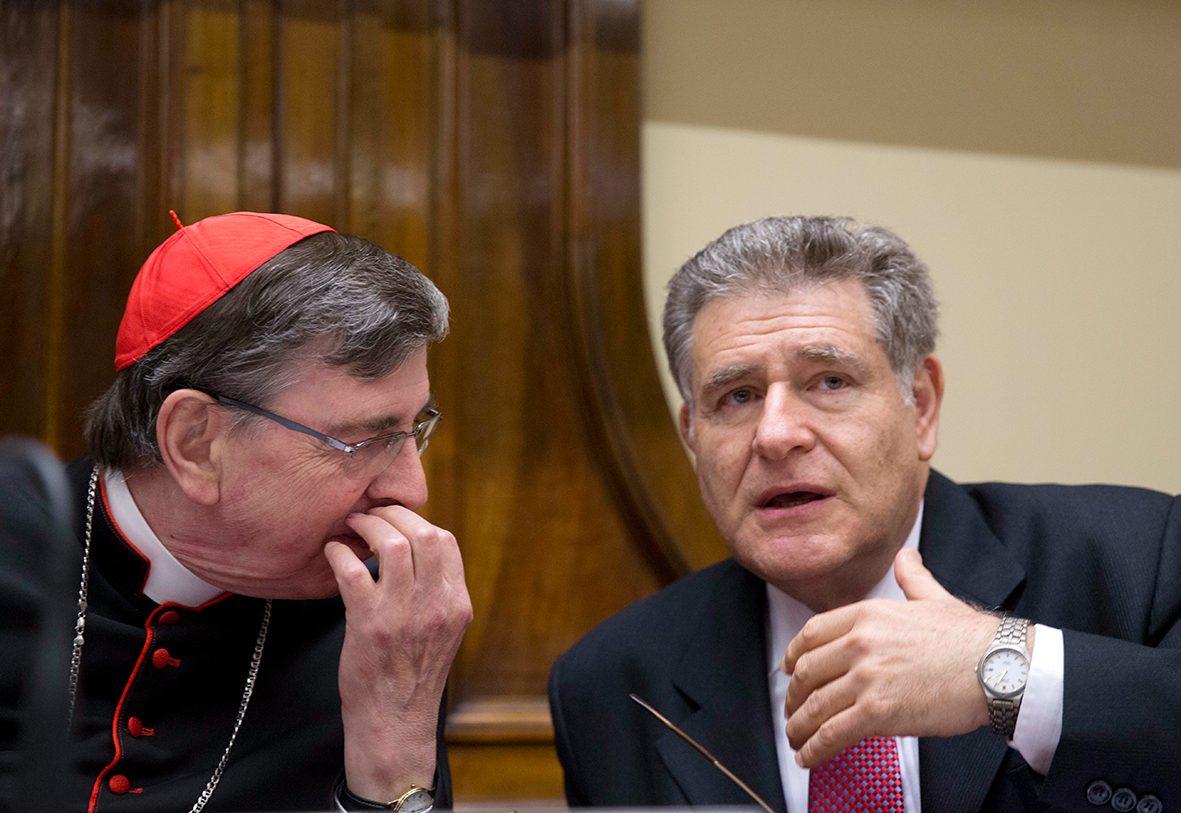
The Vatican has issued a document on Catholic-Jewish relations that rejects “institutional mission work” directed at Jews. The document says the Catholic Church “neither conducts nor supports” any such missionary initiative. How God will save the Jews if they do not explicitly believe in Christ is “an unfathomable divine mystery”, but one which must be affirmed since Catholics believe that God is faithful to his promises and therefore never revoked his covenant with the Jewish people, it says. The statement, The Gifts and the Calling of God are Irrevocable, issued by the Pontifical Commission for Religious Relations with the Jews, gives thanks for 50 years of Catholic-Jewish dialogue. It explicitly states that it is not a “doctrinal teaching of the Catholic Church”, but rather a reflection based on doctrine and flowing from Vatican II’s declaration Nostra Aetate on Catholic relations with non-Christian religions. Like Nostra Aetate, the new document condemns all forms of anti-Semitism and affirms that Christianity’s relationship with Judaism is unique because of the Jewish roots of the Christian faith. In addition to believing that the Jewish Scriptures are God’s revelation, Jesus and his disciples were practising Jews, and many elements of Catholic liturgy developed out of formal Jewish prayer. “One cannot understand Jesus’s teaching or that of his disciples without situating it within the Jewish horizon in the context of the living tradition of Israel,” the document says. “One would understand his teachings even less so if they were seen in opposition to this tradition.” The Jewish roots of Christianity, it says, give the Christian faith its necessary “anchoring in salvation history”, showing how the life, death and resurrection of Jesus are part of the story of God’s saving work since the beginning of time. The first Jewish Christians continued to go to synagogues and, the document said, historical evidence indicates the break between Christianity and Judaism – may not have been complete until the 3rd century or even the 4th century.
2:30 PM
No institutional mission to Jews, says Vatican
Staff writers

3 min read



Already a subscriber? Sign in
5freearticles every month
Continue reading with a free account. No card needed.
- Five free articles every thirty days, on any device you sign in on
- The Catholic Herald newsletter, every morning
- Subscribe whenever you like for everything: every article and the magazine
Related articles
 Newsroom
Church leaders urge Drumcree dialogue: ‘Too much is at stake’
The Catholic and Church of Ireland Archbishops of Armagh have urged a renewed commitment to peace and reconciliation amid the Drumcree stand-off
Corrie Douglas-Young Newsroom
Thousands of Irish children to join global Rosary campaign
Corrie Douglas-Young Newsroom
TikTok priest urges young people to stand with persecuted Christians
Nathalie Raffray Newsroom
Baby born at 25 weeks reunites with neonatologist two years after leaving hospital
The Catholic Herald Newsroom
Joe Biden honoured by Planned Parenthood after defending abortion rights
Christine Rousselle
subscribe to the catholic herald today
Our best content is exclusively available to our subscribers. Subscribe today and gain instant access to expert analysis, in-depth articles, and thought-provoking insights—anytime, anywhere. Don’t miss out on the conversations that matter most.
Subscribe



