February 27, 2026

A polymath in an age of midwitterry

James Bradbury
More
Related
Min read
share

At a time when the entire world seems to be starting a podcast, the announcement of yet another is now more often than not met with a sigh of bemused exasperation. In most instances, such a response feels justified. Even I, an avid podcast listener, largely agree with the sentiment that the world probably does not need another one. Since first discovering this medium nearly 10 years ago, I have found myself a faithful listener to a few shows which reliably accompany my weekly commutes and chores. A handful more circle in orbit around those most coveted listening slots and the rest, sadly, simply do not make the cut. In such a competitive and highly saturated mediascape, it is incumbent upon new podcasts to cut through the noise and justify our time.

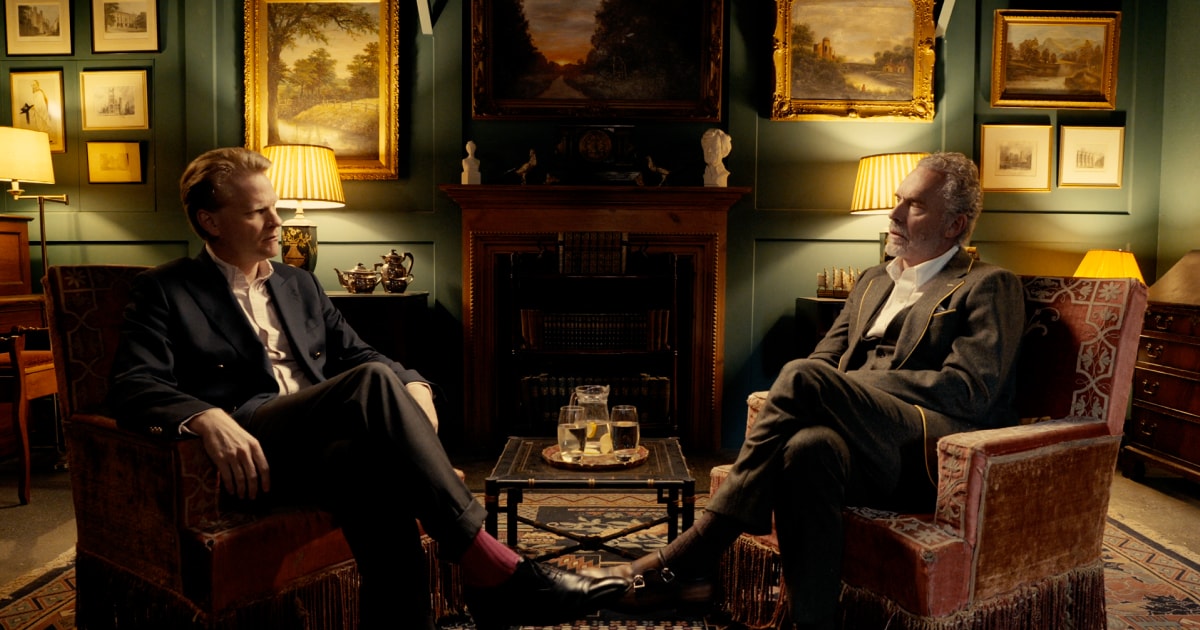
At face value, First Light, a podcast launched in September 2025 by Cambridge professor James Orr, might not appear to tick that box. While boasting a remarkably high calibre of guests for a somewhat modest following, a passer-by would not be blamed for thinking: “Oh look, another podcast trying to weasel out a confession of faith from Jordan Peterson.” Indeed, looking simply at its first series line-up – including Konstantin Kisin, Matt Goodwin, Jordan Peterson, Mary Harrington and Jonathan Pageau – one might easily mistake this show for any of the myriad others conversing with the same pool of public commentators. Beyond the guests and the beautiful setting, however, there is one crucial ingredient to the podcast’s success: its host.

It is a true indictment of the media of the past decade, both mainstream and alternative, when one considers the calibre of many prominent presenters. In a system that promotes personality over excellence, the number of individuals who have grown their platforms on the back of much drama and little knowledge, yet still present themselves as sources of information and learning, is striking. In many ways, this is the cross of our time. Where once fame was granted either for great good or great ill, it has now been commandeered by mediocrity. We have democratised the megaphone and thus devalued what comes out of it.

Here Orr stands as an antidote – a true polymath in an age of midwittery. His breadth of knowledge enables him to be as confident when discussing biblical archetypes with Jordan Peterson as when exploring intelligent design with Stephen Meyer. Likewise, unpacking “hierarchies of being” with Jonathan Pageau, the history of feminism with Mary Harrington, political crises with Matt Goodwin and the struggles of Generation Z with Freya India all sit within his sphere of competence. Such scholarship allows him to bring the best out of his guests – not merely to sit as a fellow spectator, asking carbon-copy questions posed on every other show, but to engage, probe and challenge. Viewers gain a tangible sense of Orr’s excitement for the topics at hand in his frequent interruptions – best interpreted as the enthusiasm of someone absorbed in a fascinating exchange.

That said, some viewers may struggle. First Light, while accessible, is not designed for background listening, nor is Orr’s style merely that of an interviewer. It is discursive – two minds excavating a topic for gems of insight. Many will discover the podcast for its notable guests. Dislike the host, however, and you will be in for a very long hour. Moreover, the breadth of Orr’s interests and expertise may challenge those drawn to more narrowly defined themes. Yet it is important to understand the relatedness of these areas. Across episodes one sees the natural overlap of these respective fields in Orr’s thinking. His knowledge of philosophy and the classics is in dialogue with his theology; these foundations in turn shape his reading of history, politics and culture. Rather than treating them as isolated domains, he unites them into a holistic worldview.

Nowhere is this clearer than in the show’s final question, which does much to set its tone. Orr asks his guests where “dawn” might be found amid the darkness. In so doing, he frames his conversations within a Christian horizon of hope: that God is at work in the world and that, despite the concerns discussed, light is to be found. We hardly need another podcast to remind us of the problems our world faces – opening our eyes will usually suffice. Platforms equally intent on confronting what is broken and bearing witness to what is good, however, are rarer. If for no other reason, it is here that First Light sets itself apart and merits attention.

At a time when the entire world seems to be starting a podcast, the announcement of yet another is now more often than not met with a sigh of bemused exasperation. In most instances, such a response feels justified. Even I, an avid podcast listener, largely agree with the sentiment that the world probably does not need another one. Since first discovering this medium nearly 10 years ago, I have found myself a faithful listener to a few shows which reliably accompany my weekly commutes and chores. A handful more circle in orbit around those most coveted listening slots and the rest, sadly, simply do not make the cut. In such a competitive and highly saturated mediascape, it is incumbent upon new podcasts to cut through the noise and justify our time.

At face value, First Light, a podcast launched in September 2025 by Cambridge professor James Orr, might not appear to tick that box. While boasting a remarkably high calibre of guests for a somewhat modest following, a passer-by would not be blamed for thinking: “Oh look, another podcast trying to weasel out a confession of faith from Jordan Peterson.” Indeed, looking simply at its first series line-up – including Konstantin Kisin, Matt Goodwin, Jordan Peterson, Mary Harrington and Jonathan Pageau – one might easily mistake this show for any of the myriad others conversing with the same pool of public commentators. Beyond the guests and the beautiful setting, however, there is one crucial ingredient to the podcast’s success: its host.

It is a true indictment of the media of the past decade, both mainstream and alternative, when one considers the calibre of many prominent presenters. In a system that promotes personality over excellence, the number of individuals who have grown their platforms on the back of much drama and little knowledge, yet still present themselves as sources of information and learning, is striking. In many ways, this is the cross of our time. Where once fame was granted either for great good or great ill, it has now been commandeered by mediocrity. We have democratised the megaphone and thus devalued what comes out of it.

Here Orr stands as an antidote – a true polymath in an age of midwittery. His breadth of knowledge enables him to be as confident when discussing biblical archetypes with Jordan Peterson as when exploring intelligent design with Stephen Meyer. Likewise, unpacking “hierarchies of being” with Jonathan Pageau, the history of feminism with Mary Harrington, political crises with Matt Goodwin and the struggles of Generation Z with Freya India all sit within his sphere of competence. Such scholarship allows him to bring the best out of his guests – not merely to sit as a fellow spectator, asking carbon-copy questions posed on every other show, but to engage, probe and challenge. Viewers gain a tangible sense of Orr’s excitement for the topics at hand in his frequent interruptions – best interpreted as the enthusiasm of someone absorbed in a fascinating exchange.

That said, some viewers may struggle. First Light, while accessible, is not designed for background listening, nor is Orr’s style merely that of an interviewer. It is discursive – two minds excavating a topic for gems of insight. Many will discover the podcast for its notable guests. Dislike the host, however, and you will be in for a very long hour. Moreover, the breadth of Orr’s interests and expertise may challenge those drawn to more narrowly defined themes. Yet it is important to understand the relatedness of these areas. Across episodes one sees the natural overlap of these respective fields in Orr’s thinking. His knowledge of philosophy and the classics is in dialogue with his theology; these foundations in turn shape his reading of history, politics and culture. Rather than treating them as isolated domains, he unites them into a holistic worldview.

Nowhere is this clearer than in the show’s final question, which does much to set its tone. Orr asks his guests where “dawn” might be found amid the darkness. In so doing, he frames his conversations within a Christian horizon of hope: that God is at work in the world and that, despite the concerns discussed, light is to be found. We hardly need another podcast to remind us of the problems our world faces – opening our eyes will usually suffice. Platforms equally intent on confronting what is broken and bearing witness to what is good, however, are rarer. If for no other reason, it is here that First Light sets itself apart and merits attention.

subscribe to
the catholic herald

Continue reading your article with a subscription.
Read 5 articles with our free plan.
Subscribe

subscribe to the catholic herald today

Our best content is exclusively available to our subscribers. Subscribe today and gain instant access to expert analysis, in-depth articles, and thought-provoking insights—anytime, anywhere. Don’t miss out on the conversations that matter most.
Subscribe