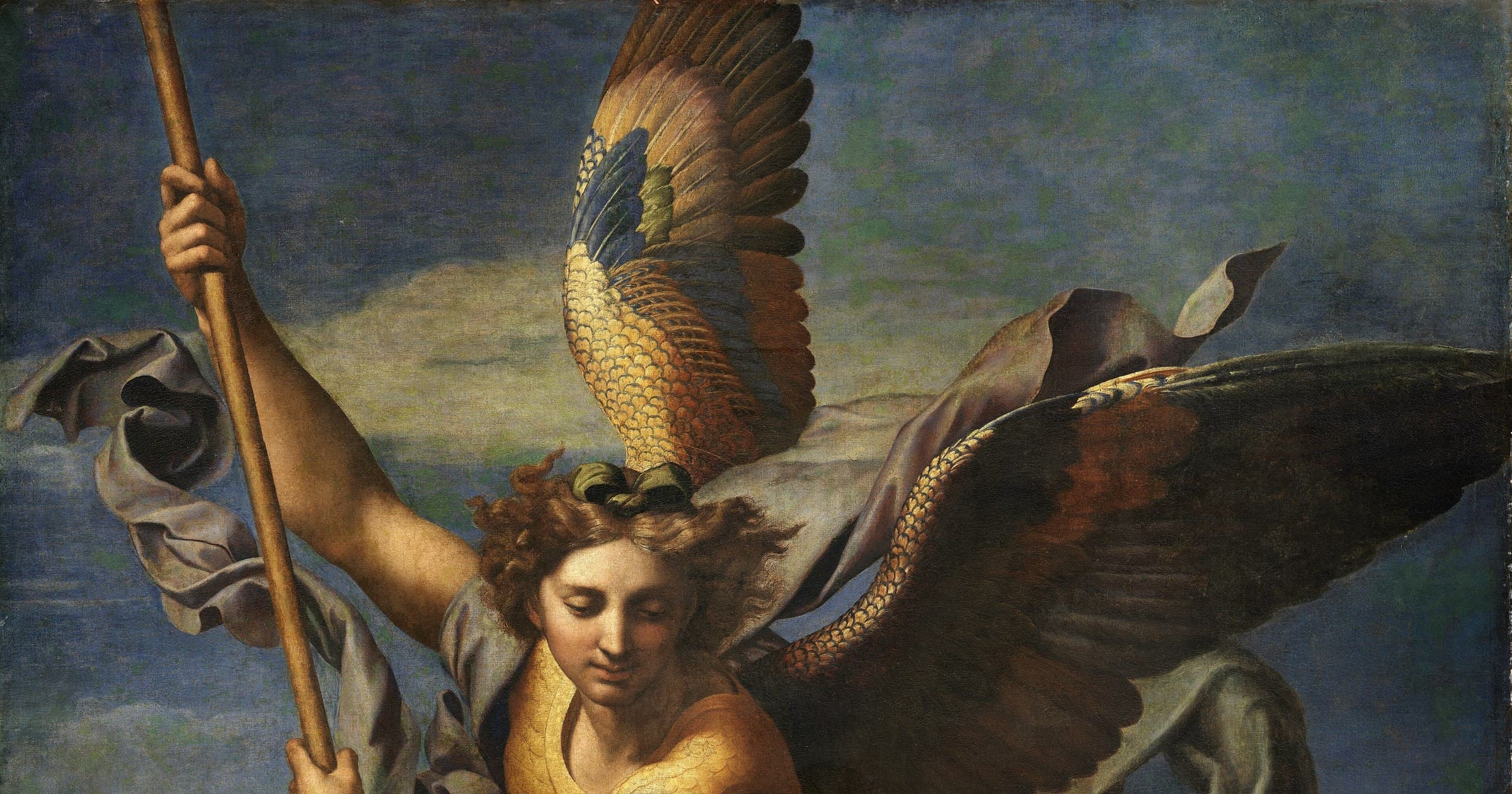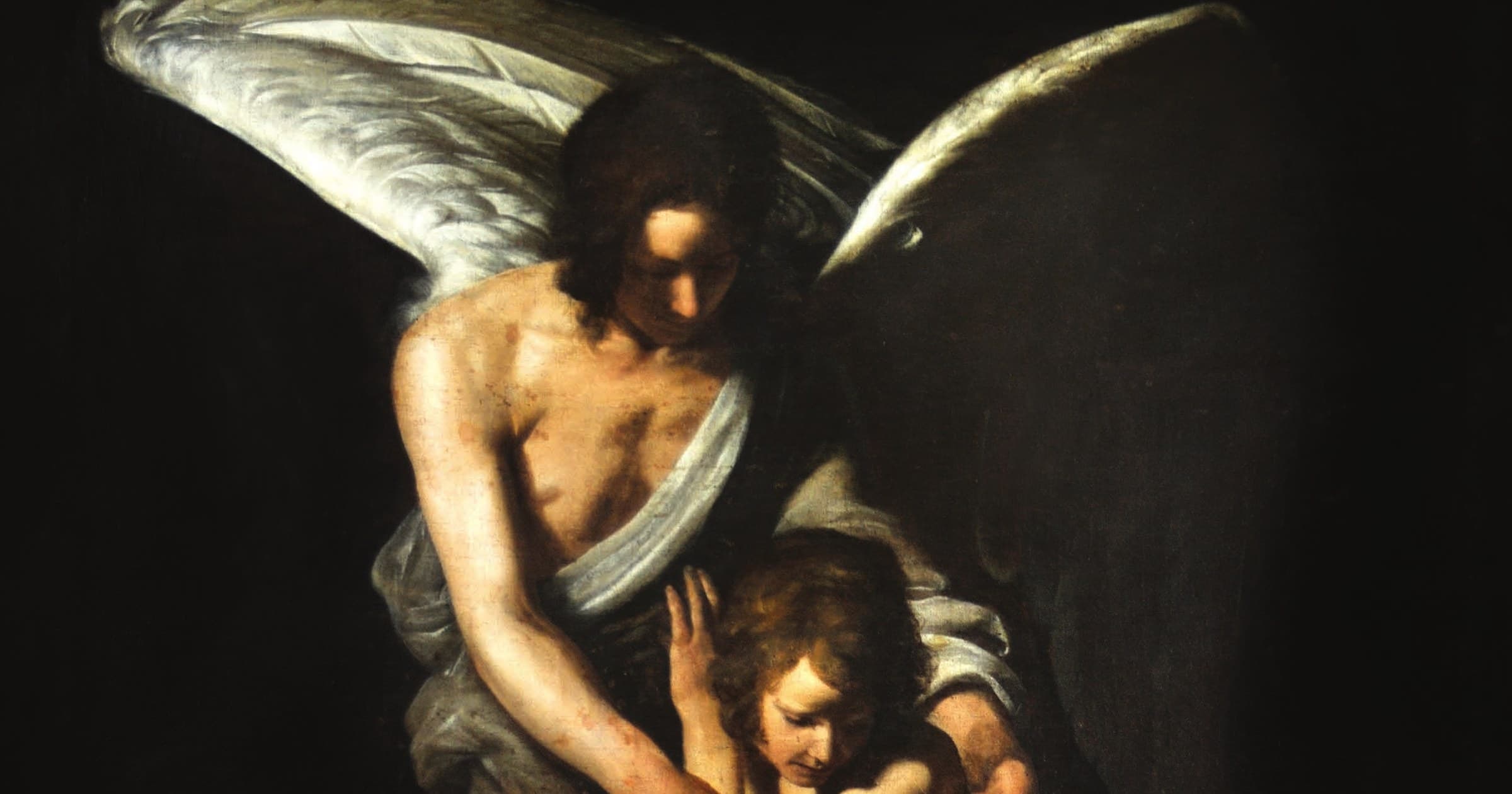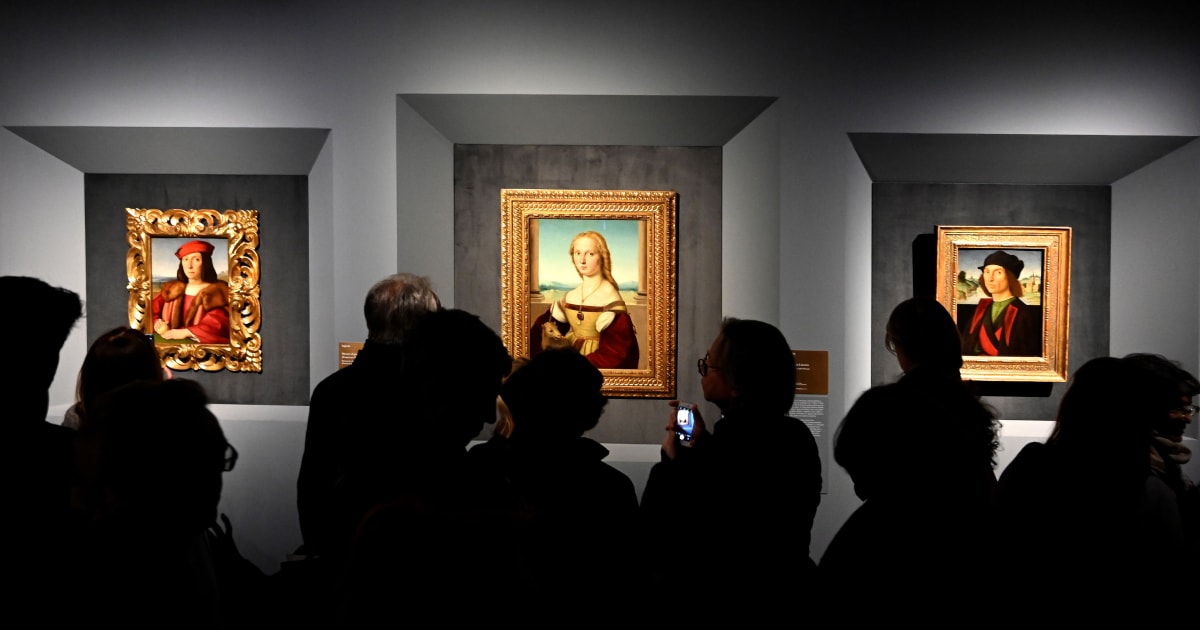

It took eight long years to put together this extraordinary exhibition at New York’s Metropolitan Museum of Art featuring over 200 works – including paintings, drawings and tapestries – most of them by one of the greatest artists the world has ever seen, Raffaello Santi, more commonly known simply as Raphael.
Born in Urbino on Good Friday 1483, Raphael died in Rome on Good Friday 1520. In his biography Raphael: A Passionate Life (Polity Press, London, 2012), Antonio Forcellino writes that he ‘was more than just the painter, the architect, and the stage designer who had created images of disturbing beauty. He had also acted as the interpreter of a very particular world, the dream of a golden rebirth to be brought about through literary studies and painting, and in this sense he had played an essential part in convincing the intellectuals of his time of the harmony, culture and intellectual and sensual equilibrium that Rome attained during the years in which he had dominated the artistic scene there’.
An exhibition of this scale and quality required an enormous effort on the Met’s part, and Carmen C. Bambach, its curator, has praised all those who contributed. Thirty-seven of the works featured are loans from Italy. Exhibits also came from other European countries and from North America. The exhibition catalogue is a fine work of scholarship, featuring 445 illustrations as well as a bibliography and index. It follows the chronology of Raphael’s career, save for two chapters which focus on his portraits and on his collaborations with other artists.
So why does the word ‘poetry’ feature in the title? Bambach sees the word as appropriate in that Raphael was the son of a poet-painter and was himself someone who attempted to write sonnets. Likewise, the Met’s director and chief executive, Max Hollein, has spoken of Raphael’s works as having a certain lyrical quality. Hollein has also referred to the way in which Raphael displayed ‘a poetic sensibility that captivated both his contemporaries and the generations that followed’. The Italian art historian Vincenzo Golzio has also written interestingly on the subject in Chapter VIII of The Complete Work of Raphael (Harrison House Publishers, New York, 1969).
In seeking to explain why Raphael had written sonnets, he said that ‘the answer that first comes to our mind is that he wrote them because of some youthful sin, as almost all the young do when they are motivated by amorous passions. But one could also suppose that Raphael was induced to write poetry by his literary environment. Painters, sculptors, architects were always thought of as being inferior to writers, even if their artistic perfection was at times called “divine”.’ The fact that Raphael’s poetry was not all that great tends to refute the view of Raphael attributed to Giorgio Vasari: that there was nothing Raphael could not do.
What of the paintings and drawings themselves? Here the word ‘sublime’ is entirely apt. The exhibition contains numerous works of exceptional beauty, notwithstanding the fact that some of Raphael’s most famous works could not travel.
Writing in the catalogue about Raphael as an entrepreneurial artist, Bambach describes him as ‘practical, disciplined, and tirelessly productive in his last decade’, adding that he ‘owed his success not only to his creative genius but also to his entrepreneurial acumen and his willingness to enlist the help of collaborators’. She says that ‘he perfected a business model that could accommodate the scale of his projects and the staggering number of his commissions’ and that he ‘owed the success of this model in part to his charisma and gregarious personality, which helped him cultivate friendships and professional associations with a vast network of artists, architects and artisans’. I must admit that, personally and no doubt mistakenly, I do not find it endearing in an artistic context to hear talk of business models and entrepreneurship.
It is a cause for celebration, if not surprise, that such a leading American cultural institution as the Met is giving prominence to ‘our boy from Urbino’ – as Bambach has affectionately described him – at a time when transatlantic relations are effectively in tatters. One could also note in this regard the way in which other leading cultural institutions in the city – the Frick Collection especially springs to mind – contain crucial European elements. ‘Thank God for European art,’ one might declare.
These days even some leading European commentators warn that the continent risks becoming little more than a museum. An exhibition such as Raphael: Sublime Poetry may not alter the broader political climate, but it can still serve as a reminder, on both sides of the Atlantic, of Europe’s extraordinary cultural inheritance and civilisational significance. And what of Raphael himself, whose reputation has remained remarkably constant over the centuries, with only occasional fluctuations? The exhibition at the Met offers ample evidence to support Golzio’s conclusion that Raphael remains ‘a star of the first magnitude in the sky of art’.