



There are really two questions about the origins of the human race. First question: did we evolve from animal ancestors? In answer to that question, the Church says: 1. The first human bodies may have been the product of ordinary evolutionary processes. There is no Church teaching on the matter. Its resolution is left to ordinary scientific inquiry. 2. The first human souls were directly created by God. That is just the logical consequence of a more general revealed truth, namely that every human soul (yours, mine, and Adam’s) was so created. 3. The combination of those two ideas – a human body evolved over time, into which God infused the first human soul – might be called the Catholic consensus view on Adam and Eve. So asking “Is humanity a product of evolution?” is like asking “Are babies produced by sexual reproduction?” Speaking loosely, we say “yes”. But strictly that’s not so, since a new human being (whether Adam or you) comes into existence only with a direct divine action – the creation of a new human soul. Second question: were Adam and Eve historically real? To put it another way, are all human beings descended from an original couple? In answer to that question, the Church says: 4. All human beings (except Jesus and Mary) suffer from original sin, a state acquired either by commission of the original sin itself (a single act, committed by the two first human beings) or by inheritance from one’s biological ancestors. 5. It is very difficult to see how that understanding of original sin is compatible with a multiplicity of first human beings (“polygenism”). So the Church teaches (as a very strong presumption) the idea that there was a single first couple (“monogenism”). Monogenism faces two scientific challenges. First, evolutionary processes ordinarily produce entire new populations – not just two individuals. Second, human genetic diversity corresponds to chimpanzee genetic diversity in a way that must be traced to our common ancestors but which could not have been passed from them to us through a bottleneck of a single couple. Consequently, in recent years some Catholic theologians have attempted to revise the doctrine of original sin in a way that would be consistent with polygenism. In my view, none of them have succeeded. No such revision is, however, necessary. Ten years ago, I suggested an alternative reconciliation. Perhaps evolutionary processes produced an animal population that was like us in some respects: humans would be able to breed with them, and their perceptual powers were sufficiently complex to allow the infusion of a created human (rational) soul. Nevertheless, these animals did not possess human souls and were therefore not rational and not human. Perhaps God chose just two of those “biologically human” beings and made them truly human by infusing human souls into them. Perhaps the descendants of these first two human beings interbred with the larger population of “biologically human” animals; and God infused human souls into offspring that have even one human parent. After a reasonably short length of time, the entire population would be human and each of them would have that first couple among its ancestors. That scenario is consistent both with Catholic doctrine and with evolutionary biology. That does not prove that the scenario is true, but it does show that there is no scientific argument against Catholic teaching on monogenism. Some people do not like my account because it presents our ancestors as sinners: would it not have been wrong for them to interbreed with the “biologically human” animals? Why they think that scenario makes our ancestors worse than does the Bible has never been quite clear to me. Those critics must have missed the passages about Cain and Jephthah, Sodom and Gomorrah, and Noah’s neighbors. Even if those stories are legendary, it is undeniable that the Bible teaches that our ancestors, like us, were great sinners. Of course, my account, unlike the points mentioned earlier, is not Church doctrine, but it does do what some critics say could not be done: it gives Adam and Eve a place in a larger evolutionary story of the origins of the human race. Kenneth Kemp is emeritus associate professor of philosophy at the University of St Thomas, Minnesota
6:28 PM
Adam, Eve and science: How to reconcile Church teaching and evolution
Kenneth Kemp


4 min read



Already a subscriber? Sign in
5freearticles every month
Continue reading with a free account. No card needed.
- Five free articles every thirty days, on any device you sign in on
- The Catholic Herald newsletter, every morning
- Subscribe whenever you like for everything: every article and the magazine
Related articles
 Newsroom
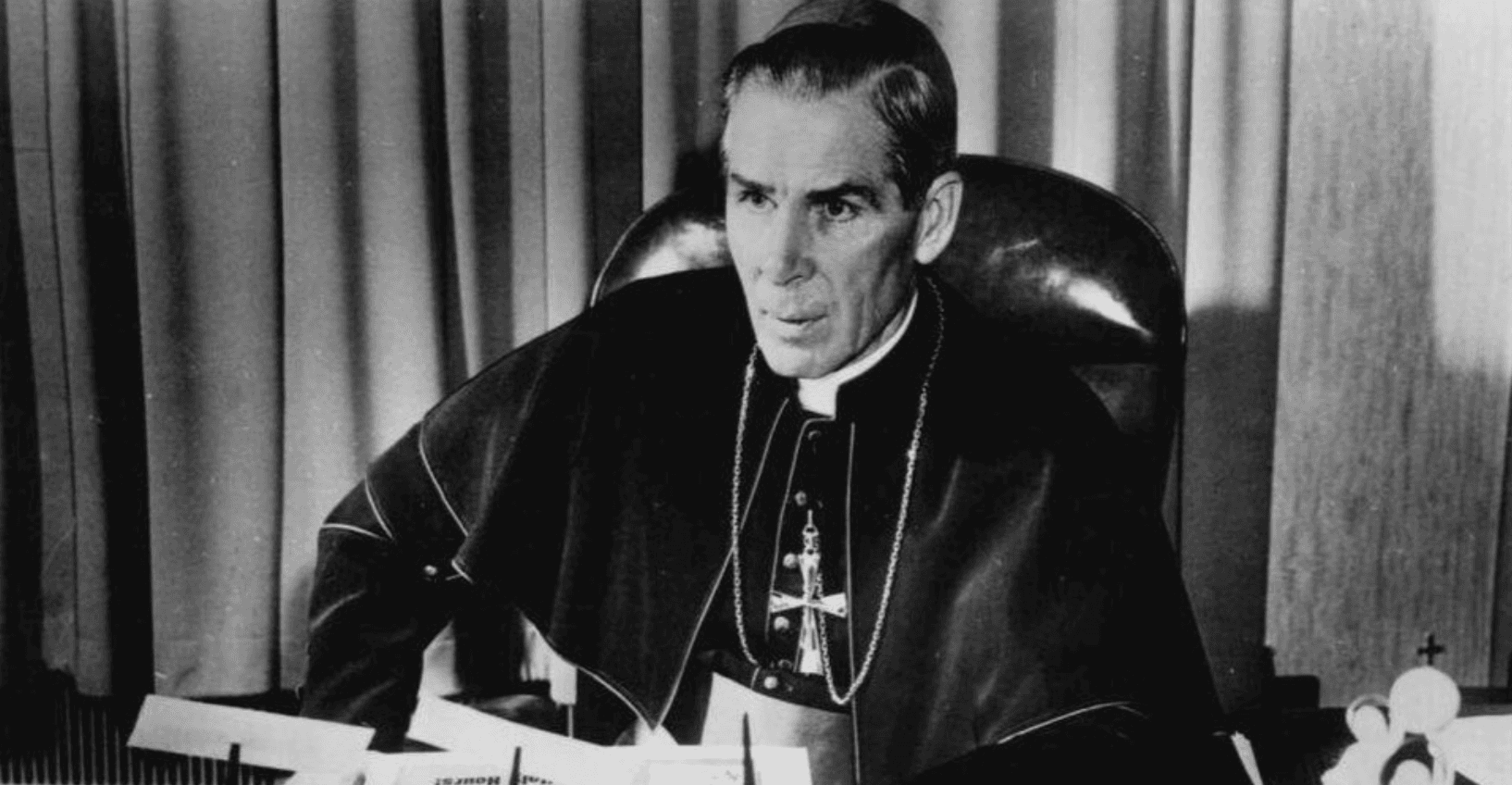
First parish named for Bl Fulton Sheen established in Illinois
Bishop Louis Tylka of Peoria announced the new Blessed Fulton Sheen Parish two days after Sheen became the first American-born bishop to be beatified
Christine Rousselle Newsroom
Injured priest tells Poles: ‘Do not blame Ukraine’ for convent attack
Corrie Douglas-Young Newsroom
Church leaders urge Drumcree dialogue: ‘Too much is at stake’
Corrie Douglas-Young Newsroom
Thousands of Irish children to join global Rosary campaign
Corrie Douglas-Young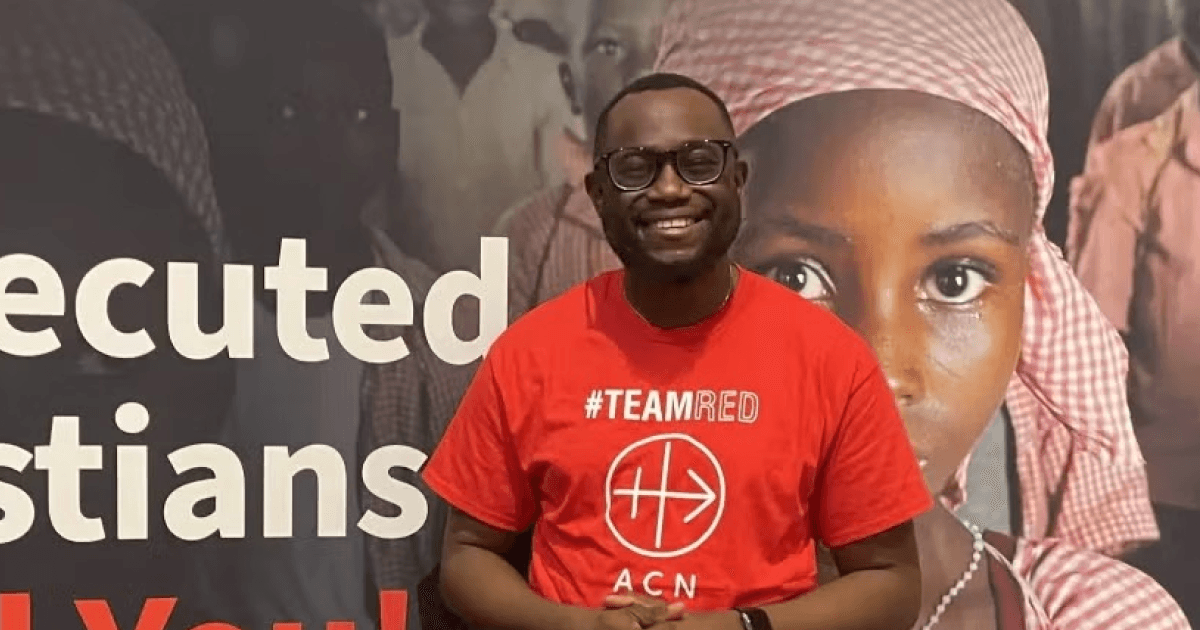 Newsroom
TikTok priest urges young people to stand with persecuted Christians
Nathalie Raffray
subscribe to the catholic herald today
Our best content is exclusively available to our subscribers. Subscribe today and gain instant access to expert analysis, in-depth articles, and thought-provoking insights—anytime, anywhere. Don’t miss out on the conversations that matter most.
Subscribe



