
The advancement of artificial intelligence (AI) is already a matter of life and death for people. In 2024, Sewell Setzer III, aged 14, was seduced by an AI chatbot. It isolated him from his parents and eventually drove him to commit suicide. Also in 2024, US airstrikes in Iraq killed Abdul-Rahman al-Rawi, a 20-year-old civilian. It was later uncovered that he was targeted by a machine-learning algorithm.
These two examples are among many that should alert civic leaders and lawmakers to the urgency of governing AI systems for the common good. We have crossed into a new world where machines have the “agency” to annihilate us. Yet very powerful interests are protecting these systems from voters who desperately want to see them regulated.
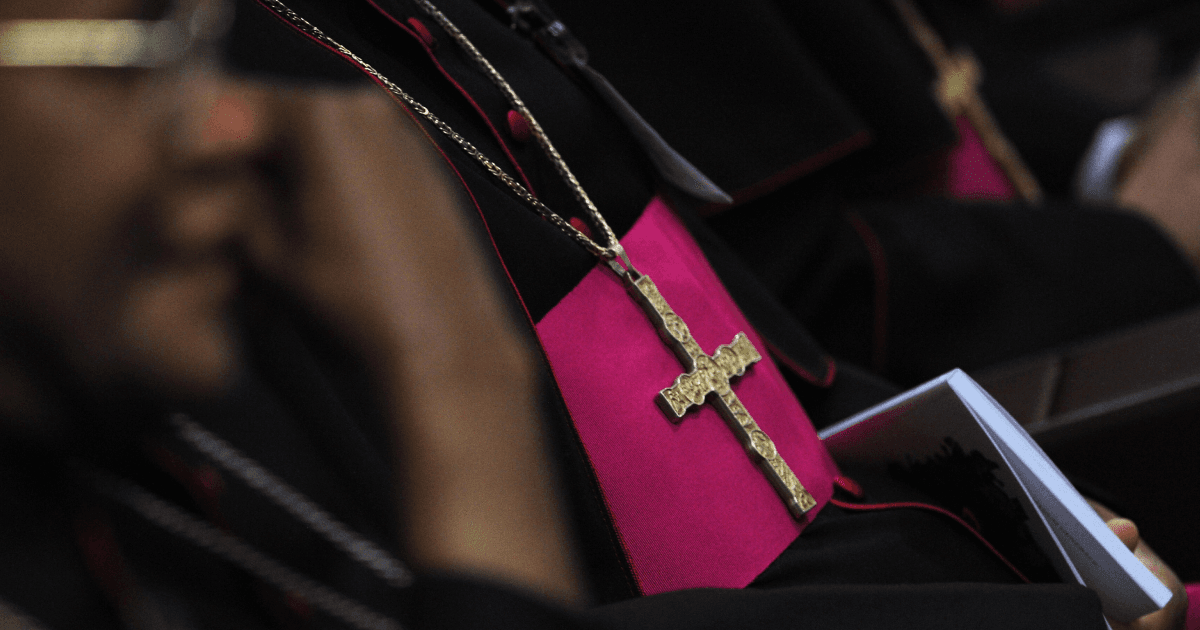
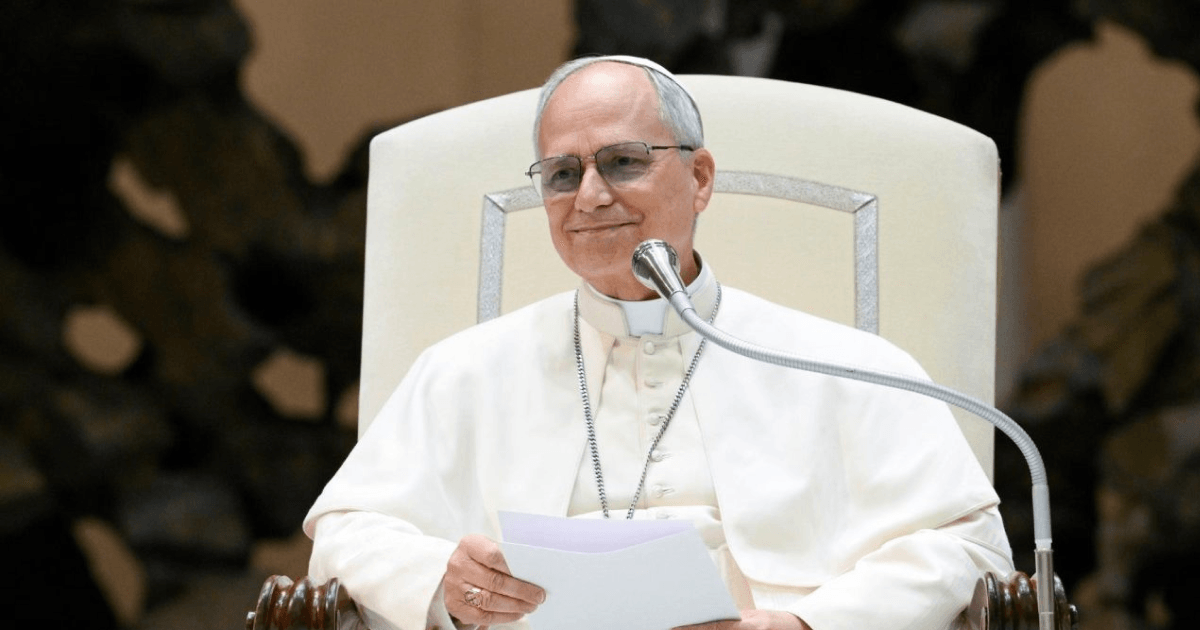
At this pivotal moment, Pope Leo XIV has released Magnifica Humanitas, a rich theological and anthropological framework positioned to evaluate AI and any frontier technology ethically, politically and spiritually.
Quite simply, Pope Leo asserts that the most important questions about AI are not technical ones. As a beloved creature made in the image of God, man is the ultimate criterion of AI’s value.
Pope Leo calls the Church, and all people of goodwill, to a time of “digital sobriety”. Considering that AI presents itself to human beings via screens, digital sobriety would provide a powerful bulwark against dehumanisation. The centrality of the screen means that it must become a primary site of political action for the Church.
Recent research by the Institute for Family Studies reveals how devastating screens have already been for childhood. In a survey of 24,000 American parents nationwide, we found that nearly 50 per cent of three-year-olds use a tablet, iPad or Kindle, and many of these devices have few or no restrictions whatsoever. By the age of 17, about 60 per cent of American children are still not allowed to leave their neighbourhood unsupervised. In other words, the screen has become their social life and their means of traversing the world.
Now, to make matters worse, AI systems have been designed to nudge users into false friendship and sexual exploitation. One of these systems drove Sewell Setzer to suicide. As Pope Leo summarises:
“Having a personal mobile device at too early an age and using it without adult supervision can exacerbate young people’s vulnerabilities, foster addiction and expose them to isolation, bullying and cyberbullying, as well as pressures to share intimate images or sensitive information.”
Silicon Valley and its allies in Washington have been measuring man against the engineered power of their own technical systems. But Pope Leo calls for the reverse. Man, in his fullest capacity, is the genuine measure of AI. “[H]umanity—in all its grandeur and woundedness,” Leo writes, “must never be replaced or surpassed” by AI, or any technology for that matter.
“We can embrace the technological progress that alleviates suffering and unlocks new possibilities,” Leo continues, “provided that we do not abandon the very essence of our humanity, namely the capacity for relationship and love.”
If artificial intelligence forces us to abandon our humanity, we cannot embrace it, at least not fully. Instead, we must either oppose or discipline it. “[T]echnology is never neutral,” Leo writes; therefore, it must be scrutinised and ordered towards the common good.
Fortunately, the legacy of Catholic Social Teaching, including the principles of human dignity, subsidiarity, solidarity, human rights, the universal destination of goods and social justice, offers us trustworthy guidance to accomplish this gargantuan task. Like the effort to rebalance the industrial economy to include the flourishing of workers and families, this will be a multigenerational task beginning now.
Addressing these issues will require concerted political action and an expanded policy imagination. It may even pit the Church against powerful interests opposed to governing AI with the common good in mind.
Our polling at the Institute for Family Studies found overwhelming support for AI safety testing, especially among Trump voters.
All Catholics are called to carry out this critical task of maintaining our humanity in the face of revolutionary technology. What can we do now, particularly those among us who do not have the attention of elites in Washington and Silicon Valley?
As Pope Leo states: “In the era of artificial intelligence, when human dignity is threatened by new forms of dehumanisation, ours is the pressing duty to remain profoundly human.”
Achieving digital sobriety is not just a matter of public policy, nor can it be only for children. It is collective work, which the Church must embody together. It must be achieved at every level – national, diocesan, parochial, across rites, among schools, throughout ministries, within the domestic Church and across all age groups. Most importantly, we must practise it in our own lives.
Pope Leo underscores the reality that parents cannot handle this crisis alone, no matter how well intentioned.
“Therefore, it is essential to form an alliance among policy-makers, educational institutions and families that is capable of concretely supporting adults in this task,” Pope Leo adds.
“Today, [with adults] accompanying children and young people,” Leo writes, “we can help them ‘recognise the risks and choose what fosters inner freedom’.”
In other words, digital sobriety must be embodied and modelled.
To promote this, dioceses should encourage digital fasting as a norm during Lent and Advent, and perhaps as a weekly practice throughout the year. That is how monumental the digital technology crisis is.
Schools, Leo teaches, must also resist technological fads. Yes, children need to be educated about how AI systems work, particularly to help them identify manipulative techniques critically. But, more importantly, mental distance between digital systems and the minds of children must be fostered.
“A genuinely healthy attitude is needed [in schools], requiring rhythms that incorporate silence…” Leo writes, adding:
“Schools are not called to follow the pace of the digital world, but to offer that which the digital sphere itself cannot provide, namely a shared time for learning and developing trustworthy relationships.”
Such a vision might seem radical. But fundamental attacks on what it means to be human call for a radical effort to remain human. Practising widespread digital sobriety is a first critical step in regaining mastery over ourselves. It is also the only condition in which we can even plausibly begin to master AI.
Michael Toscano is Senior Fellow and director of the Family First Technology Initiative at the Institute for Family Studies.