
The news was shocking, unexpected, and seemed to bear a dire prophecy – or so it appeared to many observers. Reports that Iran’s Supreme Leader, Ayatollah Ali Khamenei, had been killed during recent military strikes spread rapidly across the world, triggering speculation about escalation, regime change and the possible consequences for an already volatile region. Yet even as the story circulated, uncertainty remained. American officials were quick to deny that the United States had deliberately targeted the Iranian leader. In an interview on CBS’s Face the Nation, Secretary of State Marco Rubio stated that the United States had not set out to kill Khamenei and was not pursuing regime change, emphasising instead that American operations were directed against military infrastructure and immediate security threats.
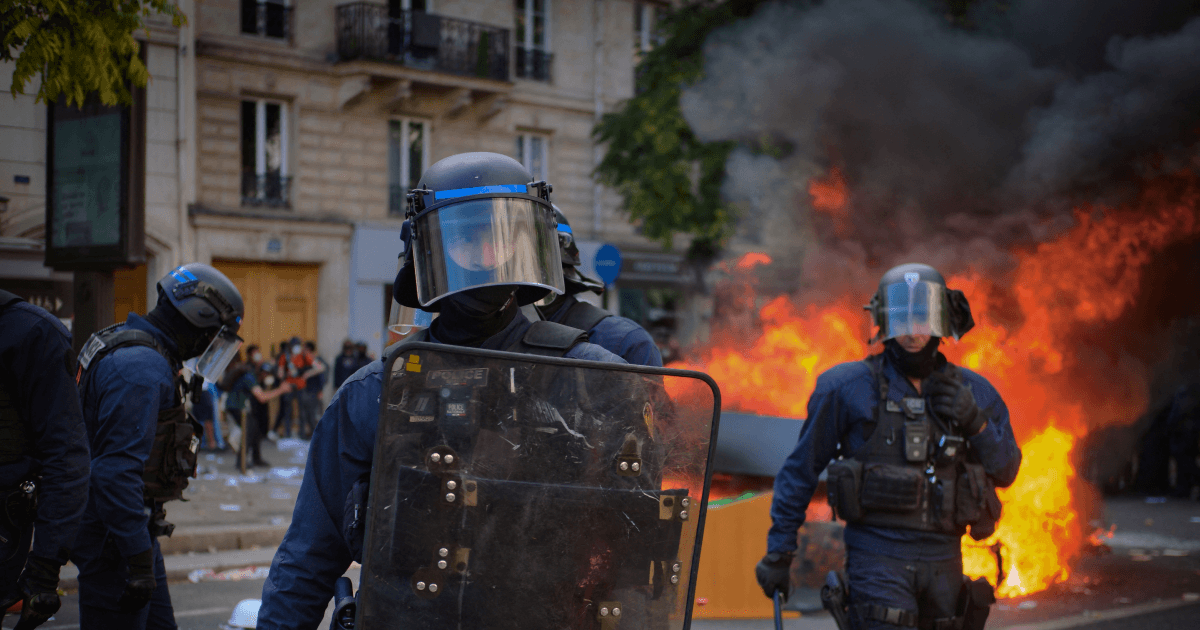
Regardless of who killed the Ayatollah, public debate in moments like these circles around tyrants, assassins and liberation. If a ruler is dangerous, brutal or oppressive, is his removal by force morally justified? The question has haunted political history for centuries – and it is one the Catholic tradition approaches with far greater caution than modern political rhetoric often allows.
History offers one of the most striking examples of this dilemma in the failed attempt to kill Adolf Hitler on 20 July 1944. The circle of conspirators around Claus Schenk Graf von Stauffenberg believed that Germany had fallen under a regime of radical murderous criminality and that eliminating Hitler was necessary to end a war of annihilation and the systematic murder of millions. Among those involved in the resistance were men deeply shaped by the Catholic faith, including the Jesuit Alfred Delp and others.
Stauffenberg himself was not motivated by revolutionary ideology but by conscience. As the scale of Nazi atrocities became increasingly undeniable, he and his fellow conspirators concluded that obedience to a criminal regime could no longer be reconciled with moral responsibility. Their plan was not merely to kill Hitler but to dismantle the regime and restore lawful government through the German military command structure. The assassination attempt was therefore embedded within a broader effort to re-establish legitimate authority.
For this reason, the example of 20 July cannot simply be reduced to the romantic image of a lone assassin. It reflects a tragic moral dilemma that has engaged Christian political thought for centuries: when authority becomes tyrannical, how may injustice be resisted without destroying the very order that makes justice possible?
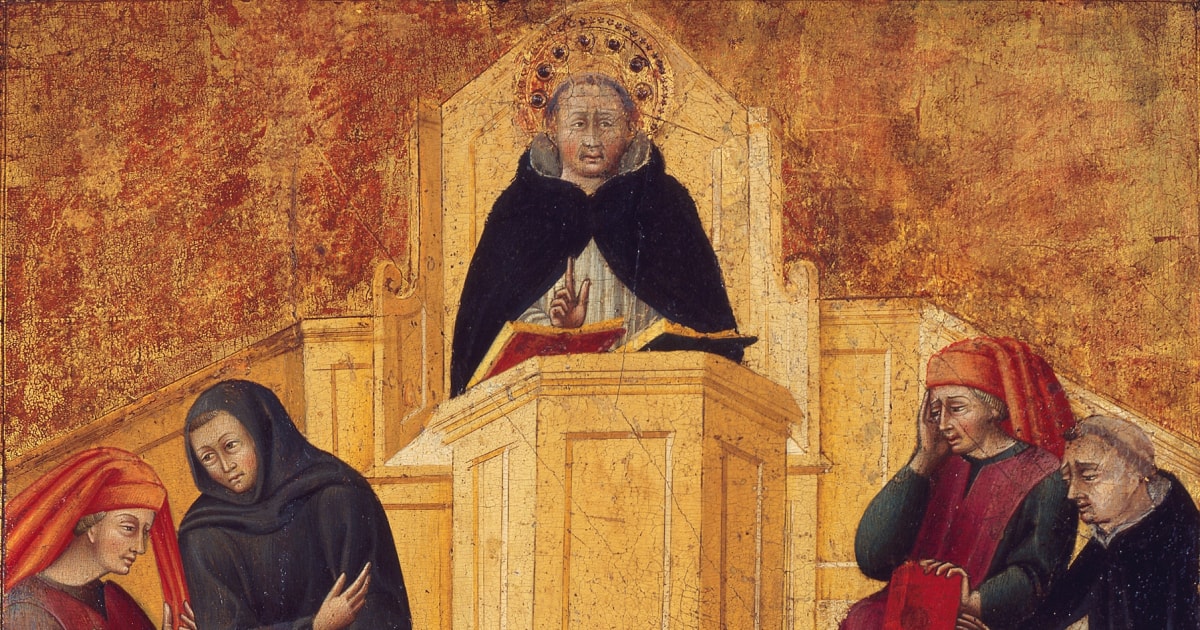
To approach this question, Catholic moral theology turns above all to the thought of St Thomas Aquinas. Speaking with Fr Francesco Giordano, a theologian and European director of the Rome office of Human Life International who teaches at the Angelicum and CUA’s Rome Center, I had the opportunity to discuss Aquinas’s thought in greater depth. Aquinas does not begin with tyranny itself but with the deeper moral forces that tear societies apart. In the Summa Theologiae (II–II, qq. 34–43), he examines the vices opposed to charity, tracing a progression from interior moral disorder to public violence. Hatred gives rise to discord, discord to schism, schism to violence and violence ultimately to political rupture. War and rebellion are not merely geopolitical events but the outward manifestations of deeper moral decay.
Political authority, Aquinas teaches, exists for the common good. A ruler who governs for the good of the whole is properly called a king; one who governs for his own advantage is a tyrant. Tyranny, therefore, is a corruption of authority rather than its absence. The tyrant bends political order towards his own interest instead of the welfare of the community.
Aquinas refuses to endorse private tyrannicide. His concern is not sympathy for injustice but fear of something even worse: the collapse of political order itself. If any private individual could claim the right to kill a ruler whom he judges unjust, authority would dissolve into rival acts of private violence. The cure, Aquinas warns, may become more destructive than the disease. A tyrant may oppress a people, but civil chaos can devastate an entire society. In one of his most sober observations, Aquinas suggests that it may sometimes be better to endure a moderate tyranny than to unleash the disorder that accompanies rebellion. Once authority collapses into competing acts of violence, the conditions for justice themselves may disappear.
This Thomistic prudence continues to shape Catholic social teaching. The Catechism of the Catholic Church does not endorse tyrannicide but instead sets forth strict conditions under which armed resistance to political authority might be morally legitimate. According to paragraph 2243, such resistance is justified only when several demanding criteria are simultaneously met: there must be grave and prolonged violations of fundamental rights; all other means of redress must have been exhausted; resistance must not provoke worse disorders; there must be a well-founded hope of success; and no better solution can reasonably be foreseen.
The Church’s tradition insists that the direct killing of a ruler by private individuals cannot become a routine instrument of justice. Violence detached from legitimate authority risks dissolving the very order it claims to defend. Fr Giordano points out that the Church’s moral tradition, drawing from Aquinas and the Catechism, therefore distinguishes sharply between legitimate resistance aimed at restoring lawful authority and acts of private vengeance that undermine the common good.
This caution reflects a deeper tension in Aquinas’s political theology. Authority exists for the common good and therefore loses its moral legitimacy when it becomes tyrannical. Yet authority itself participates in the order of divine governance. In the Summa Theologiae, Aquinas presents war as an extension of lawful authority ordered to the common good (I–II, q. 90; II–II, q. 40), while the sequence of sins against charity (II–II, qq. 34–43) shows how the breakdown of love leads from discord to violence and ultimately to sedition. At the same time, his teaching on Providence (I, qq. 103–119) reminds us that political authority, however imperfect, remains part of the structure through which God governs the world. The result is a real tension: a tyrant corrupts authority by subordinating the common good to himself, yet private individuals who assume the right to eliminate him risk usurping the very authority that participates in divine providence.
The same caution applies to contemporary events. The death of Khamenei has already generated triumphalist rhetoric in some political circles, while others have condemned it as reckless escalation. The facts remain incomplete and even the role of the United States remains disputed. American officials themselves have insisted that the operation was directed at military infrastructure rather than the deliberate killing of Iran’s leadership.
Thus, Catholic tradition does not offer the dramatic certainty that modern politics often demands. It neither endorses the assassin nor approves tyranny. Instead, it insists that justice must remain ordered to the common good and exercised under rightful authority. Aquinas reminds us that the gravest danger in politics is not only injustice from above but disorder from below. The tyrant corrupts authority by bending it towards himself. The assassin risks destroying authority altogether. The Christian moral task is therefore more demanding than either passive submission or revolutionary enthusiasm: injustice must be resisted, but in a way that preserves the possibility of order and peace.
History shows that moments arise when resistance becomes morally unavoidable. The conspirators of 20 July were convinced they had reached precisely such a moment. It was for the sake of Germany (“For Holy Germany” were Stauffenberg’s last words before his execution) that he went through with his plan. Catholic tradition does not deny that such moments exist. What it insists upon is that resistance must aim at restoring lawful authority, not replacing tyranny with chaos.
The Church’s wisdom lies precisely in this restraint. It reminds us that political authority participates – however imperfectly – in the order of Divine Providence. To overthrow it lightly is dangerous; to absolutise it is equally so. Between passive submission and revolutionary violence lies the more demanding path of prudence: resisting grave injustice while preserving the possibility of order and peace.
Many observers demand moral certainty at moments like these, and this sober moral vision may appear unsatisfying. Yet it guards a deeper truth: justice cannot be restored by abandoning the very moral limits that make justice possible.