



July 5, 2026

‘Attend to them with the ear of your heart’

Magnificat
More
Related
Min read
share

This week our series on Saints Who Taught About Prayer continues with great figures such as Saint Patrick, Apostle of Ireland (p 90), and Saint Benedict, Founder of Western Monasticism (p101), whose feast occurs on Saturday 11 July. We also encounter Saint Bruno (p137), who deepened Saint Benedict’s original charism by founding the silent order of contemplative monks we know as Carthusians.

Whether or not Saint Patrick actually wrote the famous Lorica (Saint Patrick’s Breastplate), it remains a brilliant expression of how prayer keeps us focused on the protection of the Lord.

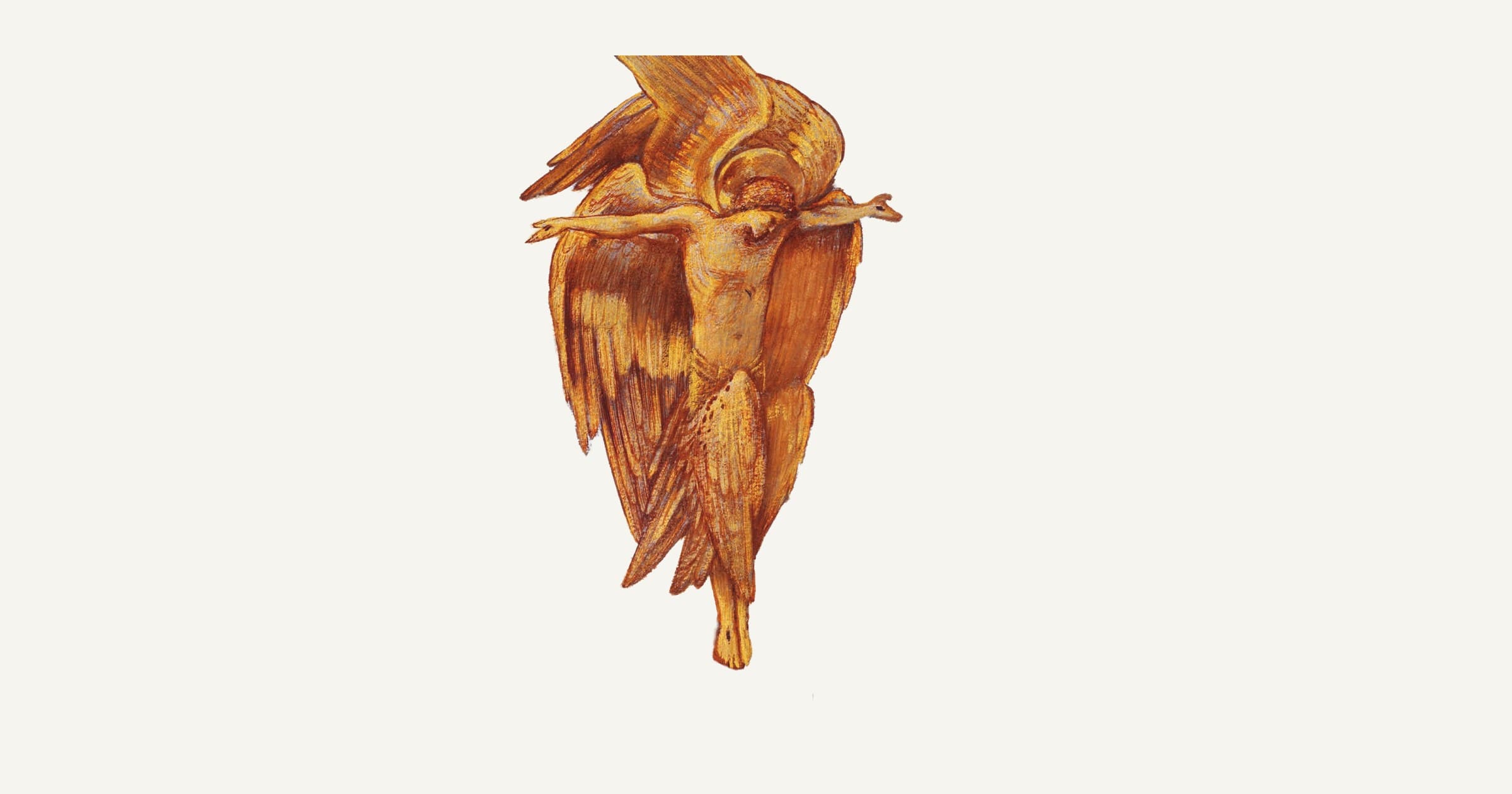
“Christ ever with me, Christ before me,
Christ behind me, Christ within me, Christ beneath me,
Christ above me, Christ to my right side, Christ to my left,
Christ in his breadth, Christ in his length, Christ in depth,
Christ in the heart of every man who thinks of me,
Christ in the mouth of every man who speaks to me.”

As the violent death of Saint Maria Goretti (6 July) reminds us, that protection does not necessarily guarantee safety from physical harm. Anyone who is weak or powerless is vulnerable to abuse, as Saint John Paul II pointed out (see our Mass introduction on page 82), but the one thing that cannot be torn from the dispossessed is the love of Christ. On page 97, Saint John Henry Newman speaks of how that one necessary thing can purify even the most hardened heart, as it did Goretti’s murderer.

“O most Sacred, most loving Heart of Jesus, you are concealed in the Holy Eucharist, and you beat for us still. Now as then you save… I worship you then with all my best love and awe, with my fervent affection, with my most subdued, most resolved will… Purify [my heart] of all that is earthly, all that is proud and sensual, all that is hard and cruel, of all perversity, of all disorder, of all deadness. So fill it with you that neither the events of the day nor the circumstances of the time may have power to ruffle it, but that in your love and your fear it may have peace.”

The Gospel for 7 July, for which that meditation has been chosen, contains the famous call that has inspired so many vocations: the burning desire of the heart of Jesus to gather humanity into itself.

“And Jesus went throughout all the cities and villages, teaching in their synagogues and proclaiming the gospel of the kingdom and healing every disease and every infirmity. When he saw the crowds, he had compassion for them, because they were harassed and helpless, like sheep without a shepherd. Then he said to his disciples, ‘The harvest is plentiful, but the labourers are few; therefore pray earnestly to the Lord of the harvest to send out labourers into his harvest.’” (Matthew 9:35–38)

What does this labour consist in, truly? Jesus spoke with authority; this is what attracted his followers. But his compassionate actions, springing from his divine heart, also drew them in. Likewise those who consecrate their lives to him. As Saint Benedict, whose feast brings the week to its conclusion, puts it: “We realise that we will be heard for our pure and sorrowful hearts, not for the numbers of our spoken words.” Or again, in his most famous instruction: “Listen carefully, my son, to the master’s instructions, and attend to them with the ear of your heart.”

The Sunday readings contain the passage from Isaiah that reinforces the divine nature of this call:

“Thus says the Lord: ‘For as the rain and the snow come down from heaven and do not return there but water the earth, making it bring forth and sprout, giving seed to the sower and bread to the eater, so shall my word be that goes out from my mouth; it shall not return to me empty, but it shall accomplish that which I purpose, and shall succeed in the thing for which I sent it.” (Isaiah 55:10–11) 

The greatest exemplar of a fertile heart is Mary. In the middle of this week, on 9 July, our readers in Scotland celebrate her in a special way (p116). The introduction to the Mass sets the scene for the Feast of Our Lady of Aberdeen:

“Since the Restoration of the Scottish Hierarchy in 1878, devotion to Our Blessed Lady in Aberdeen, throughout the Diocese of Aberdeen and further afield, has focused on copies of an ancient statue that was saved from destruction in Aberdeen during the Reformation and hidden in several different countries. Copies now stand in St Mary’s Cathedral and St Peter’s Church in Aberdeen. The original can be seen at Notre Dame de Finistère in Brussels.”

The words of the responsorial psalm for that feast serve as a cry of gratitude for the presence of the Mother of God in salvation history.

You are the highest honour of our race.
Blessed are you, O daughter, by God Most High;
you are above all women on earth,
and blessed be the Lord God
who has created the heavens and the earth.
For your deed of hope will never depart
from the hearts of those
who always remember the power of God.

Continue reading with a free account

Create a free account to read up to five articles each month
Create free account

You have # free articles remaining this month.

Subscribe to get unlimited access.
Sign up

subscribe to the catholic herald today

Our best content is exclusively available to our subscribers. Subscribe today and gain instant access to expert analysis, in-depth articles, and thought-provoking insights—anytime, anywhere. Don’t miss out on the conversations that matter most.
Subscribe