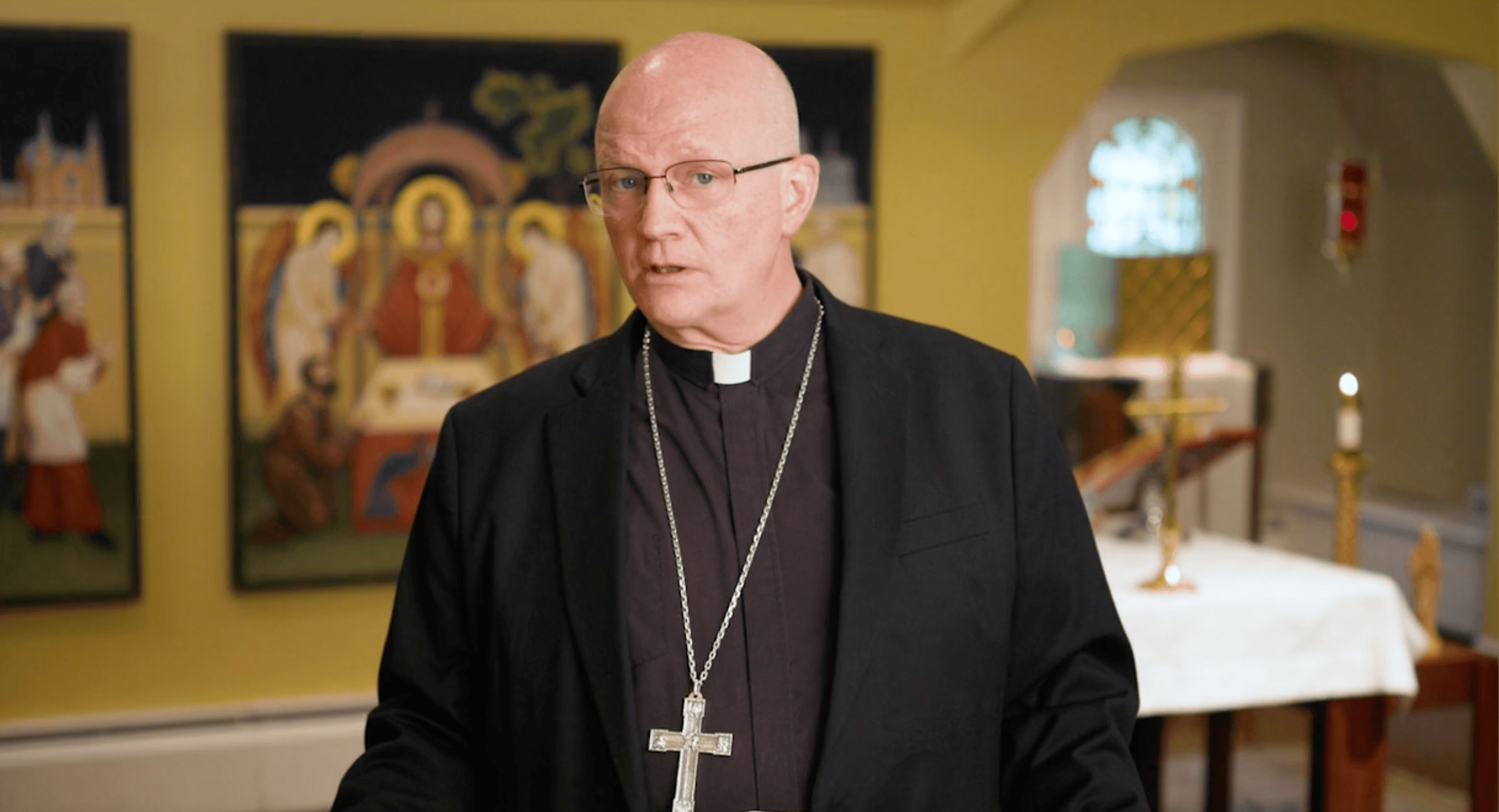


Bishop Athanasius Schneider, auxiliary bishop of Astana in Kazakhstan, has disclosed that he personally proposed to Pope Leo XIV the promulgation of an Apostolic Constitution to settle the dispute over the celebration of the Traditional Latin Mass.
The proposal, made during a private meeting with the Pope on 18 December, was revealed by the bishop following the recent extraordinary consistory of cardinals. Until now, Bishop Schneider said he had maintained a prudential silence about the encounter, but chose to speak after renewed debate over restrictions imposed on celebrations of the 1962 Missal.
In an interview with Christopher P. Wendt of the Confraternity of Our Lady of Fatima, Schneider explained that he urged the Holy Father not to respond to the current situation with what he described as another “anti–motu proprio”, but instead to issue a document of higher legal and magisterial authority. “Not an anti–motu proprio, but a more solemn document,” he said, arguing that the matter should be elevated beyond the level of papal legislation used in recent years.
According to the bishop, the intention would not be to annul Traditionis custodes directly, but to supersede it through a more solemn act of pontifical governance. “I think it would not be so fitting to again do an anti–motu proprio against Traditionis custodes, but simply a more solemn document above the motu proprios,” he said. Such an approach, he argued, would allow the Pope to establish a new and stable legal framework without perpetuating a cycle of opposing documents.
Schneider told the interviewer that the aim of such a constitution would be a “solemn regularisation” of the traditional Latin Mass, guaranteeing “complete freedom and the co-existence of both forms, pacific co-existence, with no limitations and impediments of both forms”. He stressed that the document should stand independently of earlier motu proprios, including Summorum Pontificum and Traditionis custodes, and should provide clarity for priests and faithful alike.
A central element of Schneider’s proposal concerns the authority of diocesan bishops. He argued that if the Pope were to legislate at this level, bishops would no longer be able to prohibit or restrict the traditional liturgy where it is celebrated legitimately. “Just like a bishop cannot forbid the Novus Ordo, the same principle applies: a bishop cannot limit or forbid the traditional form,” he said. He maintained that a universal legal settlement would prevent ongoing conflict by placing both forms of the Roman Rite on an equal juridical footing.
The bishop also challenged the terminology adopted during the pontificate of Benedict XVI, which described the traditional Mass as the “extraordinary form” of the Roman Rite. Schneider said he would favour abandoning that distinction altogether. “Both are ordinary forms which every Catholic and every priest has the right to celebrate or to assist at,” he said, adding that banning the traditional liturgy should be regarded as just as unacceptable as banning the reformed rite.
Schneider explained that an Apostolic Constitution is the appropriate instrument precisely because of its solemnity and juridical force. “I think it could be an Apostolic Constitution, a very solemn form of papal document containing juridical norms. It is more solemn than a motu proprio,” he said.
He pointed to historical precedent, noting that major liturgical settlements in the life of the Church have been promulgated in this way. Pope St Pius V issued an Apostolic Constitution when promulgating the Roman Missal following the Council of Trent, while Pope Paul VI used the same form when introducing the revised Missal in 1969 after the Second Vatican Council.
An Apostolic Constitution is the most solemn form of legislative document available to a Roman Pontiff, carrying the highest juridical authority in the governance of the Catholic Church. It is the instrument through which popes have historically enacted universal laws, restructured ecclesial institutions, or settled questions touching the Church’s public worship, discipline, and internal order.
Unlike more limited papal acts, such as apostolic letters issued motu proprio, an Apostolic Constitution is intended to establish a stable and enduring legal framework, binding on the universal Church and ordinarily remaining in force until explicitly replaced by another act of equal weight.
In legal terms, an Apostolic Constitution functions as a capstone document. It is promulgated explicitly in virtue of the Pope’s supreme, full, and immediate authority and typically contains clear juridical articles rather than general exhortations. These articles may abrogate previous legislation, derogate from established norms, or render contrary customs null and void. For this reason, Apostolic Constitutions have often been used to resolve questions resistant to incremental regulation or competing interpretations.
The clearest liturgical precedent is Quo Primum, issued by Pope St Pius V in 1570 following the Council of Trent. That constitution promulgated the Roman Missal and ordered its use throughout the Latin Church, commanding bishops and priests to adopt it “in virtue of holy obedience” and granting perpetual permission for its celebration without fear of penalty, subject only to narrow exceptions for rites of proven antiquity.
In more recent times, Apostolic Constitutions have continued to play a decisive role. Pope Francis’s Praedicate Evangelium, promulgated in 2022, reorganised the Roman Curia, abolishing the previous constitution Pastor Bonus and establishing a new structure of dicasteries.
Understood in this light, the proposal outlined by Bishop Athanasius Schneider does not depart from established norms or precedent. Were an Apostolic Constitution to be used to address the question of the traditional Latin Mass, it would offer a level of clarity and finality lacking in recent years, when the matter has been governed by polarising motu proprios. The intention would not simply be to reverse existing restrictions, but to establish a new legal settlement standing independently of them.
If such a constitution were promulgated, it would likely follow the established form of papal legislation. It would open with a solemn invocation of apostolic authority and situate its provisions within the continuity of the Church’s liturgical tradition, explicitly affirming the legitimacy of both the 1962 Missal and the post-conciliar Missal promulgated by Paul VI. Should Pope Leo XIV be so inclined, the constitution could define both as ordinary forms of the Roman Rite, abandoning the terminology that has shaped debate since 2007.
The practical effect would be significant. By legislating at this level, the Pope could establish that priests of the Latin Church possess the faculty to celebrate either form of the Roman Rite without special permission. Episcopal authority over the liturgy would remain intact within its proper limits, but bishops would be unable to prohibit one form of the Roman Rite while permitting the other. Provisions of Traditionis custodes assigning exclusive authorisation to diocesan bishops could be explicitly abrogated.
Customarily, Apostolic Constitutions also include transitional norms. In the context of the traditional Latin Mass, these could safeguard existing communities such as the FSSP and ICKSP, clarify the status of personal parishes, and encourage seminaries to provide adequate formation in both forms of the Roman Rite.
As a consequence of such normalisation, institutes formerly overseen by the Pontifical Commission Ecclesia Dei might fall under the Dicastery for Institutes of Consecrated Life and Societies of Apostolic Life, rather than the Dicastery for the Doctrine of the Faith.
Such a constitution would not represent a rejection of the Second Vatican Council or of liturgical reform. Rather, it would seek to regularise a contested area of ecclesial life by placing it on a clear and universally binding legal footing.
In this scenario, the Novus Ordo would retain its central status as the primary liturgical expression of the Roman Rite. The document would affirm the peaceful co-existence of both forms as ordinary usages of the single Roman Rite, echoing Summorum Pontificum’s assertion that “these two expressions of the Church’s lex orandi will in no way lead to a division in the Church’s lex credendi”.
Whether Pope Leo XIV will choose this path remains an open question. What is clear is that an Apostolic Constitution would possess the authority required to settle the status of the traditional Latin Mass in a way that lesser documents cannot.


.jpg)
.jpg)
.jpg)