


May 20, 2026

Cardinal Eijk condemns Synod study group report on homosexuality

Michael Haynes
More
Related
Min read
share

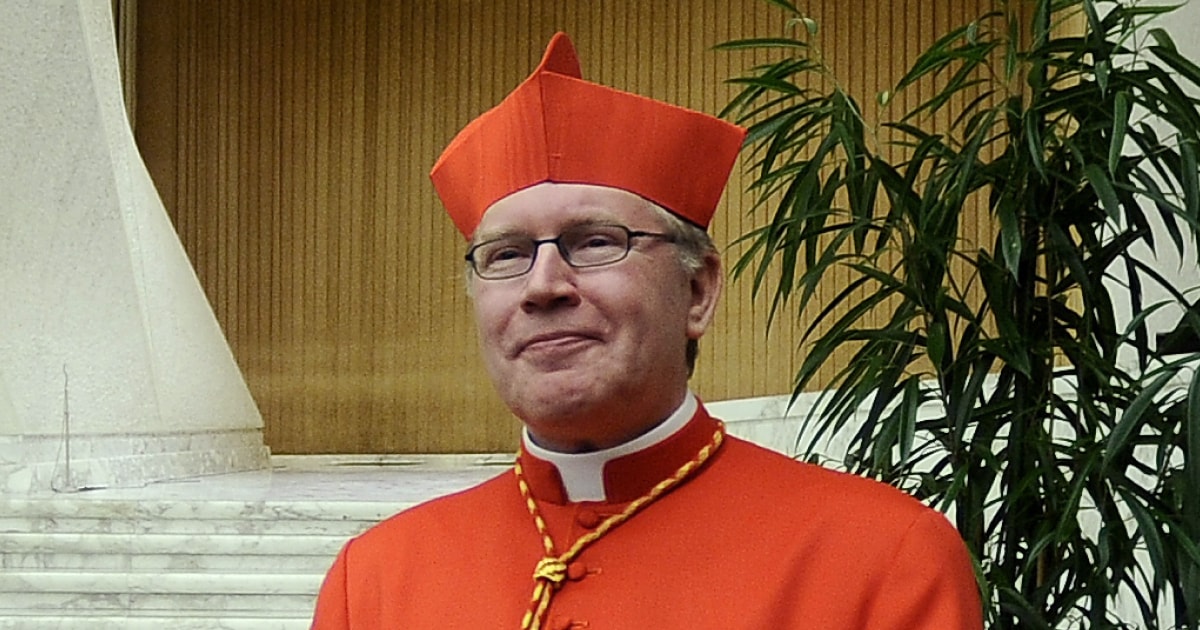
A prominent Dutch cardinal, considered papabile in the 2025 conclave, has condemned the synod study group report on homosexuality as “a fundamental contradiction of Catholic teaching that demands a forceful response”.

Writing May 14 in the National Catholic Register, Cardinal Willem Eijk issued an excoriating critique of the report released by Study Group 9, born out of the Synod on Synodality. (For full details on the report itself, see this correspondent’s analysis for the Catholic Herald.) Eijk pulled no punches. “The recently published report from Synod Study Group 9 represents a troubling departure from the Catholic Church’s consistent moral teaching,” he began.
The Study Group’s report is just that – the product of a study group or committee, and it has no teaching authority or moral weight of any kind. But Eijk warned that the “report’s methodology and framework systematically undermine the Church’s ability to proclaim and apply her moral doctrine”.

At the centre of the controversy surrounding the report is the Study Group’s summary of a Portuguese homosexual man’s testimony. The study group writes that the man’s testimony “bears witness to the discovery that sin, at its root, does not consist in the (same-sex) couple relationship, but in a lack of faith in a God who desires our fulfilment”.

“This new awareness,” the report summarises, “becomes the starting point for moving beyond a conception of the Christian community merely as a place of welcome and compassion, to arriving at the experience of the Christian community as a place where we are all loved”.

Commenting on this testimony, Cardinal Eijk observes that it “is fundamentally flawed”. “Homosexual acts are intrinsically evil – this is settled Catholic doctrine,” he noted. “A believing Christian who engages in such acts certainly falls short in faith, insofar as he fails to trust in God’s grace, which enables him to avoid sin. But this does not mean the sin lies primarily in lack of faith rather than in the act itself, as the witness suggests. The authors’ failure to clarify this point creates dangerous ambiguity.”

Indeed, Church teaching is decidedly clear on the matter. “Homosexual acts are intrinsically disordered” and “contrary to the natural law”, reads the Catechism. The Catechism is also very clear that homosexual activity can never be approved, and repeats that “[h]omosexual persons are called to chastity”.

“By the virtues of self-mastery that teach them inner freedom, at times by the support of disinterested friendship, by prayer and sacramental grace, they can and should gradually and resolutely approach Christian perfection,” the Catechism further outlines.

The Vatican noted in its 1986 instruction on pastoral care of homosexual persons that while a homosexual inclination is not a sin in itself, it is nevertheless “a more or less strong tendency ordered toward an intrinsic moral evil; and thus the inclination itself must be seen as an objective disorder.”

The Study Group’s report does not argue that homosexual acts are some kind of moral good, but it notably promotes testimony arguing thus and fails to counter such testimonies with authentic teaching. “By elevating such testimonies without doctrinal commentary, the report effectively normalises homosexual relationships within a Church context,” wrote Eijk. “This represents a clear attempt to weaken the proclamation of Catholic moral teaching.”

Much of the arguments made during the synod have been framed in light of adapting to suit the times, or of listening to the voice of the Church via the people, or even of listening to the voice of individual conscience. Open-ended questions have repeatedly been posed, which create the appearance that Church teaching is up for discussion, when in fact it is not.

This methodology Eijk particularly condemned. “This language sounds pastoral and Christ-centred, but it conceals a radical departure from Catholic moral theology,” he warned. “The authors invoke Jesus’s statement that ‘the Sabbath was made for humankind, and not humankind for the Sabbath’ to suggest that moral norms cannot be absolute – that there must be exceptions based on individual circumstances and experiences. This is a fundamental misreading of Scripture.”

Eijk – the Cardinal Archbishop of Utrecht – accused the Study Group report of creating “deliberate ambiguity” on Catholic sexual morality, and of attesting that “arriving at moral knowledge requires a long-term synodal process of listening across cultures and experiences”.

Such an idea “is simply false”, he said. “The intentions with which God created the human person in the context of marriage and sexuality are universal truths, established once and for all, that human beings can know spontaneously through natural moral law, and can be found in Sacred Scripture.”

In previous decades, the Vatican clearly taught that pastoral care for homosexual-attracted persons included “clearly stating that homosexual activity is immoral”. The Holy See instructed bishops that “departure from the Church’s teaching, or silence about it, in an effort to provide pastoral care is neither caring nor pastoral. Only what is true can ultimately be pastoral. The neglect of the Church’s position prevents homosexual men and women from receiving the care they need and deserve.”

This element has been gradually lost. It stems, opined Eijk, “from a persistent misunderstanding that has plagued pastoral theology since the 1960s: the notion that pastoral care consists in finding compromises between the Church’s moral teaching and the concrete reality of people’s lives”. Such an approach “assumes moral truth has a dual status – abstract doctrinal truth on one hand, concrete existential truth on the other – with priority given to the latter to create room for exceptions to universal norms”.

Echoing the Vatican’s earlier document, Eijk noted how “true pastoral care does not seek compromises with moral truth. The shepherd leads people to the truth, which is ultimately found in the person of Jesus Christ.”

Eijk was considered papabile during the May 2025 conclave, and his voice is respected as one who has a deep attention to the integrity of Catholic doctrine. Demonstrating this, he sought to reassure Catholics that “a number of cardinals and bishops will make their objections known to the Roman Magisterium” concerning the Study Group’s report.

The text, he closed, “fundamentally contradicts Catholic moral teaching and thoroughly undermines its application to moral conduct. It relativises the Church’s moral doctrine, with consequences that extend far beyond questions of sexuality to the protection of human life itself. This report must be forcefully refuted.”

Continue reading with a free account

Create a free account to read up to five articles each month
Create free account

You have # free articles remaining this month.

Subscribe to get unlimited access.
Sign up

subscribe to the catholic herald today

Our best content is exclusively available to our subscribers. Subscribe today and gain instant access to expert analysis, in-depth articles, and thought-provoking insights—anytime, anywhere. Don’t miss out on the conversations that matter most.
Subscribe



