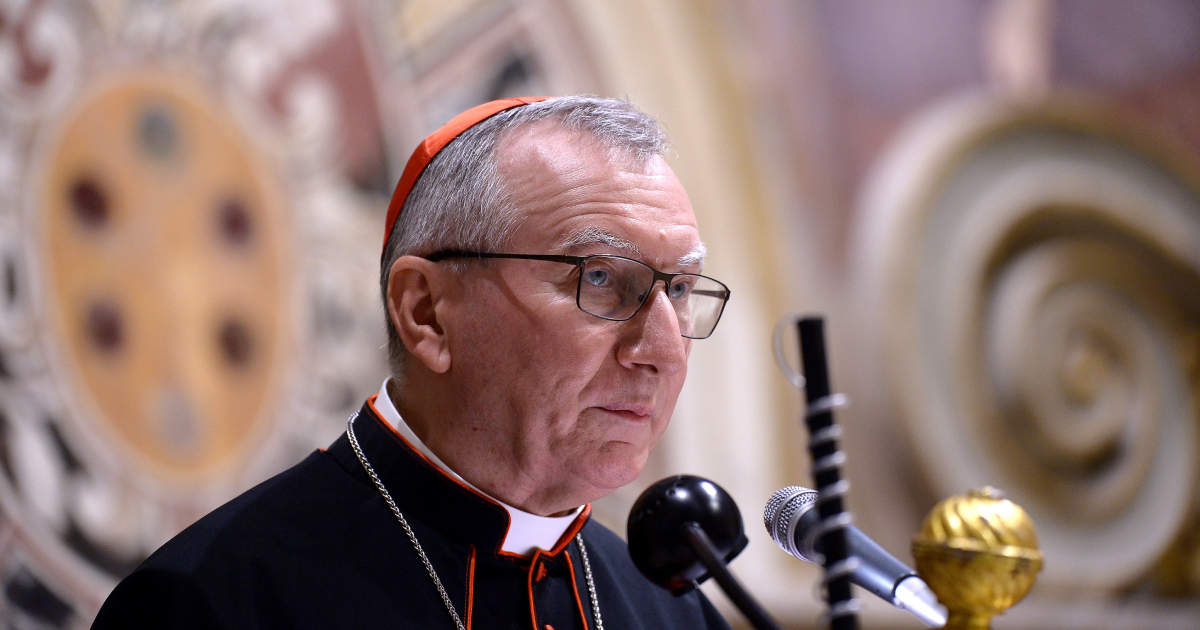


Cardinal Pietro Parolin has acknowledged the depth of division surrounding the Traditional Latin Mass, warning that the Church must avoid allowing the liturgy to become a source of conflict.
Speaking candidly to the Catholic Herald, the Secretary of State aligned himself with the Pope’s assessment of the situation, saying: “I think we all share this, let’s say, assessment that the Pope gives.” He continued: “In the sense that the liturgy must not become a source of conflict and division among us.” His remarks reflect a growing awareness within the Roman Curia that tensions over the older form of the Roman Rite remain unresolved despite successive interventions.
Cardinal Parolin indicated that a constructive path forward will require balance rather than escalation. “It will be necessary to find the formula … that can meet legitimate needs,” he said, suggesting that accommodation remains possible. Crucially, he added that such a resolution must come “without turning the liturgy into a battlefield”.
This follows Pope Leo writing through the Secretary of State, Cardinal Pietro Parolin, signalling a notably conciliatory tone on the question of the Traditional Latin Mass in a message to the French bishops ahead of their plenary assembly taking place from March 24 to 27.
In the message, dated March 18, the Pope said he was “particularly attentive” to the issue of the liturgy, acknowledging that “a painful wound concerning the celebration of Mass, the very sacrament of unity, continues to open in the Church”. He called for “a new way of looking at one another, with a greater understanding of each other’s sensitivities”, adding that such an approach could allow Catholics “enriched by their diversity” to “welcome one another in charity and the unity of faith”.
The letter explicitly addressed the growth of communities attached to the older form of the Roman Rite and encouraged the bishops to consider “concrete solutions that will allow for the generous inclusion of those sincerely attached” to it.
While the Pope did not suggest any immediate change to existing norms, his appeal for inclusion and mutual understanding indicates a desire to ease tensions that have persisted in dioceses across France.
The Pope also encouraged the bishops in their efforts to defend the Catholic character of education amid what he described as “growing hostility towards Catholic institutions and challenges to their distinctive character”. Without explicit reference to particular policies, the letter warned that Catholic education “without references to Jesus Christ would lose its very purpose”.
Cardinal Parolin’s intervention is non-committal, but it appears designed to temper the rhetoric that has accompanied restrictions since Pope Francis’s motu proprio Traditionis Custodes. The emphasis on “legitimate needs” points to a recognition of continued attachment to the older liturgy and his remarks, read as a whole, signal a shift in tone from the Francis era attitude to the Traditional Latin Mass.