

The Latin Patriarch of Jerusalem has called for new political leadership in the Middle East, saying that it is a necessary step in implementing lasting peace.
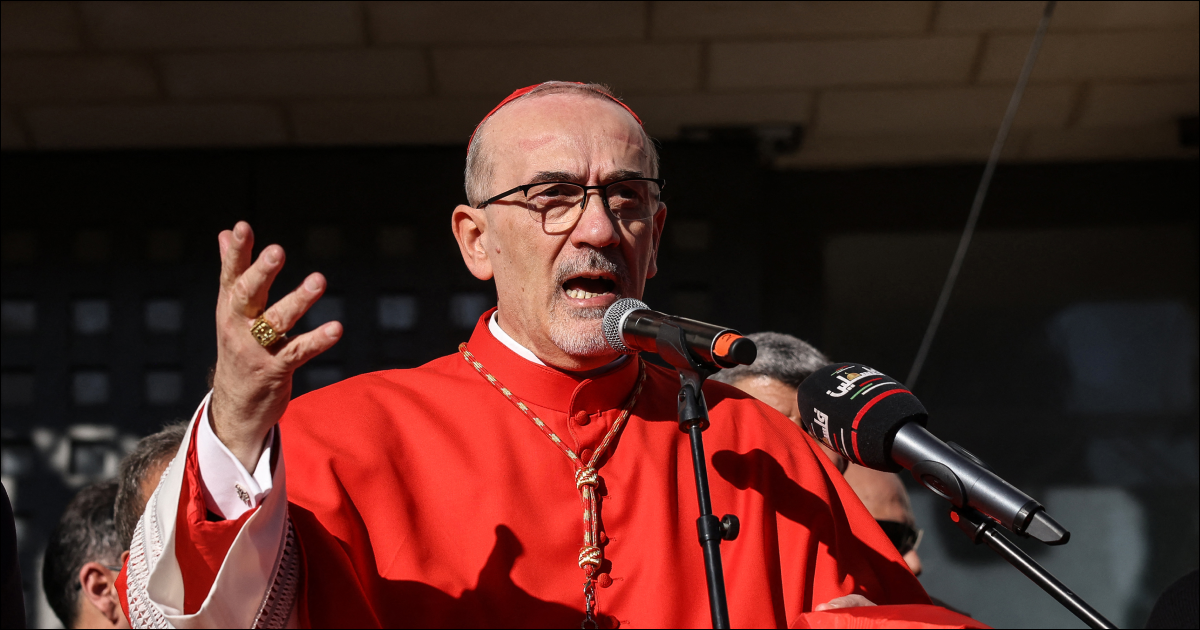
Few cardinals have risen to prominence quite as rapidly as Cardinal Pierbattista Pizzaballa, the Latin Patriarch of Jerusalem who famously offered himself in exchange for hostages following the October 7 attack in 2023. A Franciscan who has now spent around three decades in the Holy Land, Pizaballa’s knowledge of the region is widely respected and his leadership similarly so. Not for nothing was his name bandied around as papabile prior to the 2025 conclave.
Interviewed by the Vatican’s in-house news portal this week, Pizzaballa commented on the yet elusive peace in the Middle East, highlighting the disparity between promises and reality.
“Everyone is awaiting the elections as if they were a solution to all problems, but in reality, the problems in the Middle East are the kind that will take a long time to resolve,” he said. “We need new faces, new leaders. That is for the voters to decide.” Elections are due to be held in Israel on October 27 this year, with voters heading to the polling stations to decide on the members of the Knesset and the potential successor to current Prime Minister Benjamin Netanyahu.
Pizzaballa has been unafraid to critique both sides in the conflict which has raged with a new intensity between Israel and Hamas since October 2023. In particular, he has often highlighted his concerns about Israeli officials preventing Catholics from accessing churches in Jerusalem, and has previously opined that lasting resolution to the Holy Land conflict would remain elusive without a change in political leadership across the board.
Such change is desperately needed, Pizzaballa said this week. Amongst all groups in the region “there is great weariness with this back-and-forth, with these announcements that are then contradicted by reality. It’s become daily news.”
Distrust of politicians is running high due to the inability to reach lasting agreements for peace, he said. Even when a positive development takes place, “people no longer believe it because they’re no longer used to seeing such things.”
For the Italian cardinal, this lack of stability and certainty, and the continuation of the “ambiguous situation”, is a key issue. He critiqued the prevalence of instances “where people talk about solutions without actually creating real ones.”
“That’s what worries me,” lamented Pizzaballa, “because it fosters an increasingly cynical attitude of distrust within people’s hearts, which is the greatest danger I see right now among the population.”
However the Patriarch has always paired his realism with hope, often pointing to positive moves in the region when few have been able to do so. He remains impressed and hopeful due to the example of volunteers, both young and old, who have “put themselves on the line to do something, to connect with others, to stand up for what’s right”.
Such individuals “are still the antibodies that protect the entire organism from being infected by this virus of violence,” he commented.
Pizzaballa also pointed to the priority of investing in the youth of the region, saying that “young people are the hope. That is why we need to look ahead with confidence.” He urged that greater attention be given to the youth, so that they “can build and propose something different from what we have handed down to them.”
The cardinal’s interview was given just ahead of Pope Leo’s visit to Assisi to meet with young people gathered at the hillside town for a few days of formation centred upon Franciscan spirituality. During his speeches Leo urged the crowds to focus on rejecting the spread of war and “injustice”, and instead to prioritise peace, poverty and an authentic “civilisation of love”. The Pope also noted that “increasingly, Christians will be called to become artisans of peace within societies that are tempted to place religion at the service of competing identities.”
Asked about whether Pope Leo might visit the Holy Land, Pizzaballa said it was simply a matter of choosing the right time.
“The Pope is very close to us and is very well informed about what is happening, which is very important. He is present,” assured Pizzaballa. “As for a papal visit to the Holy Land, it will certainly happen sooner or later, but it must take place in a climate of serenity.”
Michael Haynes is an English journalist in the Holy See Press Corps. He serves as Vatican Correspondent for the Catholic Herald, while readers can follow him at Per Mariam and on X @MLJHaynes.