July 18, 2026

Cardinal Sarah: Pachamama was proof that ‘paganism has entered the Church’

Michael Haynes
More
Related
Min read
share

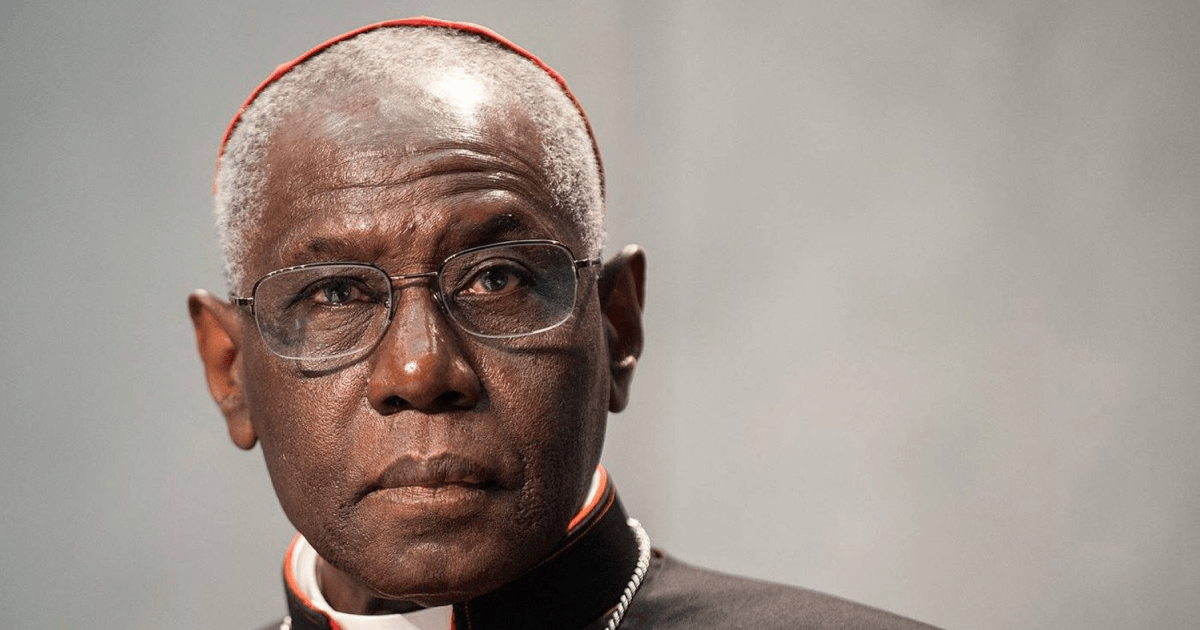
Two key moments from Pope Francis’ pontificate are proof that “sheer paganism has entered the Church”, according to Robert Cardinal Sarah.  

“They brought an Inca idol, and this idol entered the Basilica of Saint Peter,” lamented Cdl. Sarah when reflecting upon the Amazon Synod of 2019.

“We carried it in procession from the Basilica to the Paul VI Hall, and it remained in front of us the whole time during the Synod,” he recalled, during a lengthy interview with Vaticanist Diane Montagna. “The Pachamama remained there like that throughout the whole Synod.”
“When we held the Amazon Synod, I asked myself, doesn’t Latin America have a Madonna venerated in every country of Latin America? The Guadalupe… Why did they not bring Guadalupe to preside over the Synod on the Amazon?”

For Sarah, such a moment was entirely avoidable and scandalous, especially when contrasted with the example given by his Catholic forefathers in his native Guinea. Noting how the Christian missionaries to Africa ordered converts to burn their former idols, Sarah recounted that a Guinean convert was killed by his own family for abandoning his pagan way of life. “His family told him, ‘No, you mustn’t abandon them [idols].’ But he said, ‘I am a Christian,’ and they killed him.”  

“And now we bring the Pachamama into the Basilica?”

The infamous Pachamama incident at the Vatican during the 2019 Synod remains one of the most controversial days of Pope Francis’ pontificate. On 4 October, the Pope participated in a “highly symbolic tree-planting ceremony” in the Vatican Gardens, during which an indigenous Amazon group prostate before two statues of the pagan goddess Pachamama.  

Francis watched the ceremony and then blessed the two statues of the Pachamama – a figure revered in pagan Incan tribes as being a goddess of fertility.  

Pachamama statues were then placed in the church of Santa Maria in Traspontina, situated in the shadow of St. Peter’s Basilica, until Alexander Tschugguel famously seized the statues and threw them into the River Tiber.

Following this, Francis demonstrated himself more than a simple bystander when it came to the Pachamama controversy. He apologised “as bishop of the diocese” stating that “I ask pardon of the people who were offended by this act” – referencing the throwing of the statues in the river.

He welcomed the reported retrieval of the Pachamamas by the police and hinted at their possible display during the Synod’s closing Mass.  

Amidst the international controversy over the display of the statues a number of prelates called for reparation. “An idol was also introduced into St. Peter’s Basilica – the figure of a demonic force,” commented Cardinal Raymond Burke at the time. “There is a need for reparation and prayers, in order to pray that the evil forces that have entered with this idol will be defeated by the grace of God, by Christ who wants St. Peter’s Basilica to be cleansed of the sacrilegious act which was carried out during the synod.”

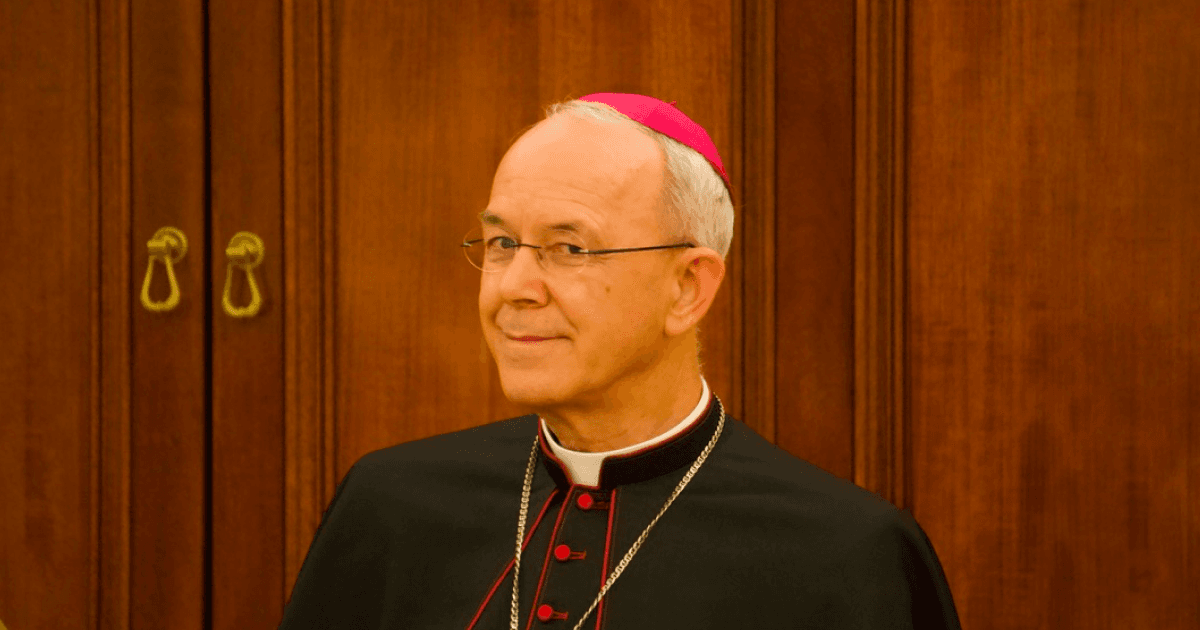
Similarly outspoken was Bishop Athanasius Schneider, who praised Tschugguel’s actions, suggesting that it “will be recorded in the annals of Church history as a heroic act which brought glory to the Christian name, while the acts of high-ranking churchmen, on the contrary, who defiled the Christian name in Rome, will go down in history as cowardly and treacherous acts of ambiguity and syncretism.”

But this was just one of two incidents which Cdl. Sarah identified during his recent interview was proof of the spread of paganism in the Catholic Church. The second was during one of Francis’ last international voyages.  

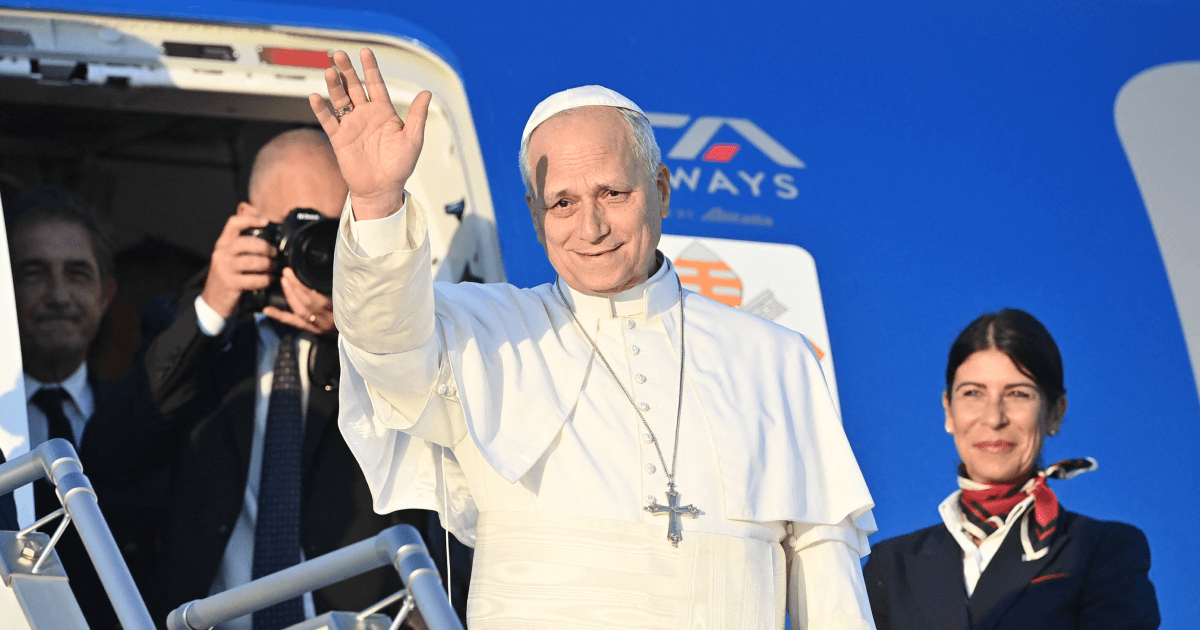
“When Pope Francis went to Singapore, he said that all religions are equal, that they are like paths, like languages, like different dialects. They all lead to God.”  

Echoing the critique expressed by many at the time, Sarah questioned: “But then what is the point of the Incarnation? What is the point of the Incarnation? What is the point of Christ’s love, if all religions can lead to God?”

If Francis’ statement is correct, then – said Sarah – that would mean that "‘Christ is lying when he says ‘no one goes to the Father except through Me, I am the door.’ That is, sheer paganism has entered the Church.”

Francis’ statement was delivered at an inter-religious meeting of young people in Singapore, during the closing part of his Far-East voyage in September 2024. It came on the back of a number of ecumenical moments forming a key part of the voyage, and against the ecumenical focus which Francis gave to his pontificate, often causing controversy due to lack of clarity regarding the preeminent place of the Catholic Faith.  

His actions in Singapore were highlighted as being juxtaposed to the Church’s traditional teaching, summarised succinctly in the Baltimore Catechism which reads: “The one true Church established by Christ is the Catholic Church.” {Q. 152}

Though ecumenical ventures have proliferated in recent decades, and consequently the need of belonging to the Catholic Church has become less spoken about, the Vatican formerly issued clear guidelines for ecumenical ventures. A1949 decree instructed that bishops involved in ecumenism must always outline the necessity of becoming Catholic:  

By no means is it permitted to pass over in silence or to veil in ambiguous terms the Catholic truth regarding the nature and way of justification, the constitution of the Church, the primacy of jurisdiction of the Roman Pontiff, and the only true union by the return of the dissidents to the one true Church of Christ.

Though the two incidents Sarah highlights caused immense controversy at the time, there has been no formal clarification or further statement on the events after the matter. They have, however, been cited by theologians who have called for corrective measures to be made following Francis’ pontificate. So also were they referenced by the Society of Saint Pius X as examples of the “state of necessity” which they cited in justifying the 1 July episcopal consecrations.

Michael Haynes is an English journalist in the Holy See Press Corps. He serves as Vatican Correspondent for the Catholic Herald, while readers can follow him at Per Mariam and on X @MLJHaynes.

Continue reading with a free account

Create a free account to read up to five articles each month
Create free account

You have # free articles remaining this month.

Subscribe to get unlimited access.
Sign up

subscribe to the catholic herald today

Our best content is exclusively available to our subscribers. Subscribe today and gain instant access to expert analysis, in-depth articles, and thought-provoking insights—anytime, anywhere. Don’t miss out on the conversations that matter most.
Subscribe