
April 1, 2026

Cardinal Sarah warns Church ‘is nothing without God’

The Catholic Herald
More
Related
Min read
share

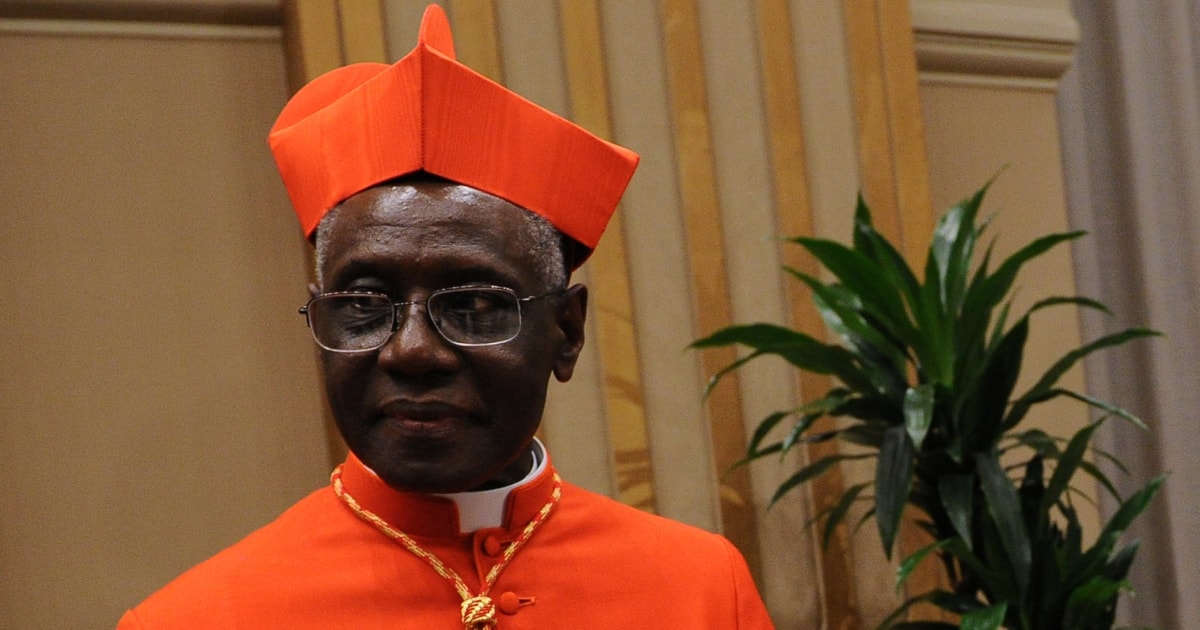
Cardinal Robert Sarah has said that the Catholic Church “is nothing without God” and warned that turning the liturgy into a site of conflict risks undermining its central mission.

Speaking to CNews, the former prefect of the Congregation for Divine Worship avoided naming individuals when addressing current difficulties within the Church, instead referring broadly to “we” and “people”, while attributing tensions to wider cultural trends such as relativism and a perceived tendency towards rupture and innovation.
“The Church is nothing without God,” Cardinal Sarah said. “God must truly be placed at the centre of our existence, at the centre of our life, at the centre of our concerns.” He added: “If we detach the Church from this mission … the Church is useless.”

The cardinal insisted that the Church cannot be reduced to a political, humanitarian or sociological body, maintaining that its essential purpose is to save souls and to nourish them through the sacraments.

Addressing the question of the liturgy, he said it had increasingly become a source of division. Referring briefly to Pope Leo XIV, he said: “I understand that the Pope is concerned about this liturgical unity. It is not a place for battle. We have made it a place of battle, of combat. That is how we destroy the liturgy.”

He continued: “Benedict XVI said: the crisis of the Church today comes from the crisis of the liturgy. And so, I understand that Pope Leo XIV is concerned about this liturgy.”

The remarks come amid continuing discussion over the place of the Traditional Latin Mass. Earlier in March, the Pope, writing through the Secretary of State, Cardinal Pietro Parolin, urged the bishops of France to seek “generous” pastoral solutions for Catholics attached to the older form of the Roman rite, in a message sent ahead of their plenary assembly held from March 24 to 27.

Cardinal Parolin has also acknowledged the tensions surrounding the issue, stating to the Catholic Herald: “I think we all share this, this, let’s say, assessment that the Pope gives, right? In the sense that the liturgy must not become a source of conflict and division among us.”

He added: “It will be necessary to find the formula, well, this I believe, it will be necessary to find the formula that can meet legitimate needs. But I believe that, well, this can happen without turning the liturgy into a battlefield.”

In his interview, Cardinal Sarah returned repeatedly to the idea that the Church is bound to what it has received, rejecting that its essential elements can be reshaped. “We must pass on what we have received,” he said. “We must invent nothing. We are heirs.”

He warned that attempts to create what he described as a “new Church” or a “new priesthood” would depart from the Church’s identity. “We want to invent a new Church, or a new priesthood, then we are no longer in the Church of Christ,” he said.

Turning to the interpretation of the Second Vatican Council, Cardinal Sarah said that the Council “never intended a rupture with the past” but that it “has been interpreted as a total rupture”, without specifying by whom.

His comments follow recent developments involving the Society of St Pius X. The Society has rejected a proposal from the Holy See for renewed doctrinal talks under the proposed conditions and has declined to suspend episcopal consecrations scheduled for July 1.

In February, writing in the French weekly Le Journal du Dimanche, Cardinal Sarah said he had learned of the Society’s intention to consecrate bishops and viewed the development with “deep concern and profound sadness”. He warned that proceeding without authorisation from the Holy See would constitute “a grave act of disobedience” and risk damaging the unity of the Church.

In the CNews interview, the cardinal also addressed questions of cultural adaptation within the Church, cautioning against approaches that would fragment its universality. “People want an Amazonian liturgy, an African liturgy … but then where do we go to preserve the universality of the Church?” he said.

He further rejected the idea that all religions are equivalent, stating: “People say today that all religions are equal … that is not true.” He added that such claims represent “a contradiction of the Incarnation”.

Cardinal Sarah has long been associated with conservative positions within the Church. At 79, turning 80 in June of the same year, he took part in the conclave that elected Pope Leo. In March 2019 he said: “It is a false exegesis to use the word of God to promote migration”, and criticised both “gender ideology” and the Islamic State (ISIS) as “two radicalisations”.

His comments on the liturgy fit within the broader position he has set, maintaining Catholic teaching while avoiding direct criticism of the hierarchy or support for ultra-traditionalist groups such as the SSPX.

Cardinal Robert Sarah has said that the Catholic Church “is nothing without God” and warned that turning the liturgy into a site of conflict risks undermining its central mission.

Speaking to CNews, the former prefect of the Congregation for Divine Worship avoided naming individuals when addressing current difficulties within the Church, instead referring broadly to “we” and “people”, while attributing tensions to wider cultural trends such as relativism and a perceived tendency towards rupture and innovation.

“The Church is nothing without God,” Cardinal Sarah said. “God must truly be placed at the centre of our existence, at the centre of our life, at the centre of our concerns.” He added: “If we detach the Church from this mission … the Church is useless.”

The cardinal insisted that the Church cannot be reduced to a political, humanitarian or sociological body, maintaining that its essential purpose is to save souls and to nourish them through the sacraments.

Addressing the question of the liturgy, he said it had increasingly become a source of division. Referring briefly to Pope Leo XIV, he said: “I understand that the Pope is concerned about this liturgical unity. It is not a place for battle. We have made it a place of battle, of combat. That is how we destroy the liturgy.”

He continued: “Benedict XVI said: the crisis of the Church today comes from the crisis of the liturgy. And so, I understand that Pope Leo XIV is concerned about this liturgy.”

The remarks come amid continuing discussion over the place of the Traditional Latin Mass. Earlier in March, the Pope, writing through the Secretary of State, Cardinal Pietro Parolin, urged the bishops of France to seek “generous” pastoral solutions for Catholics attached to the older form of the Roman rite, in a message sent ahead of their plenary assembly held from March 24 to 27.

Cardinal Parolin has also acknowledged the tensions surrounding the issue, stating to the Catholic Herald: “I think we all share this, this, let’s say, assessment that the Pope gives, right? In the sense that the liturgy must not become a source of conflict and division among us.”

He added: “It will be necessary to find the formula, well, this I believe, it will be necessary to find the formula that can meet legitimate needs. But I believe that, well, this can happen without turning the liturgy into a battlefield.”

In his interview, Cardinal Sarah returned repeatedly to the idea that the Church is bound to what it has received, rejecting that its essential elements can be reshaped. “We must pass on what we have received,” he said. “We must invent nothing. We are heirs.”

He warned that attempts to create what he described as a “new Church” or a “new priesthood” would depart from the Church’s identity. “We want to invent a new Church, or a new priesthood, then we are no longer in the Church of Christ,” he said.

Turning to the interpretation of the Second Vatican Council, Cardinal Sarah said that the Council “never intended a rupture with the past” but that it “has been interpreted as a total rupture”, without specifying by whom.

His comments follow recent developments involving the Society of St Pius X. The Society has rejected a proposal from the Holy See for renewed doctrinal talks under the proposed conditions and has declined to suspend episcopal consecrations scheduled for July 1.

In February, writing in the French weekly Le Journal du Dimanche, Cardinal Sarah said he had learned of the Society’s intention to consecrate bishops and viewed the development with “deep concern and profound sadness”. He warned that proceeding without authorisation from the Holy See would constitute “a grave act of disobedience” and risk damaging the unity of the Church.

In the CNews interview, the cardinal also addressed questions of cultural adaptation within the Church, cautioning against approaches that would fragment its universality. “People want an Amazonian liturgy, an African liturgy … but then where do we go to preserve the universality of the Church?” he said.

He further rejected the idea that all religions are equivalent, stating: “People say today that all religions are equal … that is not true.” He added that such claims represent “a contradiction of the Incarnation”.

Cardinal Sarah has long been associated with conservative positions within the Church. At 79, turning 80 in June of the same year, he took part in the conclave that elected Pope Leo. In March 2019 he said: “It is a false exegesis to use the word of God to promote migration”, and criticised both “gender ideology” and the Islamic State (ISIS) as “two radicalisations”.

His comments on the liturgy fit within the broader position he has set, maintaining Catholic teaching while avoiding direct criticism of the hierarchy or support for ultra-traditionalist groups such as the SSPX.

subscribe to
the catholic herald

Continue reading your article with a subscription.
Read 5 articles with our free plan.
Subscribe

subscribe to the catholic herald today

Our best content is exclusively available to our subscribers. Subscribe today and gain instant access to expert analysis, in-depth articles, and thought-provoking insights—anytime, anywhere. Don’t miss out on the conversations that matter most.
Subscribe