




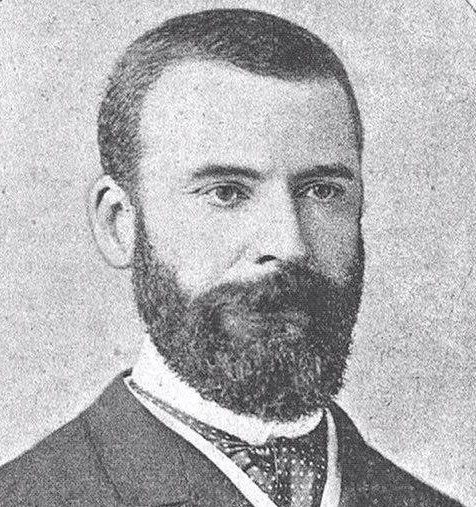
Bertram Ashburnham, 5th Earl of Ashburnham (1840-1913) was a most remarkable peer and convert in an era that produced a great many remarkable peers and converts. Educated at Westminster School and in France, he was heir to an ancient pedigree and extensive estates in England and Wales. Prominent in court circles when young, he was part of the delegation that brought Franz Josef, Emperor of Austria, the Order of the Garter in 1867. He was received into the Church in 1872 and inherited his title at the death of his father six years later. For British Catholics of either or both noble blood and financial means, the early 19th century produced a number of political areas of concern. The Continent offered a world of frustration: the older lines of the dynasties of France, Spain, and Portugal had fought against Liberals not only for their rights of succession, but for those of the Church and local liberties – and been defeated. In the 1860s and early 70s, centralised states in Germany and Italy were established, at the expense of Catholic sovereigns – in the latter case including the Pope himself. Closer to home was the question of Irish Home Rule. After his conversion, Lord Ashburnham threw himself into supporting all of these causes, becoming head of the British Home Rule Association, and chief British agent for the Spanish Carlists. But his concern with such foreign manifestations of traditional Catholic Monarchy led him to wonder if Jacobitism – a similar movement to the groups with which he was familiar – could be revived. The Earl circulated a pamphlet to that end, and in light of the response, on June10, 1886, the Order of the White Rose – and with it, the Neo-Jacobite Revival – was begun. The Order and its various offshoots attracted an extremely varied crowd: Anglo-Catholic devotees of Charles I, Catholics wanting more civil rights, Celtic Nationalists and various noted writers and artists. Even such American notables as Ralph Adams Cram and Isabella Stewart Gardner joined. Today, the Royal Stuart Society – a sort of successor to the Order of the White Rose and its spinoffs – soldiers on. The most notable public reminder of the Earl’s efforts is the wreath-laying at Charles I’s statue in Trafalgar Square. But perhaps, today, the ideas of the Earl and his collaborators should be re-examined: effective Monarchy, class collaboration, and subsidiarity.
6:23 AM
Catholic Action: A tireless idealist from an era of great converts
Bertram Ashburnham, 5th Earl of Ashburnham (1840-1913) was received into the Church in 1872 and inherited his title at the death of his father six years later.
Charles Coulombe

2 min read



Already a subscriber? Sign in
5freearticles every month
Continue reading with a free account. No card needed.
- Five free articles every thirty days, on any device you sign in on
- The Catholic Herald newsletter, every morning
- Subscribe whenever you like for everything: every article and the magazine
Related articles
 Newsroom
Church leaders urge Drumcree dialogue: ‘Too much is at stake’
The Catholic and Church of Ireland Archbishops of Armagh have urged a renewed commitment to peace and reconciliation amid the Drumcree stand-off
Corrie Douglas-Young Newsroom
Thousands of Irish children to join global Rosary campaign
Corrie Douglas-Young Newsroom
TikTok priest urges young people to stand with persecuted Christians
Nathalie Raffray Newsroom
Baby born at 25 weeks reunites with neonatologist two years after leaving hospital
The Catholic Herald Newsroom
Joe Biden honoured by Planned Parenthood after defending abortion rights
Christine Rousselle
subscribe to the catholic herald today
Our best content is exclusively available to our subscribers. Subscribe today and gain instant access to expert analysis, in-depth articles, and thought-provoking insights—anytime, anywhere. Don’t miss out on the conversations that matter most.
Subscribe



