

Catholic healthcare providers in the Archdiocese of Chicago will not be subject to the state’s new assisted suicide law after a federal judge issued a temporary restraining order on Friday protecting the groups while their lawsuit is in court.
The temporary restraining order came just one day before the law came into force in Illinois on September 12, and about a week and a half after Cardinal Blase Cupich, the Carmelite Sisters for the Aged and Infirm, the Little Sisters of the Poor and pharmacist Luke Vander Bleek filed suit against the state.
“I welcome this decision of the court that stays the enforcement of the provisions of the Illinois End-of-Life Options for Terminally Ill Patients Act (EOLOA) that require healthcare providers, against their conscience, to participate in assisted suicide by compelling them to inform patients of the ‘benefits’ of suicide and their ‘right’ to kill themselves, and also help them qualify for lethal drugs, or pass them along to someone willing to help them obtain those drugs,” said a statement from Cardinal Cupich published by Becket, the law firm representing the plaintiffs.
He continued: “These obligations violate core constitutional protections of freedom of speech and religion. The law with these provisions must be struck down permanently. To be clear, the Church’s objection to this statute is not an attempt to impose Catholic teaching on non-Catholics; it is an effort to stop the State from compelling Catholic healthcare providers to violate their conscience.”
With the temporary restraining order, the healthcare providers will not have to refer people for assisted suicide, nor will they be prohibited from discouraging someone from pursuing assisted suicide or ending their life.
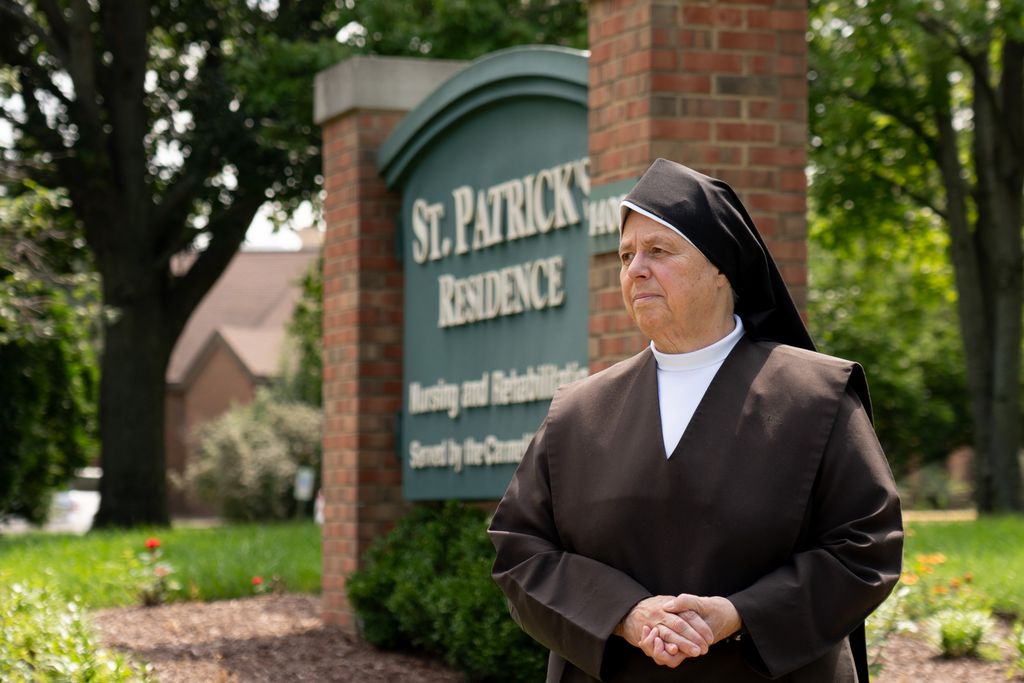
“This agreement brings real peace of mind to our Sisters, our residents and their families. It allows us to continue our vocation of showing Christ’s unbounded love to those who need it most – a love that endures in every circumstance and through every hardship,” said Mother Mary Rose Heery, O. Carm., Prioress General of the Carmelite Sisters for the Aged and Infirm, adding: “We’re grateful that nothing about the care we offer them will have to change.”
Luke Vander Bleek, a pharmacist and owner of Fitzgerald Pharmacy in Morrison, Illinois, will now not have to dispense prescriptions for assisted suicide.
“All I want is to serve my neighbours as a pharmacist while remaining faithful to my Catholic beliefs,” he said to Becket. “This agreement means I can keep doing exactly that when the new law takes effect, without being forced to fill prescriptions for suicide drugs.”
While the law exempts providers from actually providing lethal medications for assisted suicide, the suit alleges that the law still requires cooperation with the act – a violation of their Catholic religious beliefs. The EOLOA requires providers to allow their employees to promote assisted suicide or assist with off-site assisted suicides, and under the law these facilities cannot discipline or fire employees who are promoting or assisting with patient suicide, even if they are acting in violation of their employer’s guidelines, mission or identity.
The law further prohibits medical professionals from discouraging people from taking their own lives via assisted suicide, terming this “misinformation to obstruct access”, and goes as far as to say that “medical aid in dying” is not “suicide or assisted suicide”.
Failure to comply with the law is subject to fines, licence revocation or criminal charges.
This is the second temporary restraining order issued related to the EOLOA. In August, a court agreed to hold off on enforcing the law against a group of religious healthcare providers from the Diocese of Springfield, Illinois.