

A GB News correspondent has claimed that there were no Catholics in the United States until 1801, prompting backlash. Dougie Beattie, Northern Ireland reporter for the channel, was responding to US President Donald Trump’s remarks that he would “love to see” a united Ireland.
Speaking beside the Irish Taoiseach Micheál Martin during his visit to Dublin, Trump said that he did not “want to cause any problems”, but that he wished to see the Republic of Ireland and Northern Ireland unified.
“I think it would be a great feather in everybody’s cap if that happened. You know what? The way I look at it, it’s going to happen eventually. It may as well happen now,” he said.
Beattie said he believed the Irish Government had “talked blarney” to Trump that Presbyterian Ulster Scots involved in the American Revolution were Irishmen, stating that there were “never Catholics in America until 1801” following the Louisiana Purchase, which occurred in 1803. Beattie said that Trump would “need to” know the history of the United States if he was going to make comments on Irish unification.
Commentators online pointed to the history of Catholic involvement in the founding of the United States as well as the early Church presence. Fr John Hogan OCDS, writing on X, noted that Catholics had founded the colony of Maryland in 1634, fleeing religious persecution in England.
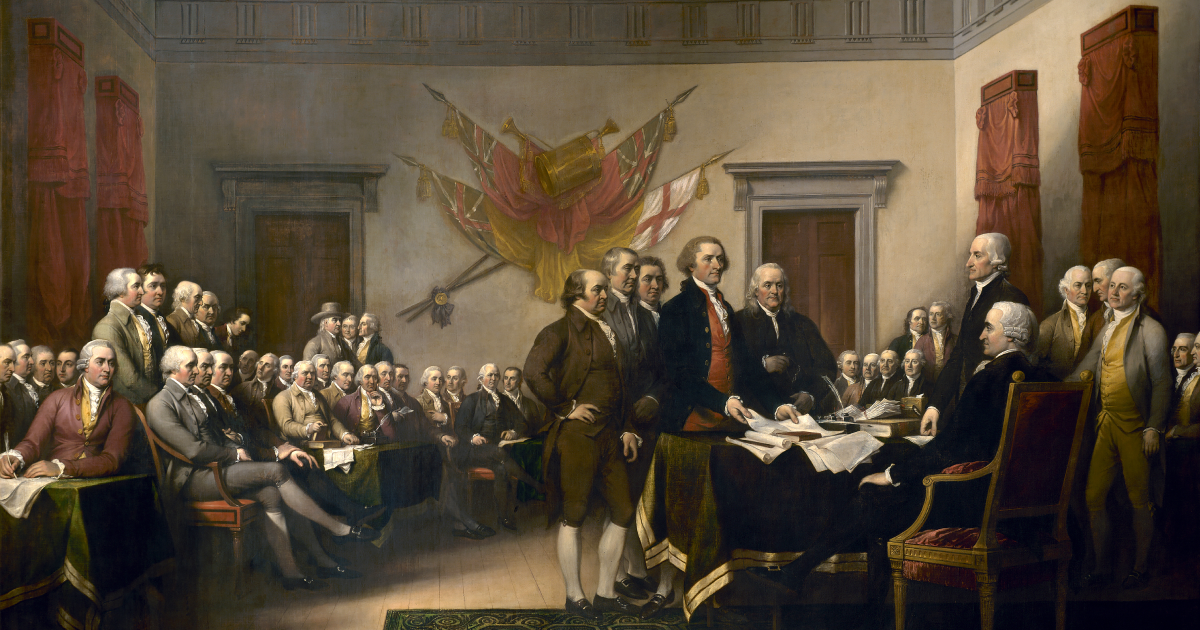
“Among those who signed the Declaration of Independence in 1776 was Charles Carroll, a Catholic. The first Catholic diocese in the US was established in Baltimore in 1789. What would become the first Catholic university in the US was established in Georgetown in 1789,” he wrote.
“And that’s just the original colonies. There is a significant Catholic presence and history in the rest of what is now the US long before 1801.”
Speaking on GB News, Beattie had questioned the economic feasibility of Irish unification, stating that 70 per cent of jobs in Northern Ireland were in the public sector. “Where would they all go?” he said. “They wouldn’t have two departments of education, two departments of health, et cetera.”
However, a February 2026 report by the Northern Ireland Statistics and Research Agency (NISRA) put that number at 27 per cent.
Trump’s comments came two weeks after UK Prime Minister Andy Burnham had said that a referendum on a united Ireland was one of the issues which would be “off the table”.
"I think we’ve got to focus on bringing people together as best we can, and I think we’ve lived through a decade where there’s been a referendum on Brexit, we had Scottish independence just before it,” Burnham said.
"What we find is the rifts that come from those situations take a long time to heal, and it sets you right back and you can’t focus on what’s right in front of us here and now, the cost-of-living pressures that are hurting people in Northern Ireland, the need to get that budget set so that public services can function as they should.
Burnham said that the 2016 Brexit referendum had contributed to ongoing divisions, and that he believed there was a need to “fix the things right in front of us in the here and now”.