


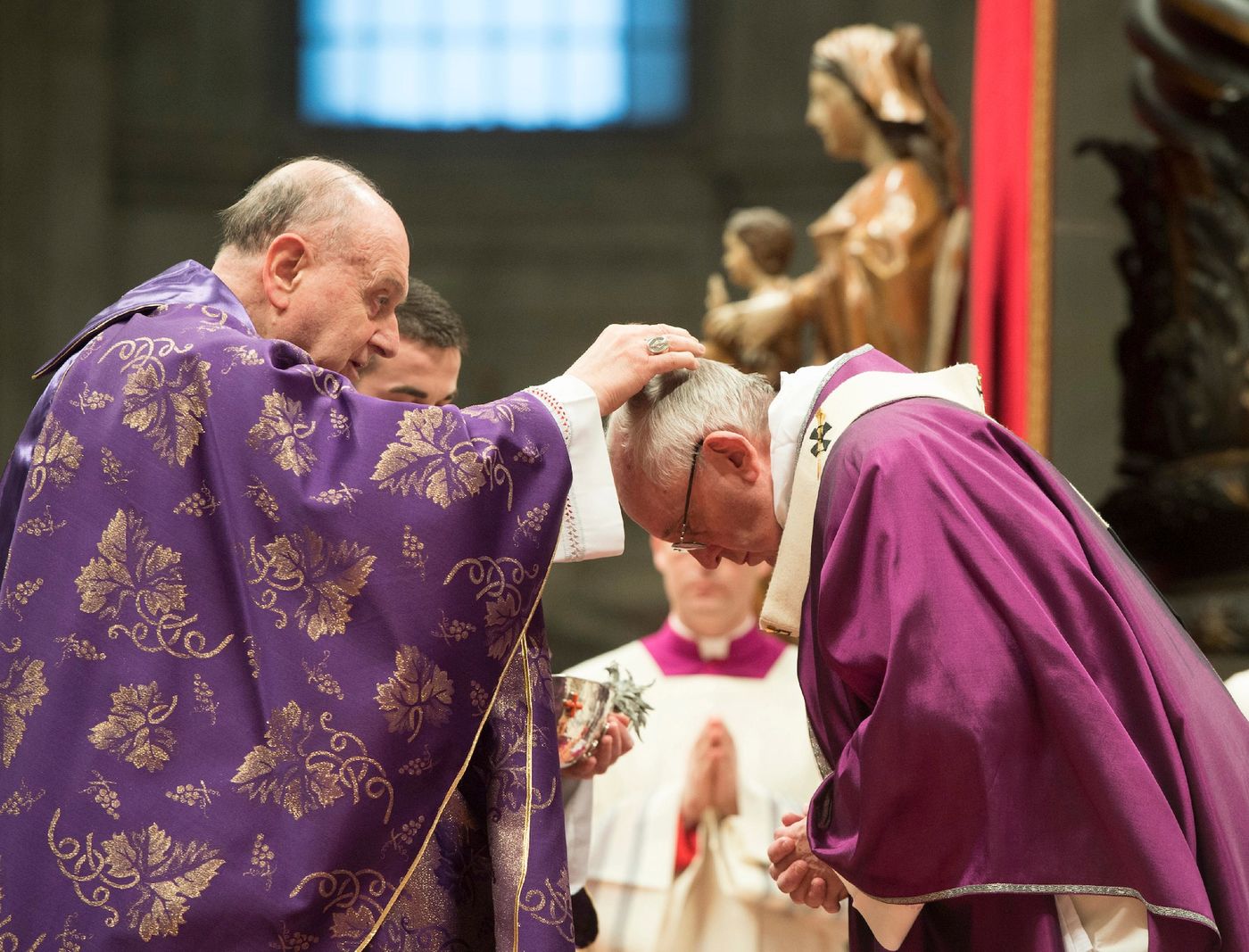
This is the day the Church puts on ashes to make the beginning of our great season of penitence. Traditionally, this sign of penitence is heralded with the proclamation: Memento, homo, quia pulvis est, et in pulverem reverteris ("Remember, O man, that thou art dust, and unto dust thou shalt return."). Sober words for a sober season.TS Eliot’s Ash Wednesday is sometimes called his “conversion poem”--it was written a few years after Eliot joined the Anglican communion--and sometimes read as a poem of renunciation, a paean to Christian asceticism. Still others see in the verse more of Bradley’s Idealism--on which Eliot wrote his doctoral dissertation--than Christian tradition. Eliot himself was notoriously unhelpful in clarifying his words. When asked what he meant by the line “Lady, three white leopards sat under a juniper-tree” he replied “I meant ‘Lady, three white leopards sat under a juniper-tree.’” As Eliot recklessly left himself open to every interpretation under the sun, I have long aspired to as add my own to the pile, and someday, when all my other responsibilities and projects magically resolve themselves, I shall write a book (or at the very least a substantial essay) on Ash Wednesday as a work of ecclesiology, specifically a meditation on the mediacy of the Church in conversion and penitence. This is what the title points to. No mention of Ash Wednesday itself occurs in the poem itself, but Ash Wednesday is so-called with respect to the liturgy of the Church, the imposition of ashes. The title points the way, and echoes the pronouncement that we are dust unto dust. Perhaps the most well known lines from Ash Wednesday, apart from “Lady, three white leopards sat under a juniper tree,” are the opening:
7:45 AM
Ash Wednesday: ...et in pulverem reverteris.
this is the day the church puts on ashes to make the beginning of our great season of penitence. traditionally, this sign of penitence is he...
Victoria Seed

3 min read



Already a subscriber? Sign in
5freearticles every month
Continue reading with a free account. No card needed.
- Five free articles every thirty days, on any device you sign in on
- The Catholic Herald newsletter, every morning
- Subscribe whenever you like for everything: every article and the magazine

subscribe to the catholic herald today
Our best content is exclusively available to our subscribers. Subscribe today and gain instant access to expert analysis, in-depth articles, and thought-provoking insights—anytime, anywhere. Don’t miss out on the conversations that matter most.
Subscribe



