April 6, 2026

Angels in the Sistine Chapel

Edward Barrett-Shortt
More
Related
Min read
share

Perhaps against my better judgement, I decided to attend Mass in St Peter's shortly before making my way to the concert. It has always been, in my experience, a somewhat frustrating affair: practising Catholics and gormless tourists alike pressed together in one immense machine of crowd control. Mass heard, I was briskly moved along; post-Mass prayer is seemingly something to be conducted against the grain of the place. From my kneeler I was shepherded onwards, out into the current and towards the Bronze Doors.

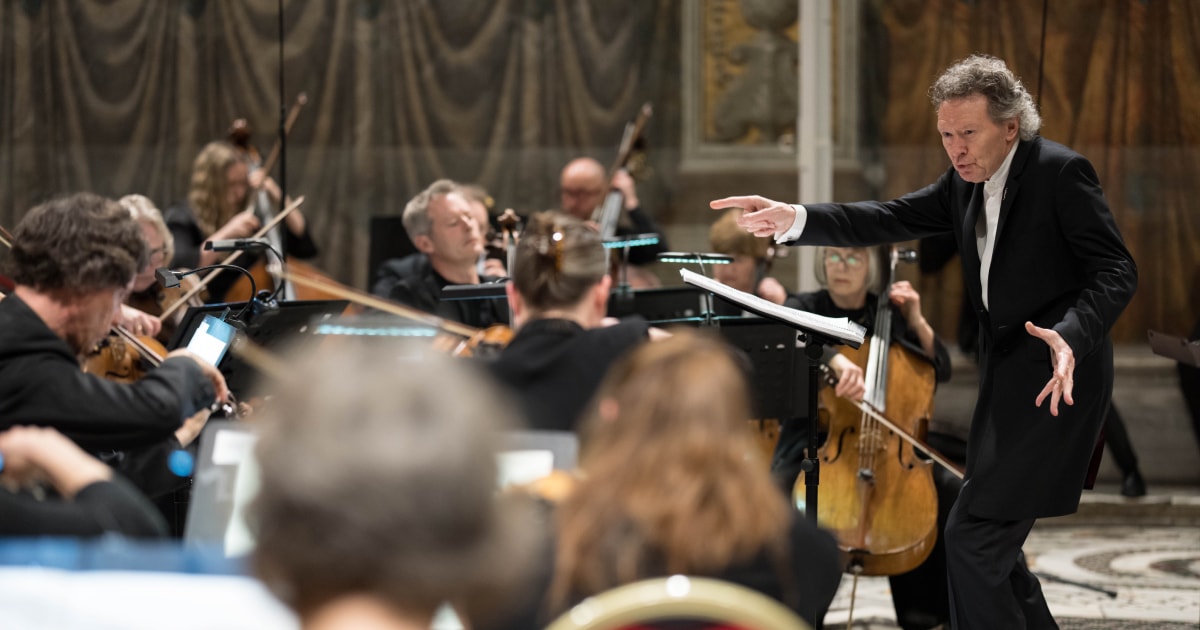
From there, the mood changed. I had been kindly invited to the world premiere of James MacMillan’s Angels Unawares, presented by the Genesis Foundation with Vatican permission. Organisers described it as the first-ever world premiere of a concert work in the Sistine Chapel. The performers were Harry Christophers, The Sixteen and Britten Sinfonia, with Elizabeth Watts and Matthew McKinney as soloists. The oratorio, setting a text by the late Robert Willis, consists of 12 movements drawn from angelic encounters across the Old and New Testaments.

It is impossible not to be overawed by the Sistine Chapel. Thanks to security, we were encouraged into our seats roughly an hour before the music was due to begin. In any other setting, it would have been a bore; here, it felt like a gift. Having previously visited the chapel in the usual fashion, as a regular punter pushed steadily through and repeatedly shushed by museum staff, I found it a rare pleasure to remain still there. To sit and look, to let the eye travel. The chapel is so overfamiliar in reproduction that one almost forgets how destabilising it is in person: Michelangelo’s human drama everywhere above you, the room at once compressed and vast, famous and somehow still private. There was also, on this occasion, the odd reminder that the Vatican is never entirely outside ordinary time: The Last Judgment was partly veiled due to restoration work.

The audience, mostly English-speaking and numbering somewhere around 200, had the slightly self-conscious air common to invited Vatican occasions: pleased to be there, faintly unsure how to behave, promptly instructed not to photograph or film anything. There was the usual mix of cardinals, Americans, vaticanisti, Dominicans, former heads of state and hangers-on.

MacMillan’s work was conceived on a large scale but not an overblown one. The scoring is for soprano and tenor soloists, choir and chamber orchestra: two trumpets, timpani, harp and strings. It lasts around 70 minutes and unfolds in two halves, the first built from Old Testament encounters, the second from the New. The title comes from Hebrews 13:2, with its exhortation to hospitality: ‘Be not forgetful to entertain strangers, for thereby some have entertained angels unawares.’ MacMillan has said he places that text at the opening because it gives the whole work its governing thought: kindness to the stranger, and the possibility that the ordinary encounter may conceal something numinous.

That theme mattered in the chapel. One could hear at once that this was not programme music in any thin or decorative sense. It had weight and intent. The sound was powerful, almost cinematic, and at moments reminiscent of Howard Shore at his most forceful. There were passages in which one half-expected the Nazgûl to come crashing through the frescoes at any moment. Yet that is not really a criticism; MacMillan knows how to summon dread without over-egging any puddings. He understands that biblical encounters with angels are very seldom soft-focus affairs. They terrify before they console.

The Sixteen were in their element. Their sound had clarity, and that peculiarly English discipline of line served the text well. One could hear why several involved in the production had stressed the importance of performing the piece in English. In a chapel more accustomed to Latin, the directness of the Anglo-Saxon tongue had a distinct effect. The solo writing, too, was finely judged: Elizabeth Watts brought radiance and agility, Matthew McKinney, a pleasant firmness. Harry Christophers conducted with authority.

What lingered most, though, was the interplay between sound and place. The Sistine Chapel resists almost everything that enters it; it has too much presence of its own. But Angels Unawares did not seem dwarfed by the room. 

The piece was commissioned by the Genesis Foundation for Harry Christophers and The Sixteen, and dedicated to the memory of Robert Willis, former Dean of Canterbury, who died in 2024 shortly after completing the text. An English text by a dean of Canterbury, a Catholic composer of unmistakable seriousness, British performers, and the premiere taking place in the chapel at the heart of the Roman Church. Ecumenism can often seem misguided; here, it was not.

Applause, acknowledgements, the breaking of the spell. And then it was over. One is always surprised by how quickly the Vatican returns you to the street. A few corridors, a few steps, a little night air, and back out into the cold Roman night, on to supper with friends.

Perhaps against my better judgement, I decided to attend Mass in St Peter's shortly before making my way to the concert. It has always been, in my experience, a somewhat frustrating affair: practising Catholics and gormless tourists alike pressed together in one immense machine of crowd control. Mass heard, I was briskly moved along; post-Mass prayer is seemingly something to be conducted against the grain of the place. From my kneeler I was shepherded onwards, out into the current and towards the Bronze Doors.

From there, the mood changed. I had been kindly invited to the world premiere of James MacMillan’s Angels Unawares, presented by the Genesis Foundation with Vatican permission. Organisers described it as the first-ever world premiere of a concert work in the Sistine Chapel. The performers were Harry Christophers, The Sixteen and Britten Sinfonia, with Elizabeth Watts and Matthew McKinney as soloists. The oratorio, setting a text by the late Robert Willis, consists of 12 movements drawn from angelic encounters across the Old and New Testaments.

It is impossible not to be overawed by the Sistine Chapel. Thanks to security, we were encouraged into our seats roughly an hour before the music was due to begin. In any other setting, it would have been a bore; here, it felt like a gift. Having previously visited the chapel in the usual fashion, as a regular punter pushed steadily through and repeatedly shushed by museum staff, I found it a rare pleasure to remain still there. To sit and look, to let the eye travel. The chapel is so overfamiliar in reproduction that one almost forgets how destabilising it is in person: Michelangelo’s human drama everywhere above you, the room at once compressed and vast, famous and somehow still private. There was also, on this occasion, the odd reminder that the Vatican is never entirely outside ordinary time: The Last Judgment was partly veiled due to restoration work.

The audience, mostly English-speaking and numbering somewhere around 200, had the slightly self-conscious air common to invited Vatican occasions: pleased to be there, faintly unsure how to behave, promptly instructed not to photograph or film anything. There was the usual mix of cardinals, Americans, vaticanisti, Dominicans, former heads of state and hangers-on.

MacMillan’s work was conceived on a large scale but not an overblown one. The scoring is for soprano and tenor soloists, choir and chamber orchestra: two trumpets, timpani, harp and strings. It lasts around 70 minutes and unfolds in two halves, the first built from Old Testament encounters, the second from the New. The title comes from Hebrews 13:2, with its exhortation to hospitality: ‘Be not forgetful to entertain strangers, for thereby some have entertained angels unawares.’ MacMillan has said he places that text at the opening because it gives the whole work its governing thought: kindness to the stranger, and the possibility that the ordinary encounter may conceal something numinous.

That theme mattered in the chapel. One could hear at once that this was not programme music in any thin or decorative sense. It had weight and intent. The sound was powerful, almost cinematic, and at moments reminiscent of Howard Shore at his most forceful. There were passages in which one half-expected the Nazgûl to come crashing through the frescoes at any moment. Yet that is not really a criticism; MacMillan knows how to summon dread without over-egging any puddings. He understands that biblical encounters with angels are very seldom soft-focus affairs. They terrify before they console.

The Sixteen were in their element. Their sound had clarity, and that peculiarly English discipline of line served the text well. One could hear why several involved in the production had stressed the importance of performing the piece in English. In a chapel more accustomed to Latin, the directness of the Anglo-Saxon tongue had a distinct effect. The solo writing, too, was finely judged: Elizabeth Watts brought radiance and agility, Matthew McKinney, a pleasant firmness. Harry Christophers conducted with authority.

What lingered most, though, was the interplay between sound and place. The Sistine Chapel resists almost everything that enters it; it has too much presence of its own. But Angels Unawares did not seem dwarfed by the room. 

The piece was commissioned by the Genesis Foundation for Harry Christophers and The Sixteen, and dedicated to the memory of Robert Willis, former Dean of Canterbury, who died in 2024 shortly after completing the text. An English text by a dean of Canterbury, a Catholic composer of unmistakable seriousness, British performers, and the premiere taking place in the chapel at the heart of the Roman Church. Ecumenism can often seem misguided; here, it was not.

Applause, acknowledgements, the breaking of the spell. And then it was over. One is always surprised by how quickly the Vatican returns you to the street. A few corridors, a few steps, a little night air, and back out into the cold Roman night, on to supper with friends.

subscribe to
the catholic herald

Continue reading your article with a subscription.
Read 5 articles with our free plan.
Subscribe

subscribe to the catholic herald today

Our best content is exclusively available to our subscribers. Subscribe today and gain instant access to expert analysis, in-depth articles, and thought-provoking insights—anytime, anywhere. Don’t miss out on the conversations that matter most.
Subscribe