
May 24, 2026

Secrecy and fear in a fallen fellowship

Daniel Turner
More
Related
Min read
share

Unchosen, Netflix, Series 1 (6 episodes)

“Over two thousand cults exist in the United Kingdom. Some are closed communities. But many, like this fictional one, live in plain sight.”

Having grown up around what the creators of this show would no doubt call cult-adjacent communities, reading these words in the opening of Netflix’s new mini-series Unchosen piqued my interest immediately. How would they portray the dynamic between leaders and members? The beauty and security of such a sheltered existence, as well as the pitfalls such sheltering brings? Sadly for those desiring such an exposé, the show’s busy and time-constrained plot did not allow for the full airing such a topic deserves.
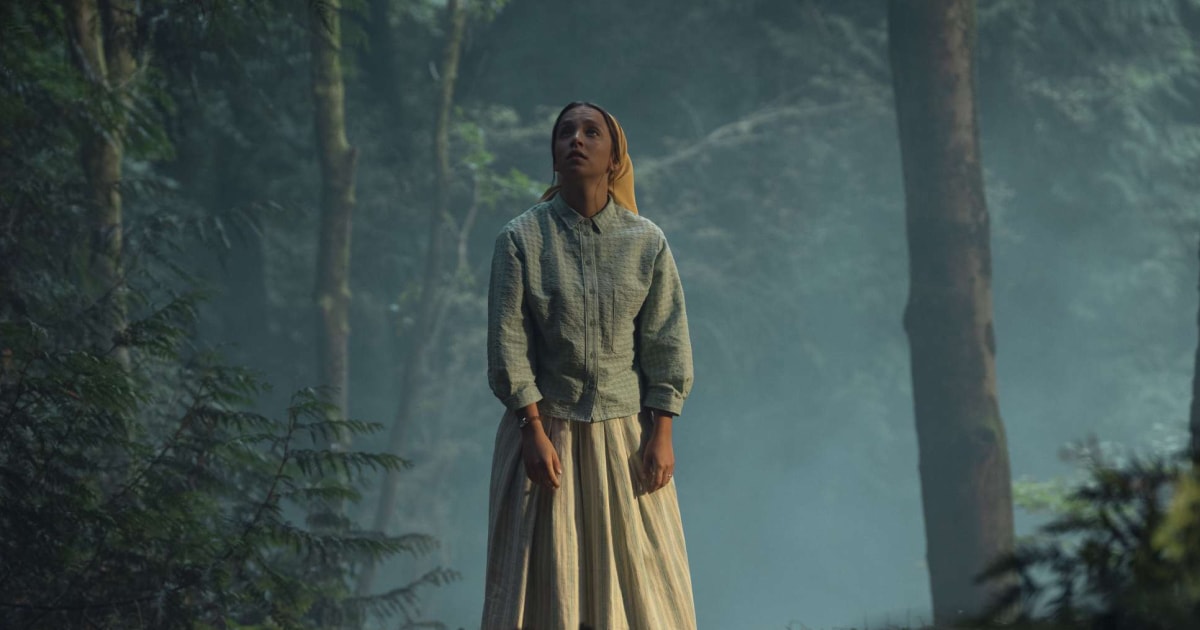
The story follows the lives of those living in the Surrey-based Christian community “Fellowship of the Divine”. A brief idyllic glimpse of their lifestyle is given in the opening sequence, as families gather in a field for a picnic. However, this picture is quickly disrupted after a child, Grace, goes missing in a storm. A search party, including her father, Adam, is put together to look for her, and her mother, Rosie, is instructed to stay behind because such activities constitute “men’s work”. The story follows the experience of Rosie, who, though clearly timid in the presence of the community’s male leadership, was heroically prepared to defy orders for the sake of her child. The story spares no time in introducing the dark underbelly of the Fellowship, where, for the sake of keeping up appearances with one another, adultery, alcoholism, rape and domestic abuse are all hushed up for fear of punishment. And as if things could not get any more complex, a psychotic murderer is thrown into the mix as Rosie’s love affair and hopeful ticket out.

Despite Unchosen’s narrow and highly dramatised portrayal of life within a cult, insights into the nature of human relationships can still be found, not only as they pertain to insulated Christian communities but to broader society as well. Very few live outside the grip of others’ influence, and this is understandable given that humans are social animals built for community. The main difference, then, between religious groups and secular society is that the former are slightly more upfront about the requirements and stakes of belonging. It does not, however, take much looking around to see that shunning, abuse and the turning of a blind eye for the sake of “keeping the peace” all exist regardless of creed.

From this perspective, the show can be seen not simply as a cautionary tale about Christian cults, but rather as a reflection on how to avoid the negative traits which intense cult environments amplify. What are these negative traits? Though perhaps the writers’ intention, the issue with Fellowship of the Divine was not necessarily its patriarchal structure. A broader depiction of the community could very possibly have presented many families living comfortably within the community’s strict rubrics. Instead, where the community did suffer was in its inability to deal with brokenness and doubt. The existence of such realities can wreck people’s cosy black-and-white perspectives of the world, and thus drive them to a fear-filled pursuit of control or deceit. Examples of this can be seen in Adam’s rape of his wife and disowning of his brother Isaac, as the show makes a point of articulating the roots of these actions as his own repressed same-sex attraction, coupled with the need to uphold his image as a committed member of the Fellowship. The maze of secrecy created as a result of such an environment lay waiting for a greater danger to navigate. Enter Sam.

The significance of the murderer and prison escapee Sam’s character is subtle in the opening episode of the show. His first appearance, after saving the young Grace from drowning in the river, depicts him in a Christlike form, standing with what appears to be a stigmata as blood pours from the palm of his hand, a wound later revealed to be from a knife attack by a fellow inmate. Motivated by his own objective of escaping the police, Sam does not hesitate to make use of the Fellowship’s many secrets to get what he wants, first through subtle manipulation and then outright blackmail. Such tactics end with him being unveiled as the community’s new leader in the show’s closing sequence.

The subtle irony of the story is that the lack of honest and transparent living which brought about these dramatic and terrible events is exactly what such communities, in theory, strive to mitigate against. Honesty, though, is a discipline hard fought for. It depends entirely upon the double-edged sword of trust, which can so easily be used to help and harm, but without which one cannot be oneself nor freely choose anything. However, trust of this kind requires an ability to navigate brokenness, doubt and even dissent. Fail here, and we quickly find ourselves living with masks, in communities and societies void of freedom, riddled with hidden sins and open to what St Peter called “the devouring lion”.

Continue reading with a free account

Create a free account to read up to five articles each month
Create free account

You have # free articles remaining this month.

Subscribe to get unlimited access.
Sign up

subscribe to the catholic herald today

Our best content is exclusively available to our subscribers. Subscribe today and gain instant access to expert analysis, in-depth articles, and thought-provoking insights—anytime, anywhere. Don’t miss out on the conversations that matter most.
Subscribe