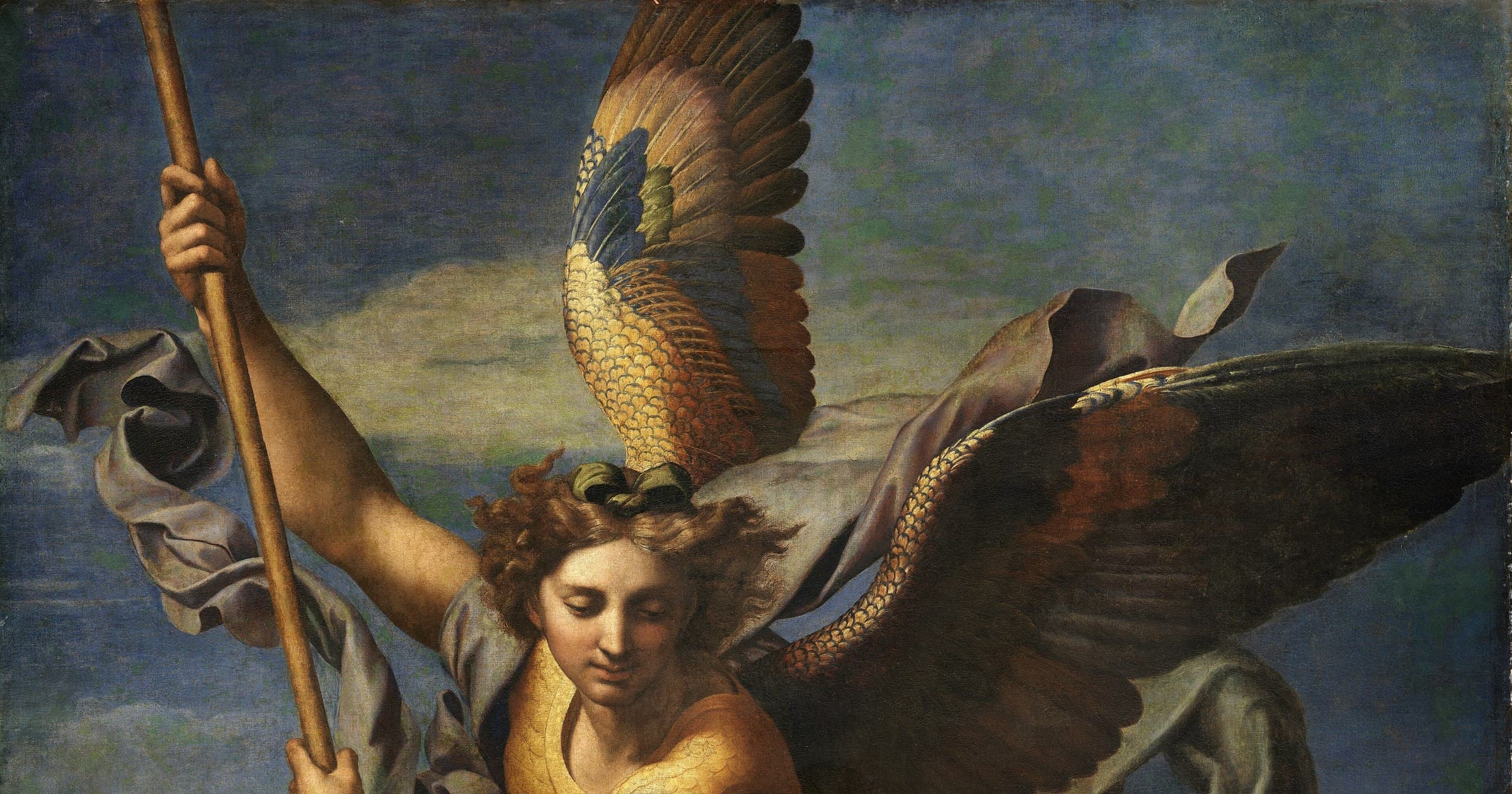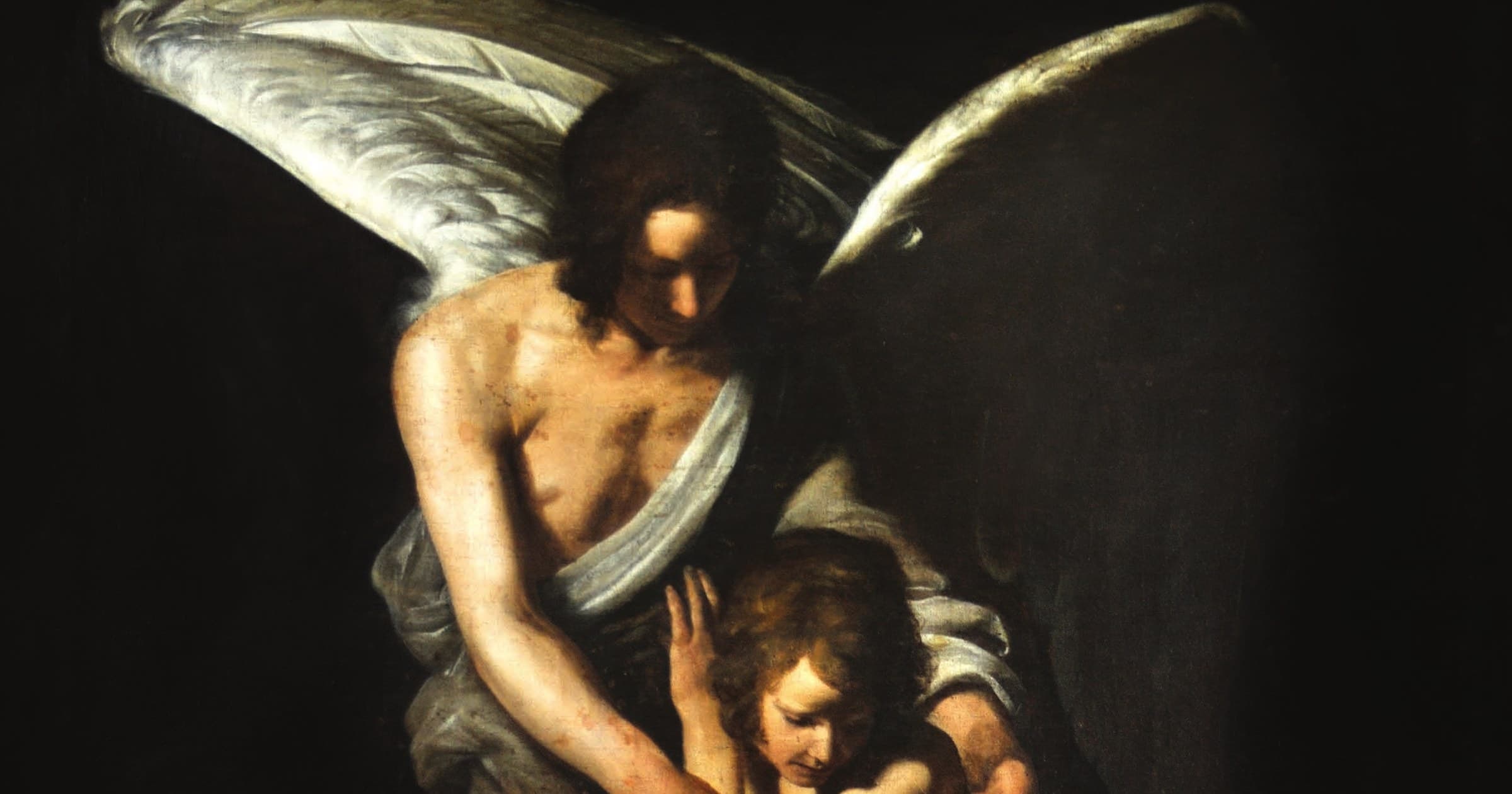


There is always a time and place for great art, and for the ultimate experience it should be within the setting for which it is designed. We all know that the experience of seeing row upon row of Renaissance paintings in great museums such as the Uffizi in Florence or the Louvre in Paris might cause something akin to mental exhaustion. Yet seeing one or two beautiful paintings mounted, pride of place, in an otherwise sparsely decorated church can give us a profound sense of wonder. This was the intention of the greats such as Caravaggio. When he created his masterpieces, he knew that each one would have a separate and venerated home, such as a private house or a cathedral.
Likewise, to witness the performance of a Beethoven symphony in the Royal Albert Hall, with all the excitement of the atmosphere created by the audience and the musicians, is exactly what the composer envisaged as he struggled with his manuscripts and quill pen in a damp attic. Listening to a symphony on compact discs or, nowadays, digitally deprives us somewhat of the real depth and sense of the music, as we relax at home in an armchair or on our earphones on the way to work through London’s rush hour.
An excellent antidote to this trivialisation of music listening takes place at the St Birinus Festival at Dorchester Abbey, Dorchester-on-Thames, from Friday July 9 to Sunday July 12. Festivalgoers will be treated to a feast of the glories of Renaissance polyphonic music, not reproduced electronically but performed live during the ancient and venerable church services for which the music was written. For this reason, the events of the festival are formed around the main sacred offices of the Catholic Church for the great Feast of St Birinus.
You might ask: why St Birinus? And why a sacred music festival in the sleepy village of Dorchester-on-Thames, just east of Oxford? Early history enthusiasts will be aware of its historical significance as the place where a Benedictine monk called Birinus, sent from Rome in the early 7th century, baptised the King of Wessex and brought about the formal transition of England to Christianity. After his death, the great saint was as fervently venerated as the other Apostle of England, St Augustine of Canterbury.
But it was not just Christianity that St Birinus brought to England; it was also music. With fellow Benedictine monks, St Birinus brought the liturgy and the Gregorian chant that accompanies it. Thus Dorchester-on-Thames found itself at the heart of a cultural and musical phenomenon.
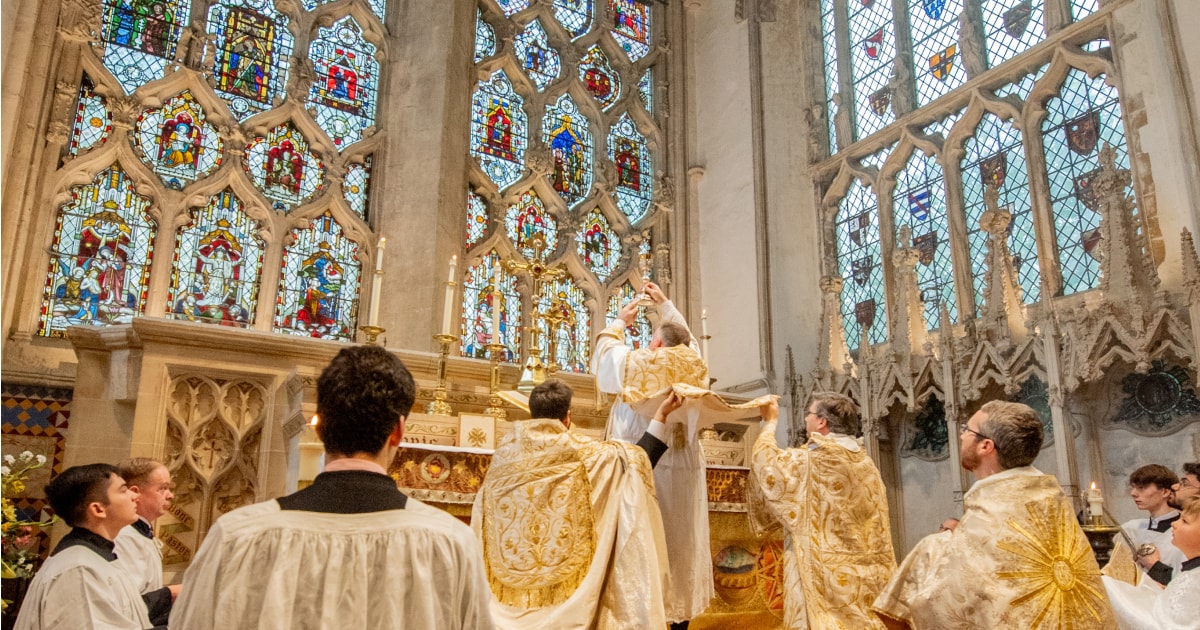
The enormous and beautiful medieval abbey that stands there today, a great shrine and place of pilgrimage to those seeking the intercession of the saint who brought about England’s faith, will host the majority of the festival events. Those who love early music and early history will be drawn to hear these ancient walls once more echo the sounds of Gregorian chant – some of which has been painstakingly revived from the Winchester Troper for this event – as well as polyphonic music from the treasures of the Iberian Renaissance. All this music will be sung within the context of the ancient Latin liturgical rites almost indistinguishable from those St Birinus would have known.
Catholics over recent decades have often witnessed the sidelining and watering down of sacred music, now rarely performed in its intended surroundings. To hear the treasures of our sacred musical heritage, one might be fortunate enough to hear them sung by the purest of professional ensembles in the Wigmore Hall or Cadogan Hall while sipping gin and tonic. But in its proper setting of the Latin Mass, festivalgoers will absorb the original intentions of the Church Fathers, where music and liturgy are seamlessly combined, and the music is just as much part of the ceremony as the celebrant. Those who attend the Masses of today, so accustomed to either no music at all or the most banal music possible, will be in for a wonderful surprise as they see the celebrant at the altar, the master craftsman, assisted by probably the most beautiful music ever written. Here, the liturgical actions in song, word and deed – not the individual character of the presiding clergyman – are the focus of attention.
The Catholic Church, through its clergy, offers up prayers to its divine Spouse all day and every day, and even during the night. The Divine Office, as it is called, is its lifeblood and is essential for the sanctification of the clergy. In fact, daily recitation of the entire Divine Office was until recently obligatory for secular clergy, whereas daily Mass was not. So it is that St Birinus festivalgoers will have the heaven-sent opportunity to tap into the veins of this great and continuous prayer as Dorchester Abbey echoes to the sounds of the devotions, motets and chants of Lauds, Vespers and Compline.
This liturgical music was written for the greater glory of God and was performed in the great cathedrals and monasteries of Europe out of a burning love for the Creator of all things. The words ‘elitist’ and ‘irrelevant’, so beloved of our modern progressives, were unknown in those days because our forefathers were not producing some kind of entertainment but, rather, submitting themselves to the established liturgical norms based on the assumption that ‘God is everything; we are nothing!’
Alongside the liturgies that form the daily pulse of the festival, there are lectures, talks, workshops, children’s activities, recitals and concerts. The great festival concert will be a performance of the Monteverdi Vespers in the abbey, directed by Simon Over, of Sinfonia Smith Square, and accompanied by period instruments of the Guerrero Baroque Collective.
The St Birinus Festival is the only annual Catholic sacred music festival in the world. We are lucky to have among our patrons the great English composers of our day such as Ryan Wigglesworth, who will be directing many of the festival services, Sir Stephen Hough and Sir James MacMillan. Our thanks go to Archbishop Bernard Longley, also a patron, for his generous support. It is a huge honour for me to organise these events and to see the impact on all participants, young and old alike. This extraordinary ancient music never ceases to amaze and inspire.
The St Birinus Festival runs from 9-12 July in Dorchester-on-Thames: stbirinusfestival.co.uk