
May 25, 2026

Revolutions and revelations

Isobel Yuill
More
Related
Min read
share

Outlander, Amazon Prime, Season 8 (10 episodes)

Faith. This is the central theme of Outlander’s eighth and final season: not only the faith of its cast of characters, who turn, as they have ever done, to God when trying to make sense of the tumult of their lives; but also Faith the person, the stillborn daughter to whom the protagonist Claire gave birth in season 2. It is fitting that Outlander, a show about time travel which also values tradition, would, as it draws to a close, ask us to look back.
Outlander began with Claire Beauchamp, a Second World War combat nurse, entering a circle of standing stones and falling through time to the 18th century, where she met and fell in love with the Jacobite Highlander Jamie Fraser. Their adventures have taken them across several continents to revolutionary America where, at the end of season 7, they discovered that Faith, the daughter they thought had died decades before, actually survived. She grew up and had a family, with whom she had been travelling to find Jamie and Claire when she died along the way.

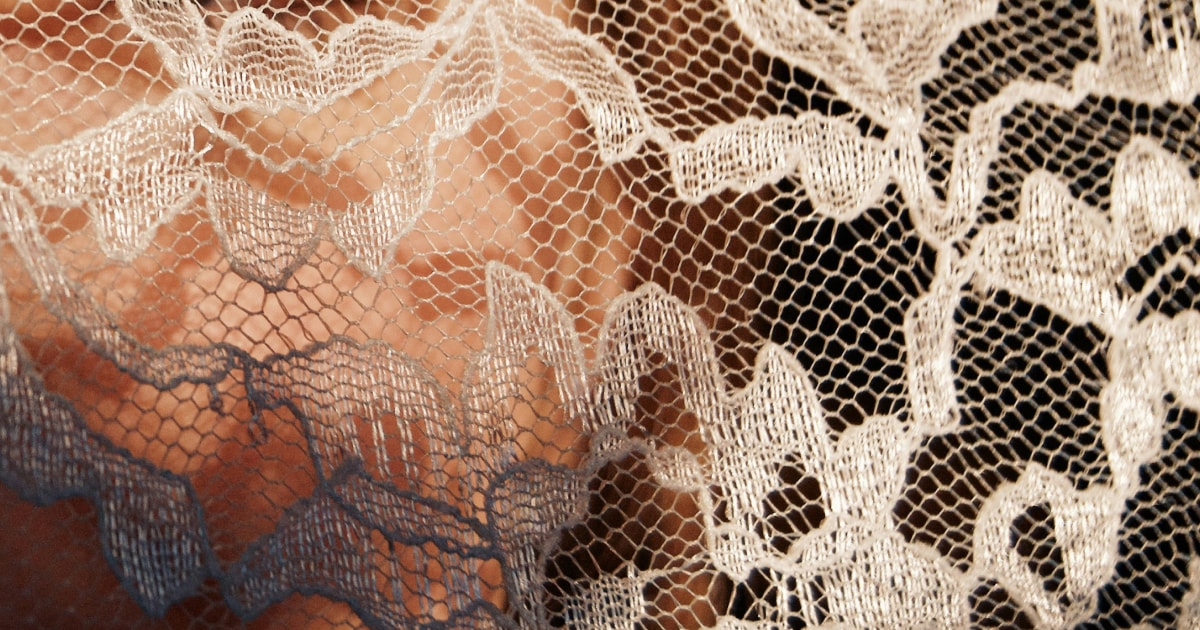
Rarely for contemporary television, Outlander depicts the sacredness of marriage with reverence. Its final season does so through the “Faith” storyline, functioning as an extended meditation on Claire and Jamie’s union. Jamie says to Claire: “The night we made our Faith… I kent a piece of me would be inside you forever, because I was giving you a child.” That child had children of her own, one of whom found her way to her grandparents, so that Jamie could then say: “It’s no small miracle that a piece of Faith came to be in our lives… Despite all we’ve lost, we can thank the Lord for that blessing.” Every episode of season 8 recalls Faith in some way, from callbacks in the action to the use of her musical motif. It is a deliberate motion of looping back, as with a needle and thread, intended to reflect the interwovenness of Jamie and Claire’s bodies and lives. Claire compares family to lace, “the threads, hard to tear apart”.

The language of interwovenness extends to this season’s understanding of God’s providence. “Such are the tapestries of our lives,” says Claire. “Threads of shock, anger, love, and affection woven together… as delicately as the most beautiful lace.” “It’s the unseen threads that bind us,” Jamie echoes, “woven together by a hand far greater than our own.” Those unseen threads turn out to be faith itself: Jamie reflects that Mother Hildegard, the abbess who delivered Faith, gave their daughter her name because she sensed the rift that had opened up between them. Only faith could bind them back together again.

Outlander is revolutionary, not just in the political sense – we are taken from the Jacobite rebellion all the way, finally, to the American war of independence – but literally: it revolves. It is cyclical: beginning with one revolution, ending with another; interleaving stills from season 1 into the credits for season 8; opening with a circle of standing stones to which the characters return again and again. As Claire reflects in season 4, humans have always been fascinated by circles, “attributing meaning where they are found, from the eternal rotation of planets around the sun… to a simple wedding band”, and Outlander itself lives out this fascination. These circles, or loops, speak to the show’s interest in eternity and the perennial truths and values of human life. It treats with a total lack of cynicism those themes that popular culture tells us to mock and discard: tradition, family – those who came before and those who might come after. In doing so, it revolts from the status quo.

The Catholic sensibility of Outlander was a rare treat on television and informed its sacramental treatment of marriage, children, childbirth and pregnancy. In this season, babies are delivered and handed to fathers who say that all the colours in the world just got brighter; dying mothers are handed over to the loving arms of their Maker. Christians of all denominations ask one another for their prayers, which are offered in Gaelic and Latin by Jamie, who crosses himself and invokes the saints whenever confronted by one of the frequent tragedies and catastrophes of life on the frontier. Perhaps most Catholic of all has been Outlander’s sense both of the supernatural and of the enchanted, its vision of Creation as imbued with power and presence. This is a world where spirits walk and stones sing and hum.

I think that most television shows today try to maintain a forward momentum in their final seasons, propelling the action onward and onward; but typically, the story peters out. It speaks to how different Outlander was from the norm that in its final season it slowed down, took a breath and turned back. By returning to one of its most poignant plotlines, Outlander gives us the sense of Jamie and Claire taking stock, reflecting on the great love and great suffering of a marriage filled with hardships and graces.

Season 8 takes the time to tie up all its ends very neatly. We learn that the woman who ended up raising Faith was a lacemaker, one of whose veils was worn by Claire while she mourned Faith’s loss. In fact, when Jamie went to buy this veil, he heard a baby’s cry in the shop – unbeknownst to him, his own daughter. Season 8 invites us to reflect on the fact that, contrary to individualist dogma, we are not atomised but instead inextricably interwoven with one another and that everywhere we go we leave threads behind that touch and intertwine with the lives of others; that our threads are woven into our histories and our futures. Perhaps neatest of all is the fact that Diana Gabaldon – unsurprisingly, a Catholic – had originally named the first Outlander novel Cross Stitch. The show really has taken us full circle.

Continue reading with a free account

Create a free account to read up to five articles each month
Create free account

You have # free articles remaining this month.

Subscribe to get unlimited access.
Sign up

subscribe to the catholic herald today

Our best content is exclusively available to our subscribers. Subscribe today and gain instant access to expert analysis, in-depth articles, and thought-provoking insights—anytime, anywhere. Don’t miss out on the conversations that matter most.
Subscribe