

June 15, 2026

Neither sinless nor divine

Isabel Gibbens
More
Related
Min read
share

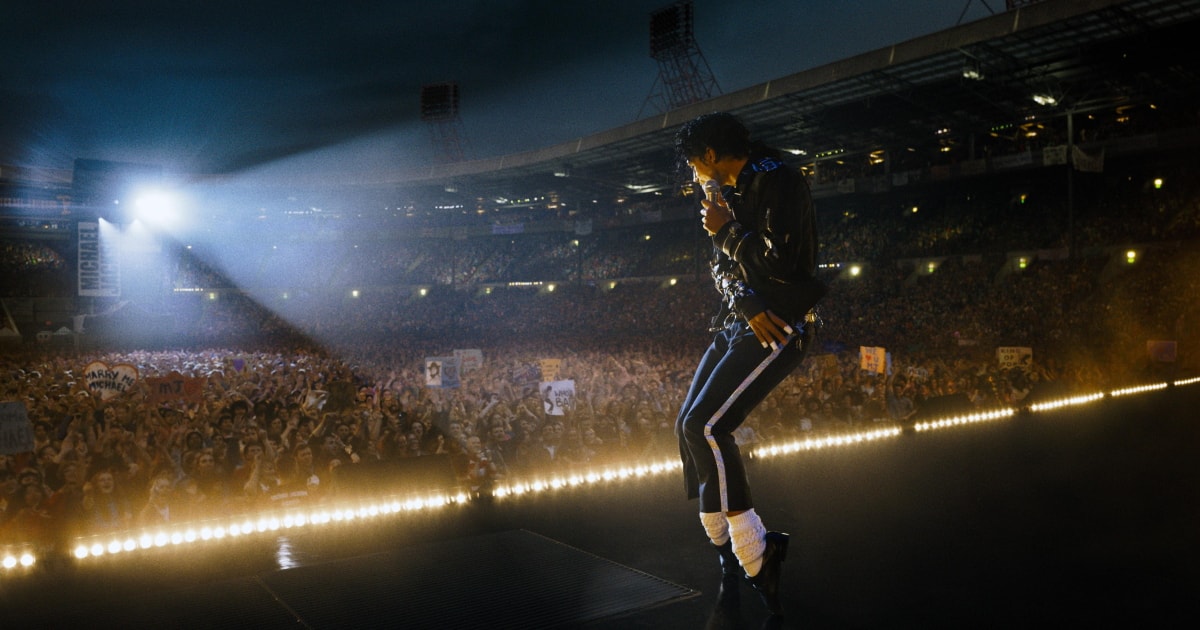
‘Michael’ (2h07m), directed by Antoine Fuqua

Like many moviegoers, I recently watched the new biopic Michael (2026), based on the life of Michael Jackson. It is one of those rare breeds that has been met with overwhelmingly negative reviews from film critics while obliterating box-office records. For anyone familiar with the Jackson story, this should come as no surprise: it merely continues his life’s legacy – a cacophony of eviscerating tabloid treatment and enduring fan adulation.

The film itself concludes on a positive note in 1988, with the young Michael performing on his first solo tour. But the story is not without tremendous struggle. The scenes of his childhood reveal the brutal rehearsal regimes imposed by his father and former manager Joseph Jackson, who refused to let his children call him “Dad”. Michael is also beaten with a belt and routinely taunted about his physical appearance – criticism that reportedly led him to seek two rhinoplasties as an adult.
Towards the end, Michael is shown sustaining third-degree scalp burns after a malfunctioning light on the set of a Pepsi commercial caused his hair to catch fire. The severity of those wounds has since been blamed for his lifelong painkiller dependency, which many believe was a contributing factor in his death.

Walking away from the cinema, many were struck by an overwhelming sense of pathos because Michael’s life seemed to echo the familiar patterns of human idealisation and denunciation found in the Passion narrative.

That is not to suggest that he was sinless or theologically comparable with Christ. Michael was as human as the rest of us, lacking godly perfection. But it is clear that he possessed an unusual emotional vulnerability, owing to his trauma-induced childlikeness, and was a victim of very public suffering, which many believe was undeserved.

One of the most harrowing parts of Michael’s life was his journey from achieving living-legend status to becoming globally vilified. Owing to his own unhappy childhood, he often visited sick children, gifted them bags of toys and invited some to stay at Neverland, his private theme park and home.

His public image was dramatically upended in 1993 when Evan Chandler accused him of molesting his 13-year-old son, Jordan. This was ultimately settled out of court, without any admission of guilt on Michael’s behalf. One year later, for reasons publicly unknown, Jordan became legally emancipated from his parents. In 2003, another accuser, Gavin Arvizo, came forward, and Michael was found not guilty on all counts. At one point, even Michael’s sister, La Toya, endorsed the allegations; she later recanted, citing her then husband’s abusive influence, but the reputational damage was already done.

Human disloyalty and fickleness were core themes of Christ’s life. His bodily suffering plays out in the Paschal Triduum (the three holy days from Maundy Thursday to Holy Saturday), but the preceding Sunday should be integral to our understanding of His sacrifice. On Palm Sunday, Jesus had been welcomed into Jerusalem, astride a donkey, and greeted by crowds of admirers waving palms and spreading their cloaks on the ground, acknowledging Him as the Messiah. Five days later, a similar crowd called for Him to be executed in the most barbarous way, and He was betrayed by His own disciples, who had accompanied Him that previous week.

Another parallel can be found in the way profound differentness can stir suspicion and ridicule. Michael’s childhood fame meant he was unable to relate to and connect with others his own age, leading him to seek solace in childhood stories, accumulate exotic companions (he famously adopted a chimpanzee named Bubbles, who would accompany him on tour), and wear unusual masks in public to protect his privacy. These behaviours were negatively construed by the press, leading to the “Wacko Jacko” tabloid nickname, which Michael admitted he found deeply hurtful.

Christ, of course, was condemned to an unfathomably cruel death by the Pharisees, who believed Him to be a blasphemous rebel for proclaiming Himself as the Son of God. This innate distrust of those perceived as different and not fitting the societally acceptable mould has endured throughout time, and such people are still ostracised for it.

Biologists explain that these feelings of defensiveness and fear are rooted in our hunter-gatherer ancestry, where outsiders were treated with suspicion because they posed a potential threat to the tribe’s safety. This is all the more pronounced if one is perceived as possessing some inherent “specialness”. Often, those viewed as extraordinary are seen as unrelatable by ordinary people, and it is precisely this distance that reduces empathy, turning them instead into symbolic targets – a fallen king, a disgraced celebrity – rather than human beings. Primal feelings of envy also intensify this hostility towards the exceptional.

In grappling with these human weaknesses, Christianity tells us to adopt a radical mindset, at odds with our nature. We are commanded to “love our neighbour”; to take inspiration from the Good Samaritan, showing kindness towards strangers; and to remember that “there is neither Jew nor Greek, slave nor free, male nor female”, for we are all one in Christ.

Paraphrasing Plato, writing centuries before Jesus’s birth, if a truly just man entered the world, he would ultimately be persecuted and killed for it. Christians naturally see this as uncannily foreshadowing Christ’s fate. While Michael was neither sinless nor divine, many who knew him nevertheless described him as incredibly gentle, sensitive and generous. His public fall from grace, therefore, reveals how uncomfortably quickly widespread admiration can curdle into collective disdain.

Whether Michael possessed Christian faith has been a matter of speculation. The Jackson children were raised as Jehovah’s Witnesses, but Michael expressed discontent with the austerity of the sect. He formally left at the age of 28, but he continued to make references to living out some of Jesus’s teachings in interviews, commenting that we should love and “be as pure as children”. Eagle-eyed fans even spotted a picture of the Sacred Heart of Jesus above his bed in a 1993 segment with Oprah Winfrey.

In 2025, the music producer Rodney Jerkins commented that, at Michael’s funeral, he had been told that Michael had become a fully fledged believer two weeks before his death, reciting the “sinner’s prayer”. Many Christians hope this is true; it is just a shame for Michael’s sake that such spiritual consolation did not come sooner. Christianity’s understanding of, and identification with, the Cross may have helped him fully make sense of his particularly painful life.

Continue reading with a free account

Create a free account to read up to five articles each month
Create free account

You have # free articles remaining this month.

Subscribe to get unlimited access.
Sign up

subscribe to the catholic herald today

Our best content is exclusively available to our subscribers. Subscribe today and gain instant access to expert analysis, in-depth articles, and thought-provoking insights—anytime, anywhere. Don’t miss out on the conversations that matter most.
Subscribe