December 12, 2025
December 12, 2025

Interview: Cardinal Müller on Europe, Islam, the SSPX and the German Synodal Path

Min read
share

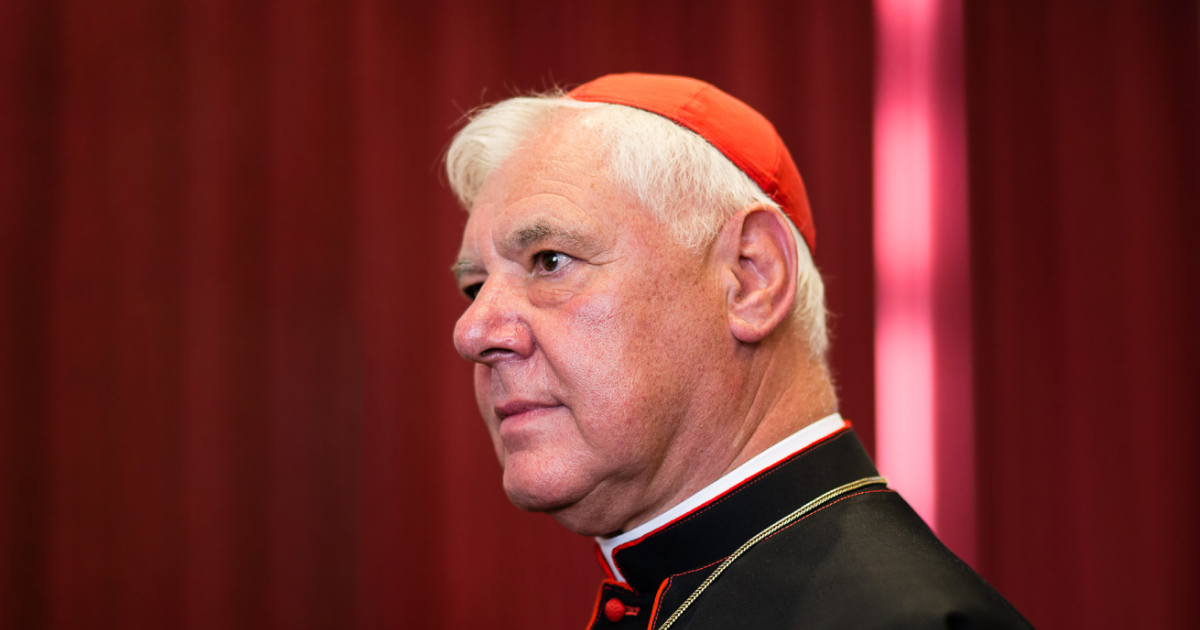
As Advent dawns — a season meant not merely for candlelight and carols but for a renewed sharpening of the Christian soul — the Church once again turns her gaze toward the mystery of Christ’s coming. Few voices speak to this moment with the clarity and spiritual urgency of Cardinal Gerhard Ludwig Müller. The former prefect of the Dicastery for the Doctrine of the Faith has long been one of the Church’s most incisive theological minds, unafraid to diagnose the deeper spiritual crises of our age and to call Catholics back to the foundations of Revelation.

In this wide-ranging conversation, Cardinal Müller reflects on the true nature of Advent as a time of purification and hope, offers counsel for resisting the noise of consumer culture, and examines Europe’s paradoxical blend of secularism and religious revival. He speaks candidly about Vatican II, the challenges posed by the SSPX, and the turbulence of the German Synodal Path. What emerges is a bracing and luminous vision of the faith — one grounded in Christ, rooted in the Tradition, and unflinching in the face of the Church’s present trials.

Jan Bentz: As we enter Advent, the Church presents this season not merely as a countdown to Christmas, but as a school of watchfulness, purification, and hope. In your view, what is the spiritual work that Catholics today most urgently need to recover during Advent?

Cardinal Gerhard L. Müller: The cycle of the liturgical year reflects the history of God’s salvation with humanity. In the celebration of the Eucharist, God’s saving work for all people is made sacramentally present in Jesus Christ. In the readings we hear the voice of the prophets — above all Isaiah — who proclaim the coming Messiah of Israel, the Saviour and Redeemer of the world: “The people who walked in darkness have seen a great light… For unto us a child is born, unto us a son is given; and the government shall be upon his shoulder” (Is 9:1, 5). This is the Kingdom of God, which Jesus publicly proclaimed and fulfilled as the King of the Jews on the Cross, and which he brought into the world, indestructible, through his Resurrection from the dead.

In Jesus, all the prophetic promises have been fulfilled beyond measure, for he is the Son of God who, through Mary, assumed our humanity, redeemed us from sin and death, and raised us to the dignity of the children of God. We are no longer slaves to the elemental powers of this world, for this is our faith — the very thing Paul proclaimed to the Churches of Galatia, and thus to Christians of all times: “When the fullness of time had come, God sent his Son, born of a woman, born under the law, to redeem those under the law, so that we might receive adoption as sons” (Gal 4:4–5).

Anyone who reflects even a little on the meaning of life and takes seriously his own existence and identity knows that preparing for Christmas cannot consist merely in buying gifts and indulging in a bit of seasonal romanticism. What truly matters is opening our ears and preparing our hearts for the coming of Jesus into our minds and lives. For we cannot place our hope — in life or in death — in the false prophets and pseudo-messiahs of ideological and political manufacture who, in the twentieth century, plunged humanity into unspeakable misery through world wars and genocides. Our hope rests in God alone, “who gives us the victory through our Lord Jesus Christ” (1 Cor 15:57).

JB: Many Catholics struggle to prepare spiritually for Christmas amid the noise of consumer culture. What practical disciplines or interior dispositions would you propose to help the faithful receive Christ at Christmas with a renewed heart?

CGLM: I believe that the interior and exterior belong together, because our human nature is a unity of body and soul, of reason and free will. As individual persons, we are always embedded in ecclesial, civil, and cultural communities that are meant to support and strengthen us.

A Christian can remind himself each day that his existence in the world is not the result of chance, but that from eternity he has been chosen in the Son of God — destined, even before the creation of the world and in anticipation of his historical existence, to become a son or daughter of God through Jesus Christ (Eph 1:4–5).

The human species, in accordance with God’s reason (logos) and will, was formed out of animal precursors into a rational being capable of self-determination. Therefore — notwithstanding the common confusion of Darwinism as a biological theory with a metaphysical concept — no human being is, ontologically speaking, a “naked ape,” destined to construct himself into a superhuman creature by means of clever survival strategies, only to surrender his biological leadership role in a final evolutionary leap to a highly technological cyborg.

For this reason, we can shape our time intellectually and spiritually through meditation, prayer, and liturgy. These practices free us from our entanglement in the machinery of entertainment and material care, from the numbing noise of the market and the media, and from the diabolical illusion of worldly doctrines of salvation with their propaganda, lies, and leaders who allow themselves to be worshipped as gods.

JB: Europe today faces an unusual combination of accelerating secularism and large-scale immigration from strongly religious cultures. How do you understand this paradox, and what does it reveal about the spiritual condition of contemporary Europe?

CGLM: European secularism is not at all devoid of religion. It is a soft — or at times violent — form of de-Christianisation. The goal is not pure immanent worldliness, but the replacement of salvation and truth, which come from God, with a religion of self-redemption.

Since the eighteenth century, Islam has been regarded — by the philosophy of deism and of “natural religion” — as an ally in the struggle against Christianity. Even today, it is instrumentalised by the so-called fighters against “Islamophobia,” who hope that this religion will eventually secularise itself and ultimately tolerate — against its own truth — the atheistic woke anthropology.

For us Christians, the decisive point is not whether we live in a secular or a religious environment, but that we place our trust in God through faith, hope, and charity — for in Jesus Christ he is our only hope.

JB: Debates about the “spirit” and “letter” of Vatican II continue to polarise Catholics. In your experience, what is the authentic meaning of the Council, and how should the Church receive it today?

CGLM: This distinction is an insult to the theological intelligence of every Catholic. We can only assent to the Church’s teaching that Jesus is Lord through the Holy Spirit (1 Cor 12:3). The Church’s doctrine is the actualised doctrine of the Apostles, through which the full truth of Revelation remains present in history — into the present and all future.

Anyone who appeals to a “spirit of the Second Vatican Council” in opposition to its binding doctrine may well be invoking a “spirit of the world” (in the sense of Hegel or the Romantic notion of national spirits). But this has nothing to do with the Holy Spirit — the third Person of the Blessed Trinity — who inspired the authors of Scripture and preserves the magisterium of bishops and popes from grave error.

JB: The situation of the SSPX remains a pastoral and theological challenge. What, in your judgment, is the most fruitful way for the Church to approach dialogue with the Lefebvrian movement while preserving unity and doctrinal integrity?

CGLM: There have been — and continue to be — endless dialogues with this group, but they simply circle around. There is no way around recognising the Second Vatican Council as the twenty-first Ecumenical Council of the Catholic Church, in accordance with the Catholic hermeneutic and epistemology already fully articulated by Irenaeus of Lyon.

The foolish talk of a “sede vacante” of the Chair of Peter, calls for a revision of the Council, and the claim that the Lefebvrists are the last bastion of true Catholicity must finally come to an end. Even if they are right to place their finger on the wounds inflicted on the Body of Christ by self-appointed reformers in the style of Modernism, there is never a justification for distancing oneself from the Catholic Church — even though the Church is a mixture of saints and sinners, as St Augustine emphasised against the strict and self-righteous Donatist sect.

Against Petilianus, the highly educated leader of the Donatists, he declared: “It was not we who separated ourselves from you — you separated yourselves from us. You withdrew from communion with the universal Church” (Contra litteras Petiliani II, 38).

Now is the kairos for all Catholics to reunite in the truth of Christ, who in the person of St Peter and his successor — Pope Leo XIV — has established an enduring principle and foundation of unity in faith and sacramental communion (Vatican II, Lumen gentium 18).

JB: The German Synodal Path has caused considerable concern across the Catholic world. How do you assess this development, and what are its broader implications for the unity and credibility of the universal Church?

CGLM: The German dioceses are part of the universal Church and are Catholic only insofar as they share the Catholic faith, the sacraments, and the Church’s divine constitution. The organisation of the so-called Synodal Path possesses no magisterial authority, nor is it a constituent assembly empowered to establish a German national church in an Anglican or Protestant style.

If even the magisterium of the Pope and the bishops is bound to Revelation and its actualisation in Scripture and Apostolic Tradition — and cannot introduce doctrines contrary to Revelation — then this applies all the more to the German Synodal Path. It is nothing other than a heretical attempt to replace the Christian understanding of the human person with gender ideology, and to present this corruption of doctrine to a naïve audience as its “development.”

There is scarcely any talk of God, Christ, the Holy Spirit, the sacraments, grace, or eternal life — except ornamentally, as a pious veneer to obscure the transformation of the Church of Christ into a religious-social NGO with spiritual slogans. This fundamental critique comes from competent German bishops and eminent theologians.

The devastating record of progressivism in Germany since the 1970s is evident in mass departures from the Church, empty seminaries, closed monasteries, and an appalling ignorance of God and the Catholic faith — an ignorance that the Anglo-Saxon Boniface, the Apostle of the Germans, already sought to overcome 1,300 years ago (Ep. 28).

And it was Pope Francis — whom the German Synodalists otherwise love to quote — who wrote in his letter of 29 June 2019, “To the Pilgrim People of God in Germany,” that the Church’s first and foremost task is not external structural reform but the New Evangelisation: “For the Church is not something we make, nor can it be reinvented by us.” And his subsequent words apply not only to Germans but to Catholics around the world in this moment of history: “She does not renew herself by adapting to the spirit of the times, but by rediscovering the Gospel.”

Photo credit: Can. Elvir Tabaković
As Advent dawns — a season meant not merely for candlelight and carols but for a renewed sharpening of the Christian soul — the Church once again turns her gaze toward the mystery of Christ’s coming. Few voices speak to this moment with the clarity and spiritual urgency of Cardinal Gerhard Ludwig Müller. The former prefect of the Dicastery for the Doctrine of the Faith has long been one of the Church’s most incisive theological minds, unafraid to diagnose the deeper spiritual crises of our age and to call Catholics back to the foundations of Revelation.

In this wide-ranging conversation, Cardinal Müller reflects on the true nature of Advent as a time of purification and hope, offers counsel for resisting the noise of consumer culture, and examines Europe’s paradoxical blend of secularism and religious revival. He speaks candidly about Vatican II, the challenges posed by the SSPX, and the turbulence of the German Synodal Path. What emerges is a bracing and luminous vision of the faith — one grounded in Christ, rooted in the Tradition, and unflinching in the face of the Church’s present trials.

Jan Bentz: As we enter Advent, the Church presents this season not merely as a countdown to Christmas, but as a school of watchfulness, purification, and hope. In your view, what is the spiritual work that Catholics today most urgently need to recover during Advent?

Cardinal Gerhard L. Müller: The cycle of the liturgical year reflects the history of God’s salvation with humanity. In the celebration of the Eucharist, God’s saving work for all people is made sacramentally present in Jesus Christ. In the readings we hear the voice of the prophets — above all Isaiah — who proclaim the coming Messiah of Israel, the Saviour and Redeemer of the world: “The people who walked in darkness have seen a great light… For unto us a child is born, unto us a son is given; and the government shall be upon his shoulder” (Is 9:1, 5). This is the Kingdom of God, which Jesus publicly proclaimed and fulfilled as the King of the Jews on the Cross, and which he brought into the world, indestructible, through his Resurrection from the dead.

In Jesus, all the prophetic promises have been fulfilled beyond measure, for he is the Son of God who, through Mary, assumed our humanity, redeemed us from sin and death, and raised us to the dignity of the children of God. We are no longer slaves to the elemental powers of this world, for this is our faith — the very thing Paul proclaimed to the Churches of Galatia, and thus to Christians of all times: “When the fullness of time had come, God sent his Son, born of a woman, born under the law, to redeem those under the law, so that we might receive adoption as sons” (Gal 4:4–5).

Anyone who reflects even a little on the meaning of life and takes seriously his own existence and identity knows that preparing for Christmas cannot consist merely in buying gifts and indulging in a bit of seasonal romanticism. What truly matters is opening our ears and preparing our hearts for the coming of Jesus into our minds and lives. For we cannot place our hope — in life or in death — in the false prophets and pseudo-messiahs of ideological and political manufacture who, in the twentieth century, plunged humanity into unspeakable misery through world wars and genocides. Our hope rests in God alone, “who gives us the victory through our Lord Jesus Christ” (1 Cor 15:57).

JB: Many Catholics struggle to prepare spiritually for Christmas amid the noise of consumer culture. What practical disciplines or interior dispositions would you propose to help the faithful receive Christ at Christmas with a renewed heart?

CGLM: I believe that the interior and exterior belong together, because our human nature is a unity of body and soul, of reason and free will. As individual persons, we are always embedded in ecclesial, civil, and cultural communities that are meant to support and strengthen us.

A Christian can remind himself each day that his existence in the world is not the result of chance, but that from eternity he has been chosen in the Son of God — destined, even before the creation of the world and in anticipation of his historical existence, to become a son or daughter of God through Jesus Christ (Eph 1:4–5).

The human species, in accordance with God’s reason (logos) and will, was formed out of animal precursors into a rational being capable of self-determination. Therefore — notwithstanding the common confusion of Darwinism as a biological theory with a metaphysical concept — no human being is, ontologically speaking, a “naked ape,” destined to construct himself into a superhuman creature by means of clever survival strategies, only to surrender his biological leadership role in a final evolutionary leap to a highly technological cyborg.

For this reason, we can shape our time intellectually and spiritually through meditation, prayer, and liturgy. These practices free us from our entanglement in the machinery of entertainment and material care, from the numbing noise of the market and the media, and from the diabolical illusion of worldly doctrines of salvation with their propaganda, lies, and leaders who allow themselves to be worshipped as gods.

JB: Europe today faces an unusual combination of accelerating secularism and large-scale immigration from strongly religious cultures. How do you understand this paradox, and what does it reveal about the spiritual condition of contemporary Europe?

CGLM: European secularism is not at all devoid of religion. It is a soft — or at times violent — form of de-Christianisation. The goal is not pure immanent worldliness, but the replacement of salvation and truth, which come from God, with a religion of self-redemption.

Since the eighteenth century, Islam has been regarded — by the philosophy of deism and of “natural religion” — as an ally in the struggle against Christianity. Even today, it is instrumentalised by the so-called fighters against “Islamophobia,” who hope that this religion will eventually secularise itself and ultimately tolerate — against its own truth — the atheistic woke anthropology.

For us Christians, the decisive point is not whether we live in a secular or a religious environment, but that we place our trust in God through faith, hope, and charity — for in Jesus Christ he is our only hope.

JB: Debates about the “spirit” and “letter” of Vatican II continue to polarise Catholics. In your experience, what is the authentic meaning of the Council, and how should the Church receive it today?

CGLM: This distinction is an insult to the theological intelligence of every Catholic. We can only assent to the Church’s teaching that Jesus is Lord through the Holy Spirit (1 Cor 12:3). The Church’s doctrine is the actualised doctrine of the Apostles, through which the full truth of Revelation remains present in history — into the present and all future.

Anyone who appeals to a “spirit of the Second Vatican Council” in opposition to its binding doctrine may well be invoking a “spirit of the world” (in the sense of Hegel or the Romantic notion of national spirits). But this has nothing to do with the Holy Spirit — the third Person of the Blessed Trinity — who inspired the authors of Scripture and preserves the magisterium of bishops and popes from grave error.

JB: The situation of the SSPX remains a pastoral and theological challenge. What, in your judgment, is the most fruitful way for the Church to approach dialogue with the Lefebvrian movement while preserving unity and doctrinal integrity?

CGLM: There have been — and continue to be — endless dialogues with this group, but they simply circle around. There is no way around recognising the Second Vatican Council as the twenty-first Ecumenical Council of the Catholic Church, in accordance with the Catholic hermeneutic and epistemology already fully articulated by Irenaeus of Lyon.

The foolish talk of a “sede vacante” of the Chair of Peter, calls for a revision of the Council, and the claim that the Lefebvrists are the last bastion of true Catholicity must finally come to an end. Even if they are right to place their finger on the wounds inflicted on the Body of Christ by self-appointed reformers in the style of Modernism, there is never a justification for distancing oneself from the Catholic Church — even though the Church is a mixture of saints and sinners, as St Augustine emphasised against the strict and self-righteous Donatist sect.

Against Petilianus, the highly educated leader of the Donatists, he declared: “It was not we who separated ourselves from you — you separated yourselves from us. You withdrew from communion with the universal Church” (Contra litteras Petiliani II, 38).

Now is the kairos for all Catholics to reunite in the truth of Christ, who in the person of St Peter and his successor — Pope Leo XIV — has established an enduring principle and foundation of unity in faith and sacramental communion (Vatican II, Lumen gentium 18).

JB: The German Synodal Path has caused considerable concern across the Catholic world. How do you assess this development, and what are its broader implications for the unity and credibility of the universal Church?

CGLM: The German dioceses are part of the universal Church and are Catholic only insofar as they share the Catholic faith, the sacraments, and the Church’s divine constitution. The organisation of the so-called Synodal Path possesses no magisterial authority, nor is it a constituent assembly empowered to establish a German national church in an Anglican or Protestant style.

If even the magisterium of the Pope and the bishops is bound to Revelation and its actualisation in Scripture and Apostolic Tradition — and cannot introduce doctrines contrary to Revelation — then this applies all the more to the German Synodal Path. It is nothing other than a heretical attempt to replace the Christian understanding of the human person with gender ideology, and to present this corruption of doctrine to a naïve audience as its “development.”

There is scarcely any talk of God, Christ, the Holy Spirit, the sacraments, grace, or eternal life — except ornamentally, as a pious veneer to obscure the transformation of the Church of Christ into a religious-social NGO with spiritual slogans. This fundamental critique comes from competent German bishops and eminent theologians.

The devastating record of progressivism in Germany since the 1970s is evident in mass departures from the Church, empty seminaries, closed monasteries, and an appalling ignorance of God and the Catholic faith — an ignorance that the Anglo-Saxon Boniface, the Apostle of the Germans, already sought to overcome 1,300 years ago (Ep. 28).

And it was Pope Francis — whom the German Synodalists otherwise love to quote — who wrote in his letter of 29 June 2019, “To the Pilgrim People of God in Germany,” that the Church’s first and foremost task is not external structural reform but the New Evangelisation: “For the Church is not something we make, nor can it be reinvented by us.” And his subsequent words apply not only to Germans but to Catholics around the world in this moment of history: “She does not renew herself by adapting to the spirit of the times, but by rediscovering the Gospel.”

Photo credit: Can. Elvir Tabaković
share

subscribe to the catholic herald today

Our best content is exclusively available to our subscribers. Subscribe today and gain instant access to expert analysis, in-depth articles, and thought-provoking insights—anytime, anywhere. Don’t miss out on the conversations that matter most.
Subscribe