


June 4, 2026

EWTN’s president Alvarado appointed to head Vatican communications

Michael Haynes
More
Related
Min read
share

A new era has begun in the field of Vatican communications, as EWTN’s president and chief operating officer Maria Montserrat Alvarado has been appointed prefect of the Dicastery for Communication.

The appointment, made by Pope Leo XIV, was announced in the June 2 daily press bulletin and ushers in a decidedly fresh face to the most public-facing of the Vatican’s offices. She will take office on November 5 this year.

Alvarado has served as president and chief operating officer of the Catholic media giant EWTN since 2023. In that time the network has undergone a wide-ranging expansion of its offerings, alongside streamlining the many affiliated news-media networks it operates. She also served as the original host of the network’s EWTN News in Depth programme. Prior to her time at EWTN, Alvarado spent 14 years in a number of leadership positions at the Becket Fund for Religious Liberty in Washington, DC, including six years as chief operating officer and executive director.
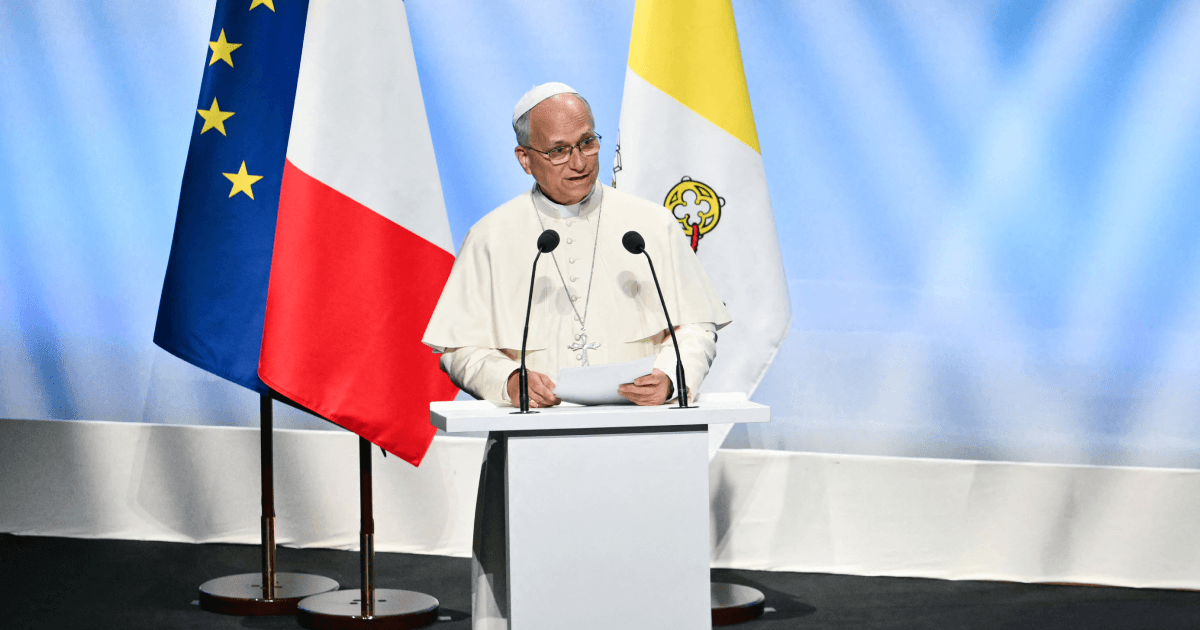
With this experience, she brings a notably media-savvy persona to the Vatican’s Dicastery for Communication and also implements a notable shift in terms of ensuring the office will become more oriented towards the Anglosphere than it has been previously. But she will not be solely focused on one language theme: born in Mexico City, she speaks English and Spanish, and has working proficiency in French.

“While this appointment was unexpected, I receive it with a sincere desire to serve the Holy Father as he begins his pontificate,” said Alvarado. With degrees in political science and management from Florida International University and George Washington University, Alvarado has met Leo at least twice in his yet-nascent pontificate, including a private audience in September last year.

The Dicastery for Communication was established by Pope Francis in 2015, and the Pontifical Council for Social Communications was folded into it. The Italian journalist Paolo Ruffini became prefect in 2018, thus becoming the first lay prefect of a Vatican dicastery.

The Dicastery oversees the wide-ranging scope of Vatican communications, including the Holy See Press Office, the in-house news service Vatican News and L’Osservatore Romano, Vatican Radio and the Vatican publishing house. It is responsible for the public-facing image of the Pope that Catholics around the world see through live-streamed events, the pictures selected for use and the information deemed worthy of sharing.

Delivering his farewell speech, Ruffini stated: “The Dicastery has embedded in its very DNA the duty to remain constantly attuned to the rapidly changing world of communication.”

He committed to working alongside Alvarado in the transition process “in the spirit of communion that unites us in the Church”.

Such news is momentous in a multitude of ways. Not least, it demonstrates the soft power wielded by the American body of the Catholic Church in that EWTN’s president has now been named to direct the Vatican’s public face. The already very close links that exist between EWTN and the Vatican will thus become even closer.

With this taking place under an American Pope, it also highlights the realisation that though the Vatican Curia’s operational style is still markedly Italian, the wider Church is not populated by Italians – nor even by Europeans. Annual figures show growth in Africa and South America, while simultaneously documenting a stagnation of the Church in once-Christian civilisation. A new, revitalised approach to the Vatican’s communications is desperately needed – one that Ruffini consistently proved incapable of delivering.

Indeed, Ruffini became embroiled in scandal after he defended Vatican News’s regular use of artwork made by the disgraced priest Fr Marko Rupnik. Rupnik’s art has been intimately linked to his serial sexual, physical and psychological abuse. Alleged victims stated that Rupnik painted icons naked from the waist down while aroused, that he coerced them into having threesomes by invoking the Trinity and also forced them to drink his semen from a chalice.

“Do you think that if I pull away a photo of art from my website, our website, I would be more close to victims? Do you think so?” Ruffini rebuffed at a media conference in 2024. “Who am I to judge?”

So tone-deaf was his defence of Rupnik’s art on the Vatican’s official portals – a use that was a recurring theme in most months of the year – that EWTN’s National Catholic Register published a commentary from its editors strongly critiquing Ruffini: “we disagree with his view of the situation”.

“The dicastery’s conspicuous use of Father Rupnik’s art, whatever the motivations inside the Vatican, appears to the outside world as shockingly tone-deaf and indefensible in light of the Church’s long struggle with the sexual-abuse crisis, including the abuse of adults,” wrote the Register’s editors. “Repeatedly choosing to promote his art, on the other hand, suggests to many that the dicastery is trying to send some kind of message.” Ruffini’s own office featured Rupnik’s artwork hanging on the wall, as did Pope Francis’s.

Vatican News’s regular use of Rupnik’s art came to a quiet but abrupt end shortly after Leo XIV was elected, proving that the Vatican did in fact have the ability to take action on the topic.

However, one element that is so far unchanged is that Nataša Govekar remains director of the Dicastery’s theological-pastoral department. Govekar is a close friend and colleague of Rupnik, and it is understood to be chiefly her influence that led to his art being used until Leo’s election. She is also a member of Rupnik’s now-infamous Aletti Centre – the centre for much of his alleged abuse – where she works on the “theology of images”.

Govekar has been key at the Dicastery since its inception, and she was responsible for monitoring and operating Pope Francis’s Instagram and Twitter accounts. She has for many years been welcomed as a keynote speaker at conferences on Catholic journalism, due to her leading role at the Vatican.

Alvarado will have to decide upon the future of such an individual if she wishes to make any meaningful change in the direction and spirit of the Dicastery.

Another personnel change that could take place is the make-up of the Dicastery for Communication itself, especially regarding the membership of Fr James Martin, who currently serves as a consulter. Should Alvarado remove the controversial priest and Govekar from the roster, then it would indeed cause a shake-up.

Michael Haynes is an English journalist in the Holy See Press Corps. He serves as Vatican Correspondent and Analyst for Pelican+ and the Catholic Herald, while readers can follow him at Per Mariam and on X @MLJHaynes.

Continue reading with a free account

Create a free account to read up to five articles each month
Create free account

You have # free articles remaining this month.

Subscribe to get unlimited access.
Sign up

subscribe to the catholic herald today

Our best content is exclusively available to our subscribers. Subscribe today and gain instant access to expert analysis, in-depth articles, and thought-provoking insights—anytime, anywhere. Don’t miss out on the conversations that matter most.
Subscribe



