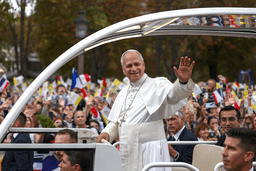
When the College of Cardinals met for the 2025 conclave it was, for many, the first time they had come together in person. Visible evidence of the lack of personal knowledge in the College was demonstrated by the corporate-style name badges and lanyards with which each cardinal was furnished.
Such ignorance was due to the lack of consistories during the pontificate of Pope Francis, which thus robbed the cardinals of the normal chance to meet and exchange ideas. A call for such meetings to return was made clear during the conclave which elected Pope Leo XIV, and he has made it a prominent part of his early reign to honour that request.
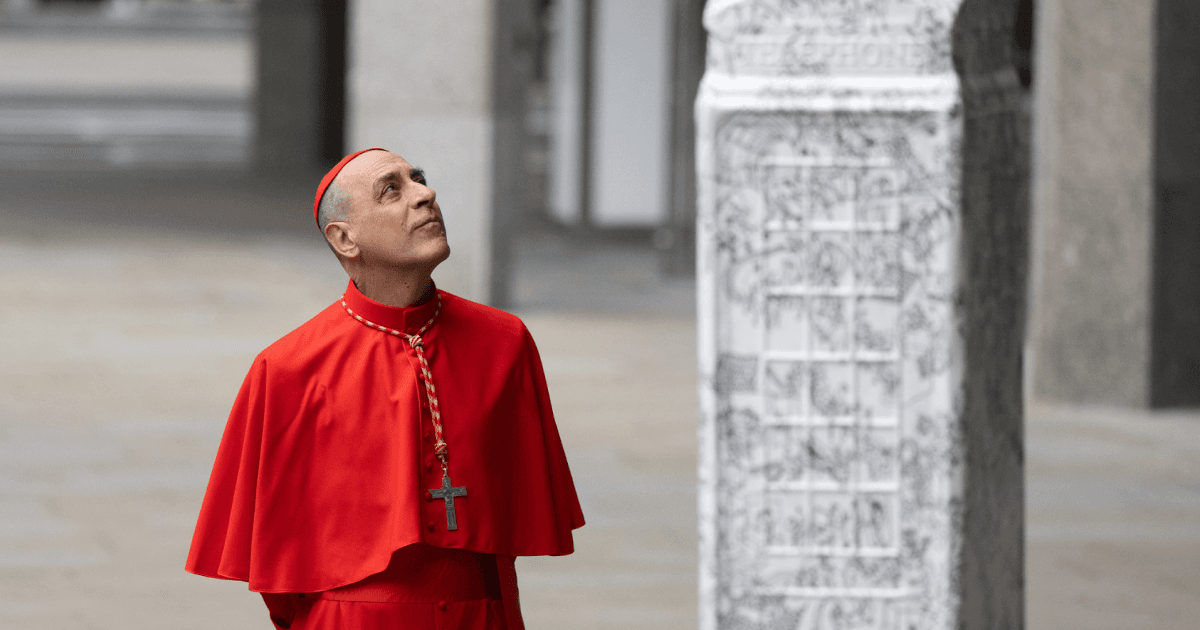
The first took place in January, and when Pope Leo and the organisers swiftly realised the two days allotted were too short, another was scheduled for June. The Pope has promised that they will become annual affairs, somewhat longer than the two-day events held so far.
This is a change which has been welcomed across the board, although some cardinals quipped in June that perhaps a cooler time of year could be chosen in future.
But though the consistories have returned, they are very different. Gone is the predominance of the traditional free interventions, also called the plenary session. Instead, the structure of the Synod on Synodality has been implemented and Pope Leo attested in June that this will become the new normal.
Some cardinals, particularly those with more of a memory of the traditional format, have raised concerns about this. They warn that the synodal, small-group method is not conducive to meaningful discussion and also that it stifles the raising of genuine concerns.
Indeed, each small-table group’s report has to be approved by all members, meaning that the concerns raised by a minority do not necessarily make it into the report and are thus not on the official record.
This, therefore, is an issue which the College will have to address. Consistories have returned but meaningful conversation has not.
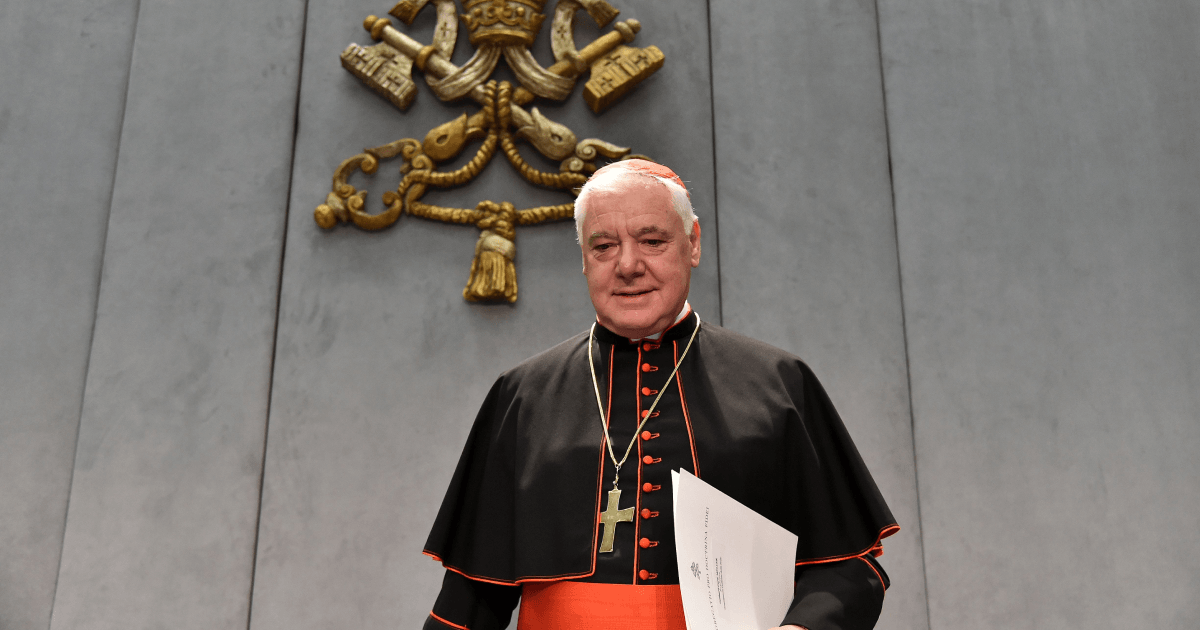
Cardinal Gerhard Müller, former prefect of the Dicastery for the Doctrine of the Faith, is one prelate who has urged a return to the traditional format. In a lengthy interview with this correspondent at the end of June, Müller spoke about the “harmony” between the Pope and the cardinals and about the need for the consistory to address real issues rather than publish platitudes.
The interview was conducted just prior to the 1 July episcopal consecrations by the Society of Saint Pius X, something the consistory bizarrely did not address at all, even after Müller used his own moment at the microphone to urge a collective response.
In this matter, Müller’s assessment points to the internal strain which is developing with the consistories: he too is glad of their reinstatement in the annual calendar, but appears increasingly concerned that they are lacking in meaningful purpose.
The Catholic Herald’s full interview with Cardinal Müller is below. Certain questions relate to the SSPX’s consecrations, since at the time of the discussion they were about to take place, but his responses also touch on the disparity in the Holy See’s handling of the SSPX and the Church in Germany.
Müller warned about the dangers of a soft approach regarding Germany, while also supporting the Holy See’s firm stance in response to the SSPX.
Haynes: Eminence, how do you think the cardinals are settling into the consistories and do you see any changes between January and the June consistory?
Cardinal Müller: There’s good harmony between the Pope and the cardinals among themselves. The College of Cardinals is not an assembly of individuals. Everybody wants to support and help the Pope in analysing the theological situation of the world and what we can do together in the mission of the Church as given by Jesus Christ, the only Saviour of the world, Son of God.
The Pope is for us the principle of unity and the permanent foundation of the visible unity of the Church in the revealed faith in Jesus Christ. Catholics don’t need a Pope due to a lack of intelligence or for sentimental reasons. We don’t need a figure to identify with like a pop star, but because he is the successor of Saint Peter and the successors of the apostles belong together, constituted as a college by Jesus Christ.
The papacy also has internal collegiality, because the Pope is the head of the Church of Rome, and the cardinals help in the service of the Pope for the government of the universal Church.
Haynes: In terms of the discussion, it seems that some of the more pressing issues inside the Church were absent from the official programme. You brought up the topic of the Society of Saint Pius X. Did that spark any conversation?
Cardinal Müller: No, the main theme was the reflection about the encyclical, the question of peace, artificial intelligence, human dignity, noting that in the world of today there is little hope placed in politicians, billionaires or the economy. The press and social media everywhere have their own interests of power, but the Church does not have a similar interest in becoming the biggest or greatest of something: instead the Church is there as a sacrament of the unity of mankind with God and of the unity of all men.
There was a little bit of discussion about these things but not a great deal due to the method of the consistory having prepared questions for us to reflect on. Everybody was so fixed on these questions as to give an answer in a general way, not with reflected statements, but just comments coming on the spur of the moment. It was more a brainstorm than a reflected conversation.
I would prefer the plenary discussion, because we are not just like some groups or individuals coming together. We are constituted as a college. The college must be together. Certainly, on the side could be some sub-commissions looking at special themes, but it would be better if we could learn from the pictures of the old synods or the photos of the new councils where all the bishops were together in the plenary and able to make clear statements.
The Council of Nicaea had such weighty discussions that St Nicholas ended up giving Arius a slap because he denied the divine nature of Jesus. Those were real discussions! We should not imitate this [slapping event], but on the other hand we must make some very clear statements to say that it’s absolutely impossible for bishops or cardinals to celebrate Masses with rainbow flags, these symbols of atheistic ideology, and not to make these so-called pastoral compromises.
It is one thing to be in helpful contact with persons who are questioning their identity, but not to be instrumental in aligning with the so-called gay lobbies…
It is not our goal to be accepted or praised by the modern press or the Left. If they are praising us we are going wrong. It is not for us to be praised by these enemies of God and mankind.
The woke ideology is a horrible enemy of mankind. To enable young people to change their sexual organs is absolutely wrong and a criminal idea, impressing upon people that they are in the wrong body. This for me is a crime against the bodily identity of everybody.
Haynes: Do you get the impression that the wider College of Cardinals is aware of the seriousness of issues present in the Church? One thing I noticed in the summaries that we received in the press corps was that the conversations often seemed quite vague or somewhat general. It did not seem that they were specific or delving into practical details – was that different for you inside the room?
Cardinal Müller: Certainly there is a temptation to speak about peace, where everybody is for peace and thus the Church must now speak for peace or make some anti-Trump remarks and so on. But that cannot be our level.
In political areas, we must give moral direction but on another level we must not take the part of one or other political groups. The citizens have to decide who they want to have for government in a democracy. The bishops give moral criteria according to which we have to decide.
All such values of peace and human dignity or the common good are founded in the natural law, but the natural law is not accepted everywhere. Original Sin has wounded human nature, and many people wish to have power over others, to have slaves to work for them…
Therefore we have to criticise some structures and conditions, not to accept them… We must always be independent of political authorities and speak the truth, whether it is opportune or not.
But we have more to say than the world. Peace is coming through Jesus Christ: “I will give you, not the peace which the world is giving to you, but My peace, divine peace.” We cannot change the curse and the challenge of the history of the world. As St Augustine described, there is the great struggle between the City of God and the City of Man, including in our hearts – not only in a political sense, but in a metaphysical, spiritual sense.
The Devil is always working…
But also we discussed the dilemma of the just war, just defence.
Haynes: In closing, Your Eminence, the SSPX consecrations: I know you mentioned this in the consistory, but do you think the Vatican or the Society might yet come to any agreement or arrangement? Is there a final appeal perhaps that could be made?
{A question posed before the 1 July consecrations.}
Cardinal Müller: There have been enough appeals made by the Pope and cardinals, and it seems they have lost hope that the SSPX will change its mind. But in no way can it be justified.
This ordination of a bishop without the communion of the Pope is a schismatic act in itself. The Pope is the successor of Saint Peter and he is the visible principle of the visible unity of the Church. Not every group can ordain its own bishop.
This group is saying: “We are the best Catholics and therefore we have the right to defend ourselves against the Pope.” This is the deepest destruction of the principle of catholicity. Luther also said: “I am Catholic and the last interpretation of the Gospel belongs to me, not to the Pope.” That’s the typical Protestant attitude.
The other question is whether the reaction to the errors in Germany is enough? [The Vatican] has been making diplomatic solutions, and these are good up to a certain point. The crucial point is the question of the truth.
Haynes: A number of people have pointed this out, that it does seem that with the SSPX the Vatican has been very swift and firm, but with places like Germany they have been very slow, giving a lot of leeway. Is the Vatican worried that Germany might leave the Church as an entire country?
Cardinal Müller: With the SSPX the Vatican has been tolerant for a long time, but regarding episcopal ordinations how many times did the popes, and Cardinal Ratzinger, engage in discussions!
There were a lot of discussions about the right understanding and interpretation of the Second Vatican Council. There are absurd ideas that hold that only the Mass in the traditional form is valid, and that the new rite is invalid. The new form is not invalid; this is absurd.
Haynes: Do you think if the Vatican were even firmer with Germany and threatened excommunication for some of the things happening there, that that could also pull Germany back?
Cardinal Müller: They are avoiding declaring the bishops to be heretical. They give different explanations and argue that “this is only a certain adaptation and modernisation”, but if you look deeper, there’s a contradiction. [What the Germans are doing] is an abuse of the term development of dogma. The development of dogma is not a changing of the substance.
Doctrine is based on the self-revelation of God in Jesus Christ. He’s the truth in person.
In Germany we have the Central Committee of German Catholics, which is a group of ideologues – not all, surely, but certainly the leaders. They want to have another Church according to their ideas coming out of woke ideology and feminism. They want to have women priests: not because of preaching the Gospel or anything, or a vision of the Church. They are not interested in the mission of the Church. But they wish to have a position of personal prestige to satisfy their desire to be in the first place. It is absurd.
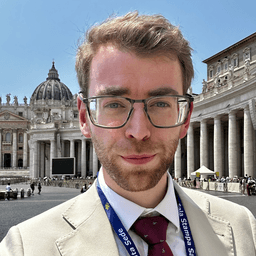
Michael Haynes is an English journalist in the Holy See Press Corps. He serves as Vatican Correspondent for the Catholic Herald, while readers can follow him at Per Mariam and on X/Twitter @MLJHaynes.