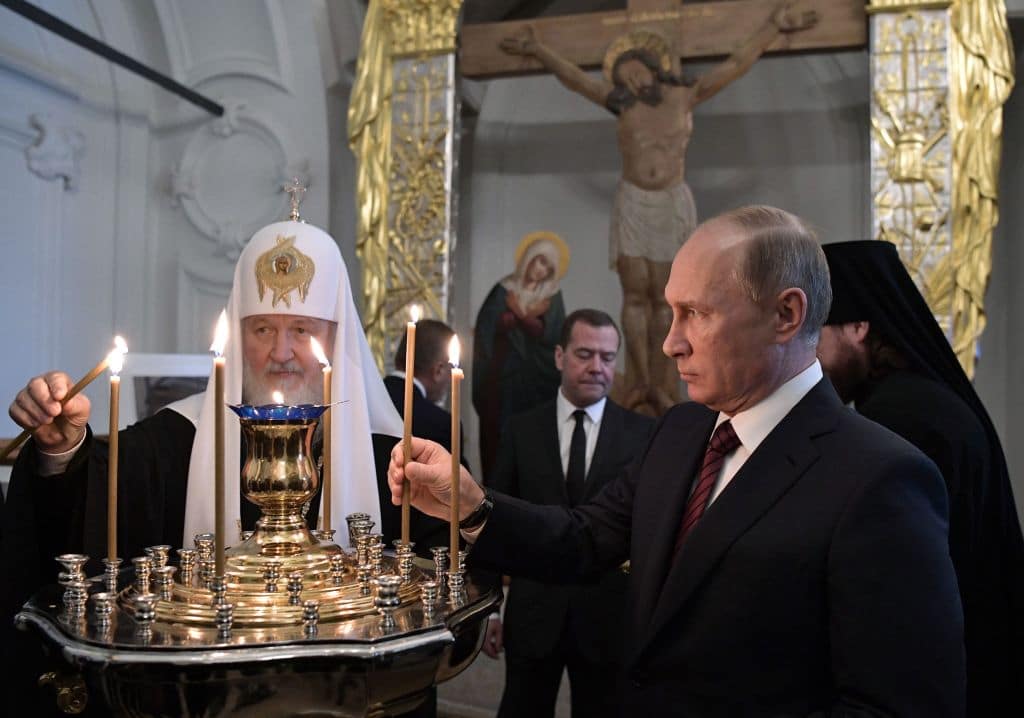



In 2016, I happened to be in Karyes, capital of the monastic republic of Mount Athos, when Vladimir Putin swept into the small hilltop in a motorcade. Russia has had close links with Mount Athos since the ninth century. Then, in the 12th century, Athonite monks led the regeneration of Russia from small settlements in the far north, under the leadership now of Moscow, Kiev having been knocked out of action by the Mongol invasions.
Alighting from his four-wheel drive, the Russian president was escorted into the 10th-century church of the Protaton, and towards a stall traditionally reserved for the emperors of Byzantium, where he stood for vespers. The authority of the emperors of Byzantium, from whom the Russian tsars traced their line of descent, extended over an ordered hierarchy of satellite states revolving in obedient harmony around the throne of a transnational autocrat.