
July 23, 2026

Father James Martin calls for ‘gay priests’

Michael Haynes
More
Related
Min read
share

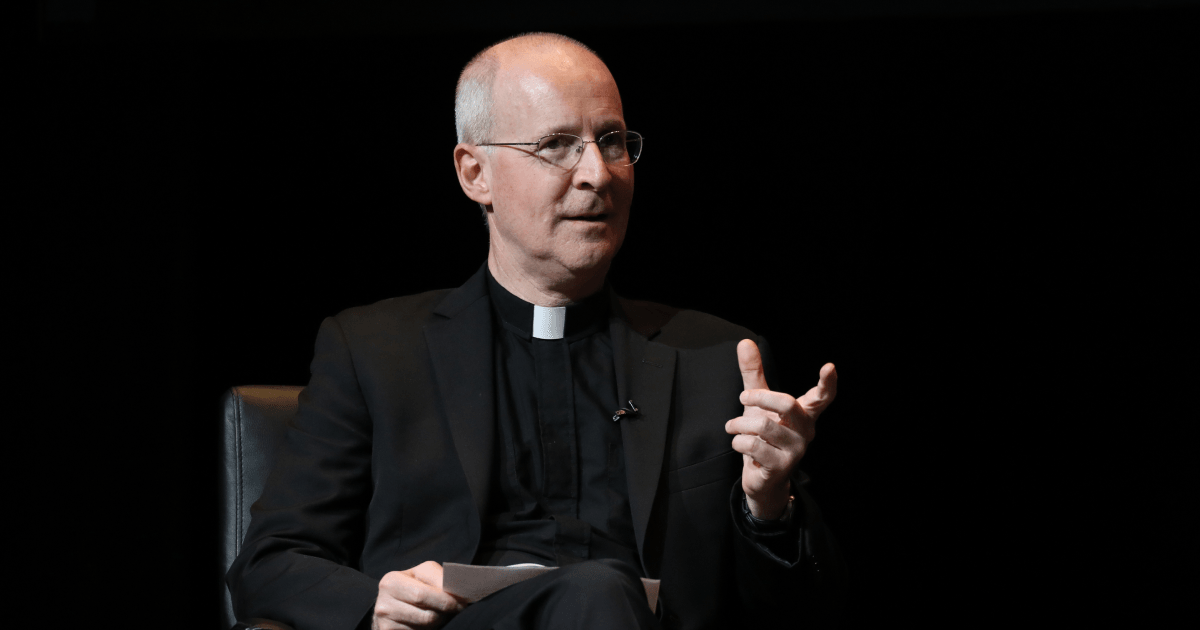
Continuing his public advocacy on LGBT issues, Fr James Martin SJ has argued that the Catholic Church should officially admit ‘gay’ priests.

In a new essay published by his pro-LGBT organisation Outreach, Fr James Martin has presented his case for why the Church should admit homosexuals to the priesthood. He notes that he is only in favour of admitting celibate men, but after establishing that as the foundation of his argument, the prominent Jesuit calls on the Church to change its rules regarding seminary admission and ordination.

“To be clear,” Fr Martin writes, “when we speak about gay men being ordained as priests or accepted into religious orders, we are presuming a life of celibacy (the promise that priests make at their ordination) and chastity (the vow members of religious orders make).”

His essay was prompted by a 2024 study conducted by the McGrath Institute for Church Life. The study’s authors recently published their findings, arguing against admitting men with same-sex attraction to the seminary.

The study distinguished between “deep-seated” and “transitory” same-sex attraction, just as the Holy See did in its 2005 document on the matter. The two authors of the McGrath Institute study defended the Church’s position in differentiating between the two forms of same-sex attraction, with the former prohibiting a man from entering seminary, while the latter does not completely close the door, although a man must be free from such attraction for many years before ordination.

But for Martin, such language is fallacious since he views same-sex attraction as a central part of an individual’s identity. “It is one thing to overcome temptation or lust; it is another to overcome one’s overall sexuality,” he wrote.

One key issue with his argumentation, and that of many LGBT activists, is the use of the word “homosexual” to refer to an individual with same-sex attraction (SSA). The Church views SSA as a temptation or trial for that particular man to combat, while LGBT activists see SSA not just as an attraction but as an identity, as part of one’s natural being. For Martin and others, a “homosexual” man is not simply a man who has same-sex attraction as a tendency, but one who is same-sex attracted as a natural part of his identity.

It is in this way that Martin defends having “gay” priests form part of the Church’s clergy, and he described the study’s language of “overcoming” same-sex attraction as “worrisome”. If – as he appears to believe – SSA is not an attraction or a temptation to be resisted, but rather a natural part of a man’s identity as God made him, then why would the Church not ordain “gay” men just as She ordains straight men?

The issue with this is that it directly contradicts Church teaching. The Holy See denotes SSA as a “condition”. Though not sinful in itself, homosexual acts are indeed sinful, as the Vatican clearly outlined on numerous occasions, including in its 1986 text on the matter:

“Although the particular inclination of the homosexual person is not a sin, it is a more or less strong tendency ordered towards an intrinsic moral evil; and thus the inclination itself must be seen as an objective disorder.”

By virtue of this, the Church states that She “cannot admit to the seminary or to holy orders those who practise homosexuality, present deep-seated homosexual tendencies or support the so-called ‘gay culture’”.

What Martin has revealed in his essay is that he fundamentally disagrees with the Catholic Church’s teaching on homosexuality. For him, it is not something which is an “objective disorder”, but rather a natural part of creation, of human existence.

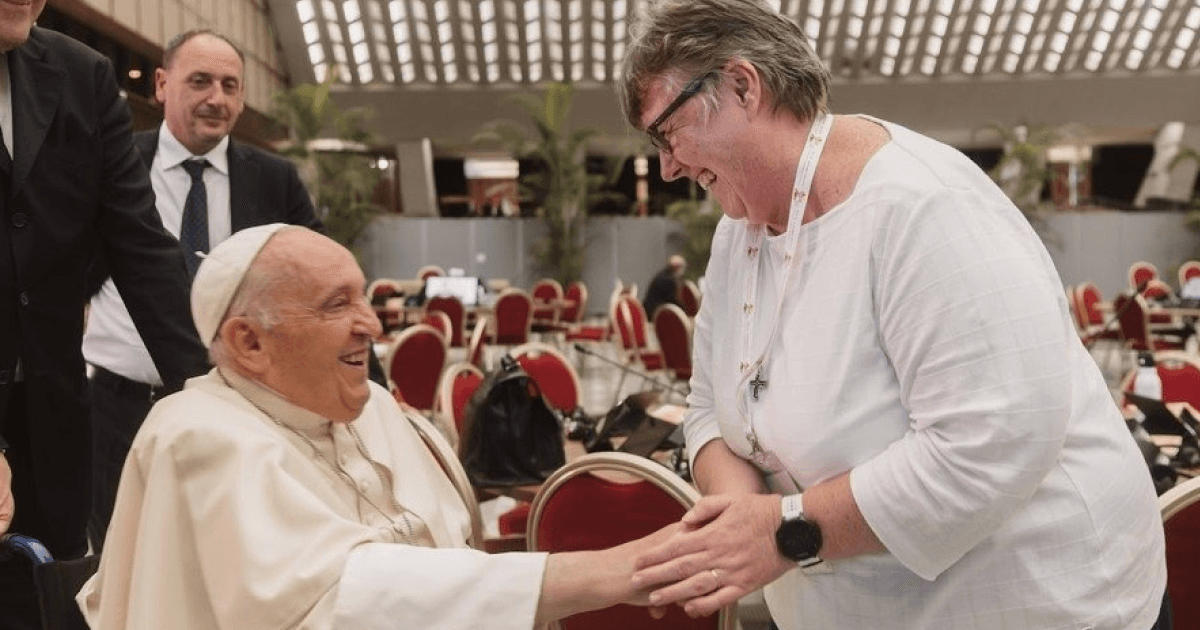
Indeed, he has anecdotal evidence which he claims supports his view, thanks to the widespread ingress of men with SSA into seminaries over past decades. During one of his private meetings with Pope Francis, Martin was told by the Pope that he knew “many ‘good, holy and celibate’ seminarians and priests who were gay”.

“In my almost 40 years as a Jesuit, I’ve known dozens of celibate gay priests who have led what Pope Francis called ‘good, holy and celibate’ lives, modelling Jesus’s message of love and mercy,” Martin added.

The Jesuit priest revealed that “a few years ago” he asked an American seminarian studying in Rome how many of his classmates “were gay”, to which the young man responded: “Half of them.” But none, the seminarian said, had revealed this fact to their rector or spiritual director for fear of being expelled.

“The most compelling argument for openness to ordaining gay men to the priesthood is the presence of many holy and healthy gay and celibate priests,” argued Martin. He continued:

“The real question is: Can a man model Jesus Christ in his love, mercy and compassion while living in faithful celibacy? The [McGrath Institute study] authors’ answer for gay men who feel called to priesthood seems to be no. With respect for their studies and experience, my answer, based on my experience with many holy and healthy gay priests over the past 40 years, is yes.”

Yet again, the Church disagrees. The Congregation for Catholic Education wrote in 2005 about men with “deep-seated homosexual tendencies”:

“Such persons, in fact, find themselves in a situation that gravely hinders them from relating correctly to men and women. One must in no way overlook the negative consequences that can derive from the ordination of persons with deep-seated homosexual tendencies.”

Due to the Church’s teaching that SSA is “an objective disorder”, She notes that celibacy itself is not enough for admission to Holy Orders. Instead, a prospective priest must be able to relate “correctly” to his flock, which necessitates being free of SSA.

“If a candidate practises homosexuality or presents deep-seated homosexual tendencies, his spiritual director as well as his confessor have the duty to dissuade him in conscience from proceeding towards ordination,” the Vatican wrote in 2005.

Men with only “a transitory problem” of experiencing “homosexual tendencies” could be admitted to the seminary, according to the Congregation, but these tendencies must be “clearly overcome at least three years before ordination to the diaconate”.

Martin’s name is synonymous with LGBT advocacy in the Catholic Church, having gained immense prominence under Pope Francis, and indeed at least partly due to the Argentinian Pontiff, who welcomed Martin in audience and directly supported the priest’s LGBT activities.

He has become one of the most divisive figures in the Church, especially among American Catholics. Some of his more controversial actions, aside from supporting same-sex-attracted individuals in that identity, include describing an understanding of God being male as “damaging”, promoting same-sex civil unions and images of Christ as a homosexual.

The priest used to be a source of contention in meetings of the US Catholic Bishops Conference. Raymond Cardinal Burke previously deemed Martin’s teaching “not coherent with the Church’s teaching on homosexuality”, and former Archbishop Charles Chaput of Philadelphia said that Martin did not speak “with authority on behalf of the Church”. Owing to the “confusion caused by his statements and activities regarding same-sex related (LGBT) issues”, Chaput further urged “caution [to] the faithful about some of his claims”. These days, his activities seem to pass without censure.

Michael Haynes is an English journalist in the Holy See Press Corps. He serves as Vatican Correspondent for the Catholic Herald, while readers can follow him at Per Mariam and on X/Twitter @MLJHaynes. 


Continue reading with a free account

Create a free account to read up to five articles each month
Create free account

You have # free articles remaining this month.

Subscribe to get unlimited access.
Sign up

subscribe to the catholic herald today

Our best content is exclusively available to our subscribers. Subscribe today and gain instant access to expert analysis, in-depth articles, and thought-provoking insights—anytime, anywhere. Don’t miss out on the conversations that matter most.
Subscribe