
February 12, 2026

Friar: a sense of hope is growing in Aleppo

Staff writers
More
Related
Min read
share

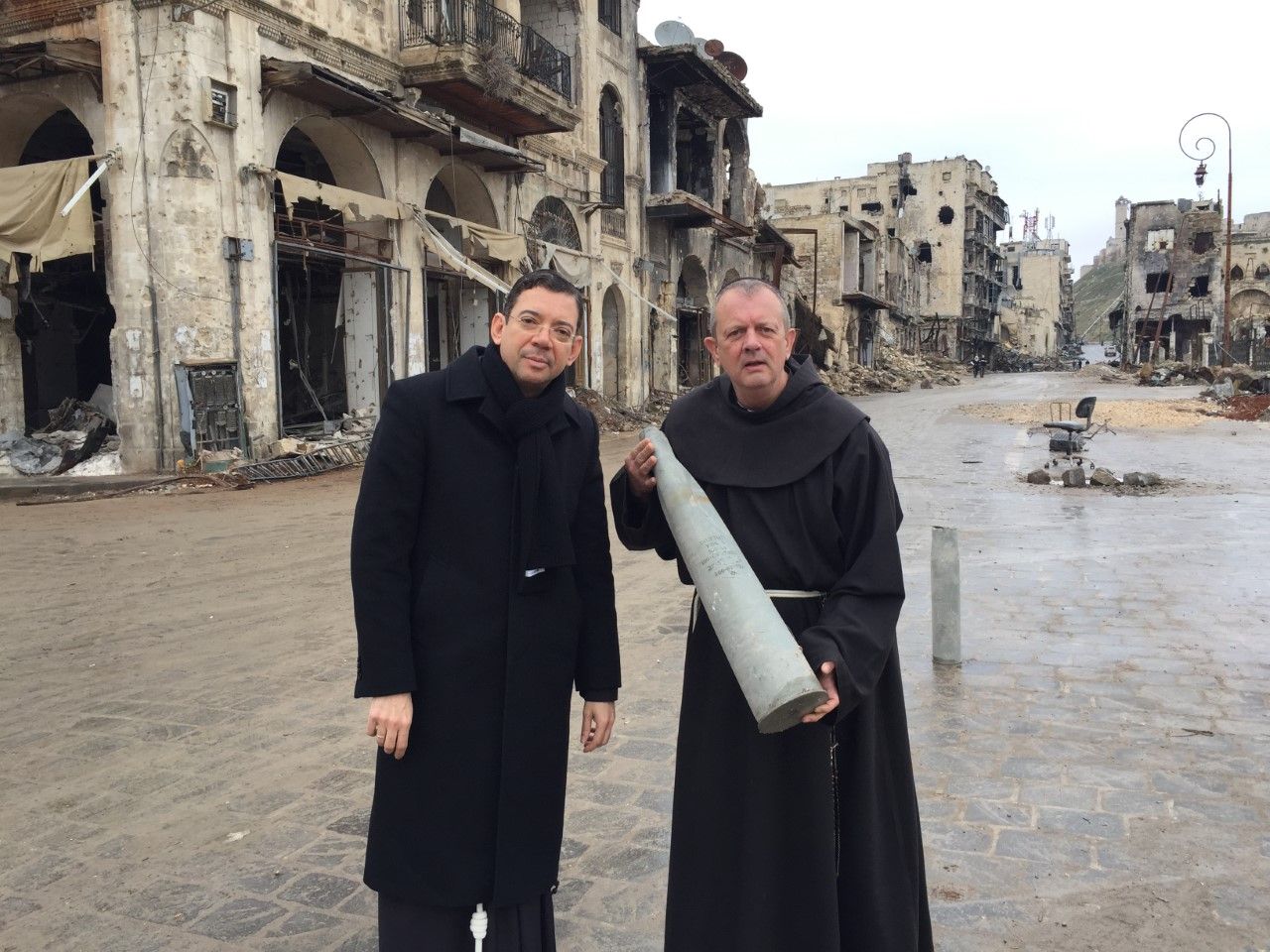
A Franciscan friar who visited the Syrian city of Aleppo last week has said that the devastation there is beyond what people can imagine.

Fr John Luke Gregory, vicar general of the Archdiocese of Rhodes in Greece, said it was “like a whole suburb of London completely flattened. You can’t imagine the devastation. It’s not just streets – it’s whole areas bombed out.”

Despite that, he said, there was a sense of hope now that the heavy shelling had stopped: “The road sweepers are at work again. There are all these bombed buildings but they are cleaning the streets of litter.”
People had also moved back into the bombed areas, he said. “All round, the buildings might be bombed you’ll see clean washing coming out.

“People need to turn back to doing ordinary things – this is a great sign of hope.”

Fr Gregory, who is from Sheffield, visited friars in Aleppo, Homs and Damascus. Even amid heavy bombardment six friars had stayed in Aleppo, he said. He explained that, as a member of the governing body of the custos of the Holy Land, he had “made the decision to send friars to all these places, so I should have the courage to stay there too”. Two Franciscans are in rebel-held areas, he said, but this was considered too dangerous for him to visit.

In Aleppo the Franciscans run schools and help with food and medicines for people, he said. Last year at their Terra Sancta college they built a swimming pool “so that adults and children could come together and have some kind of recreation and normal life”.

The thinking, he said, was that “we might as well die happy doing normal things”.

When he visited, Fr Gregory said, “the people weren’t gloomy. There’s a sense of hope.”

Readers who want to help should contact the Associazione Terra Santa.


Iraqi Church: a safe area for Christians would be a disaster

Iraqi Catholic clergy do not want to see a safe corridor set up for Christians, an American bishop has said.

Bishop Oscar Cantú of Las Cruces, New Mexico, was speaking after meeting Church leaders in northern Iraq.

In an interview with Catholic News Service, Bishop Cantú recounted remarks made by Syriac Catholic Archbishop Yohanna Moshe of Mosul.

“We don’t want to live in a ghetto. That is counterproductive. That makes us a target for our enemies. We have to live in a secure but integrated community where Chaldean Catholics, Syriac Catholics, Sunni Muslims, etc, have relationships with each other,” he said.

He recalled that the archbishop told him: “We need an integrated reality, rather than a ‘Gaza’ where there’s a wall and someone is guarding people going in and out.”

Although security is paramount, Church leaders prefer to see reconciliation take place, enabling Iraq’s different religions and ethnicities to live side by side, Bishop Cantú said.

Catholic clergy “really want to establish some normalcy in the midst of displacement,” the bishop said.


Post-earthquake babies baptised

Pope Francis baptised 13 babies from central Italy last week in a gesture of closeness to those who lost loved ones and homes following several devastating earthquakes.

The Pope celebrated the baptisms in the chapel of the Domus Sanctae Marthae, where he lives. The Vatican said that all of the babies baptised by the Pope were born after last year’s earthquakes and that “the youngest … was five days old”.

A Franciscan friar who visited the Syrian city of Aleppo last week has said that the devastation there is beyond what people can imagine.

Fr John Luke Gregory, vicar general of the Archdiocese of Rhodes in Greece, said it was “like a whole suburb of London completely flattened. You can’t imagine the devastation. It’s not just streets – it’s whole areas bombed out.”

Despite that, he said, there was a sense of hope now that the heavy shelling had stopped: “The road sweepers are at work again. There are all these bombed buildings but they are cleaning the streets of litter.”
People had also moved back into the bombed areas, he said. “All round, the buildings might be bombed you’ll see clean washing coming out.

“People need to turn back to doing ordinary things – this is a great sign of hope.”

Fr Gregory, who is from Sheffield, visited friars in Aleppo, Homs and Damascus. Even amid heavy bombardment six friars had stayed in Aleppo, he said. He explained that, as a member of the governing body of the custos of the Holy Land, he had “made the decision to send friars to all these places, so I should have the courage to stay there too”. Two Franciscans are in rebel-held areas, he said, but this was considered too dangerous for him to visit.

In Aleppo the Franciscans run schools and help with food and medicines for people, he said. Last year at their Terra Sancta college they built a swimming pool “so that adults and children could come together and have some kind of recreation and normal life”.

The thinking, he said, was that “we might as well die happy doing normal things”.

When he visited, Fr Gregory said, “the people weren’t gloomy. There’s a sense of hope.”

Readers who want to help should contact the Associazione Terra Santa.


Iraqi Church: a safe area for Christians would be a disaster

Iraqi Catholic clergy do not want to see a safe corridor set up for Christians, an American bishop has said.

Bishop Oscar Cantú of Las Cruces, New Mexico, was speaking after meeting Church leaders in northern Iraq.

In an interview with Catholic News Service, Bishop Cantú recounted remarks made by Syriac Catholic Archbishop Yohanna Moshe of Mosul.

“We don’t want to live in a ghetto. That is counterproductive. That makes us a target for our enemies. We have to live in a secure but integrated community where Chaldean Catholics, Syriac Catholics, Sunni Muslims, etc, have relationships with each other,” he said.

He recalled that the archbishop told him: “We need an integrated reality, rather than a ‘Gaza’ where there’s a wall and someone is guarding people going in and out.”

Although security is paramount, Church leaders prefer to see reconciliation take place, enabling Iraq’s different religions and ethnicities to live side by side, Bishop Cantú said.

Catholic clergy “really want to establish some normalcy in the midst of displacement,” the bishop said.


Post-earthquake babies baptised

Pope Francis baptised 13 babies from central Italy last week in a gesture of closeness to those who lost loved ones and homes following several devastating earthquakes.

The Pope celebrated the baptisms in the chapel of the Domus Sanctae Marthae, where he lives. The Vatican said that all of the babies baptised by the Pope were born after last year’s earthquakes and that “the youngest … was five days old”.

subscribe to
the catholic herald

Continue reading your article with a subscription.
Read 5 articles with our free plan.
Subscribe

subscribe to the catholic herald today

Our best content is exclusively available to our subscribers. Subscribe today and gain instant access to expert analysis, in-depth articles, and thought-provoking insights—anytime, anywhere. Don’t miss out on the conversations that matter most.
Subscribe