



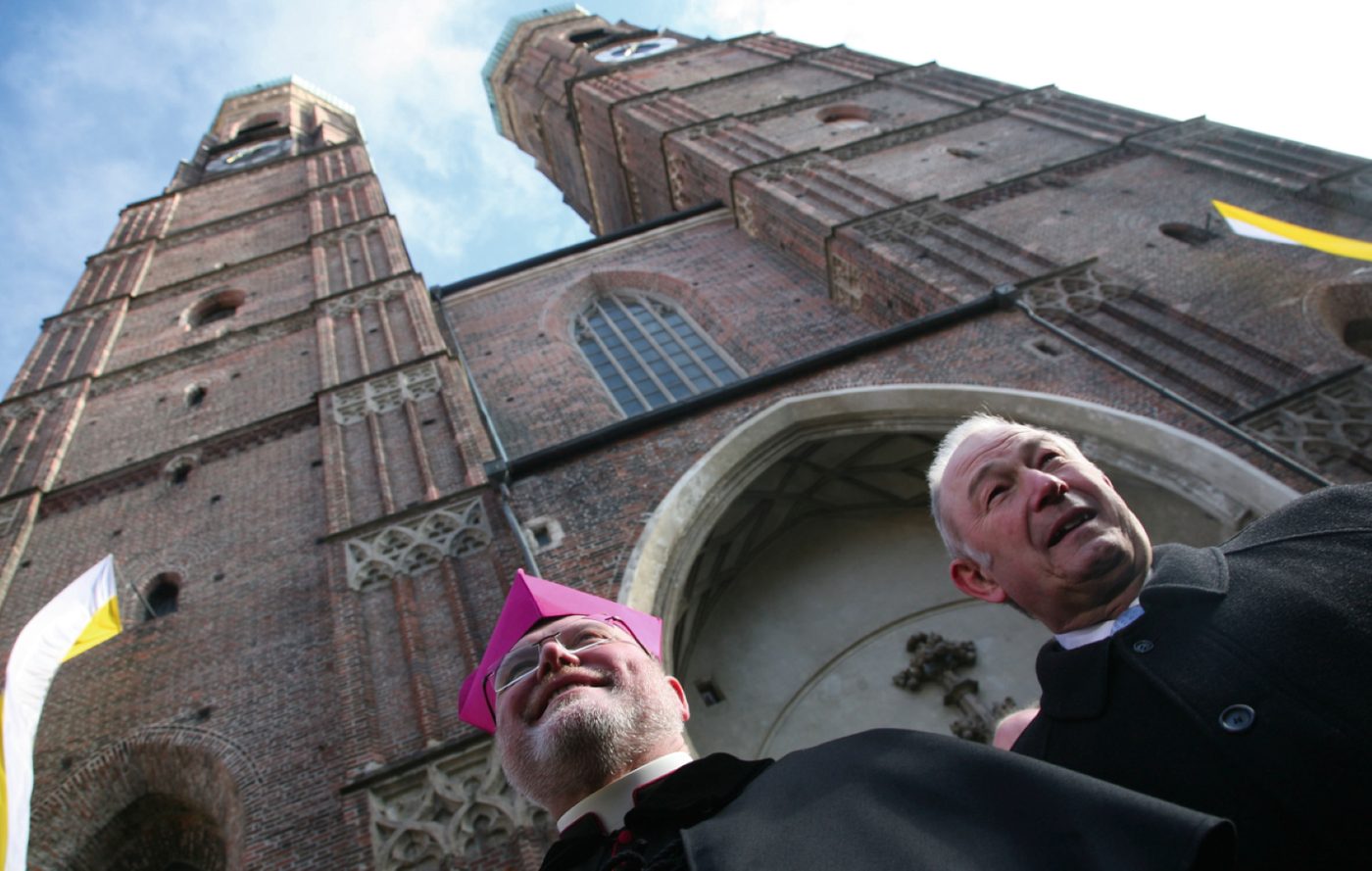
Germany’s Catholic Church received a record £5.3 billion (€6 billion) in tax money last year, a newspaper investigation has found. The country’s 27 dioceses also have a fortune of at least £23 billion, including large investments in real estate and equities, making the German Church probably the wealthiest Catholic institution in Europe other than the Vatican. The German business newspaper Handelsblatt reported that despite more than 2.2 million Germans formally deregistering from the Church since 2000, the country’s strong economy had helped boost tax revenue to record levels. Under the country’s church tax laws, the government deducts a levy of eight to nine per cent from the income of registered church members and hands it to the country’s various churches, including the Catholic Church. As well as receiving the large sums from registered Catholics, the German Church has numerous assets and investments. Handelsblatt said that the Church has total financial investments of £13 billion, and of at least £18 billion in fixed assets such as real estate and equities. The diocese with the highest equity is Paderborn, which has £3.1 billion, followed by Munich-Freising with £2.5 billion, and Cologne with £2.3 billion. The figures come despite the number of Catholics regularly attending Mass falling substantially since the 1960s. In 2015, 2.5 million Catholics went to church on Sunday, compared with 11.5 million half a century earlier. In an article for the Catholic Herald last year, Anian Christoph Wimmer, editor of CNA Deutsch, wrote that, while there were 23.8 million Catholics in Germany, only one in 10 of them attended Mass on a Sunday. “That figure,” he wrote, “is down one third from 2000.”
12:00 PM
German Church gains tax billions
Staff writers

3 min read



Already a subscriber? Sign in
5freearticles every month
Continue reading with a free account. No card needed.
- Five free articles every thirty days, on any device you sign in on
- The Catholic Herald newsletter, every morning
- Subscribe whenever you like for everything: every article and the magazine
Related articles
 Newsroom
Church leaders urge Drumcree dialogue: ‘Too much is at stake’
The Catholic and Church of Ireland Archbishops of Armagh have urged a renewed commitment to peace and reconciliation amid the Drumcree stand-off
Corrie Douglas-Young Newsroom
Thousands of Irish children to join global Rosary campaign
Corrie Douglas-Young Newsroom
TikTok priest urges young people to stand with persecuted Christians
Nathalie Raffray Newsroom
Baby born at 25 weeks reunites with neonatologist two years after leaving hospital
The Catholic Herald Newsroom
Joe Biden honoured by Planned Parenthood after defending abortion rights
Christine Rousselle
subscribe to the catholic herald today
Our best content is exclusively available to our subscribers. Subscribe today and gain instant access to expert analysis, in-depth articles, and thought-provoking insights—anytime, anywhere. Don’t miss out on the conversations that matter most.
Subscribe



