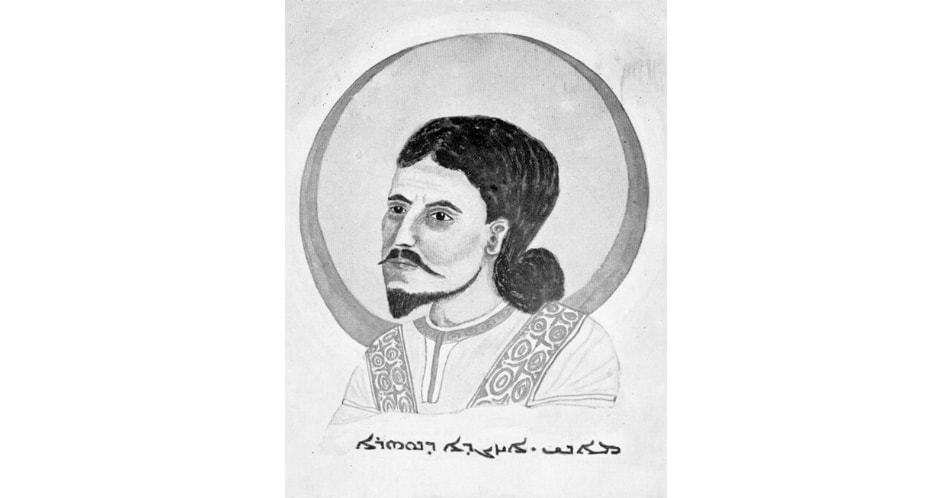


Mani (216-274) was an Iranian who lived during the transition of power in Persia from the foreign Parthians to the native Sassanid dynasty – and enjoyed favour among the latter, at least for a time. He was born during a period of great religious ferment in the Near East.
The dominant religion in Persia was Zoroastrianism, which taught a sort of dualism – the idea that there are two equally powerful gods: the good Ahura Mazda and the evil Ahriman. There were many Gnostic sects of pagan, Jewish and Christian orientation – and other heretical and orthodox Christian communities as well. Mani’s father was an Elcasaite, a Jewish Christian sect.

Between 12 and 24, Mani received a series of messages from his “Heavenly Twin”. In time, he developed his own religious system: with matter being the creation of an evil god – the demiurge – and spirit that of the good god, the human soul is in a trap. Liberation is possible through prayer, asceticism and devotion to Jesus, whose role is to help us escape the prison of flesh. This belief is called “Manichaeism”, after its founder.
Although Mani died in prison after losing court favour, his religion eventually spread from Rome to China, capturing such worthies as St Augustine (for a while). Repeated persecutions in every country it was found in drove it underground for a while, only for it to reappear as Bogomiles, Paulicians, Cathars, Albigenses, and many more.
Why did it encounter such hostility? Because of its followers’ opposition to procreation (not wishing to trap more souls in flesh), preference for sexualities that would not result in children, and refusal of all ecclesiastical and temporal authority. As an organised body, it has for the most part died out; but a resurgence of its basic attitudes imperils modern morality.