December 22, 2025
December 22, 2025

Holy day or holiday? A history of Christmas traditions

Min read
share

From the earliest days, Christmas has been a curious, eclectic mix of the sacred and the secular. Not always competing but often overlapping and overwhelming: indulgence and incarnation, revelry and reverence. Much impressive scholarship has been undertaken in recent decades into the history of the holiest and happiest day of the year, among them Judith Flanders’s fascinating Christmas: A Biography (2017), which one reviewer described as having “more footnotes than there are presents under a Rockefeller Christmas tree”. Another is Penne L. Restad’s Christmas in America (1995).

The earliest evidence for the celebration of Christ’s birth comes from the fourth century, when Pope Julius I (337 to 352) decreed that the Nativity should be observed on 25 December. This is, of course, forty weeks after the Annunciation, Lady Day, but 25 March was also chosen as the date of Christ’s death. The coming of Our Lord and His death coincided.

Christmas is also linked to the winter solstice, the shortest day of the year, and some argue that 25 December was chosen because ancient Roman midwinter pagan festivals coincided with the solstice. Christian citizens of the Roman Empire could then turn from worshipping the Sun god to worshipping the Son of God.

But in the four centuries it took to proclaim Christ’s birthday, worldly appetites had enjoyed full rein. By 389, the Archbishop of Constantinople was warning against dancing and “feasting to excess”. In the mid seventh century, Theodore of Tarsus, the seventh Archbishop of Canterbury, reminded his flock that the Church frowned on gluttony.

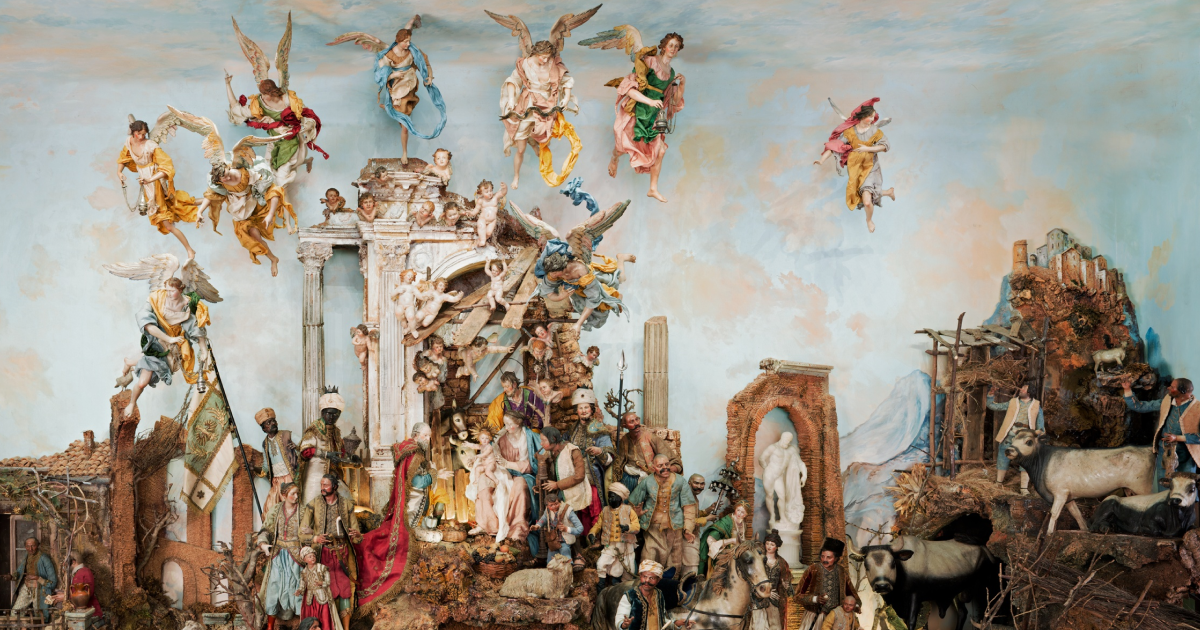
It may have taken four hundred years to settle on a date, but it took more than a millennium for the central scene of the manger to come to the fore, when on Christmas Eve 1223 St Francis of Assisi set up the first one, with the blessing of Pope Honorius III.

Inspired by a visit to Bethlehem, Francis invited the villagers and friars of Greccio, Italy, to gather for Mass at his manger, wanting to foster love for the Christ Child and hoping that the Nativity, with ox and ass standing by the feeding trough turned crib, would underline the poverty and simplicity in which God’s Son came into the world.

That other symbol of Christmas, the tree, had a complex history. The Romans had used fir trees to decorate their temples to honour Saturn, the god of agriculture, while in northern Europe evergreens were thought to ward off illness and evil spirits and were erected during the solstice in anticipation of summer and new growth. There was also the Paradise tree, a fir strewn with apples reflecting the Garden of Eden on Adam and Eve’s Day, which fell on 24 December.

Another great saint, St Boniface, the eighth century Apostle to the Germans, tried to teach his people to worship not the tree but Christ, who died on a tree. By the late medieval period, the Church had embraced this green tradition, and holly and ivy were common in churches. Trees were being decorated in Freiburg with apples, wafers, tinsel and gingerbread as early as 1419.

In the sixteenth century, Germans and Latvians would parade trees through their streets and then set them alight. It is thought the first person to bring a tree indoors was none other than Martin Luther. In 1841, Coburg born Prince Albert set up a tree in Windsor Castle, and this became fashionable.

When Albert’s wife, Queen Victoria, ascended the throne only four years earlier, only some of the trappings of the modern festival were in place: family parties, mistletoe and holly, churchgoing, charity, turkey, plum pudding and mince pies. But there were no trees, no carols, no cards, no Father Christmas and no presents.

Interestingly, the United States proved the source of much Yuletide tradition. In fact, it was after his visit there in 1842 that Charles Dickens returned to write the classic festive fable A Christmas Carol and became, as it were, king of the family hearth.

America also provided that other personification of Yuletide, Santa Claus. Again, his origins were ancient but, like so many seasonal traditions, cumulative. The inspiration for Father Christmas was generally believed to be St Nicholas, a fourth century bishop from Myra in Asia Minor. His feast was celebrated in parts of Europe on 6 December. In 1616, Ben Jonson’s play Christmas His Masque featured an old bearded man entering through the chimney, accompanied by children named Carol, Misrule, Gambol, Minced Pie and Baby Cake. In 1822, Clement Moore penned A Visit from St Nicholas, introducing a sleigh led by eight reindeer landing on houses and filling stockings. Thomas Nash gave him a home, the North Pole, where he made toys and kept a great book recording which children were naughty or nice. The episcopal robes of red and white inspired his costume, but a Coca Cola advertisement finally immortalised him as a jolly, rotund, white haired figure in a red suit with white fur trim.

Perhaps the most evocative aspect of the feast of Christmas is the carol. While Judith Flanders has claimed that the lyrics of most medieval carols were consumed with food and drink, with only a nod to the sacred, the telegraph’s Christopher Howse points to Eamon Duffy’s classic The Stripping of the Altars (1992), which argues that many, while “designed for convivial use”, are pervasively indebted to liturgical hymnody. The Catholic scholar Joanna Bogle has observed that while many carols are medieval in origin, the seventeenth century produced “While Shepherds Watched”, and the nineteenth century gave us “Away in a Manger” and “O Little Town of Bethlehem”.

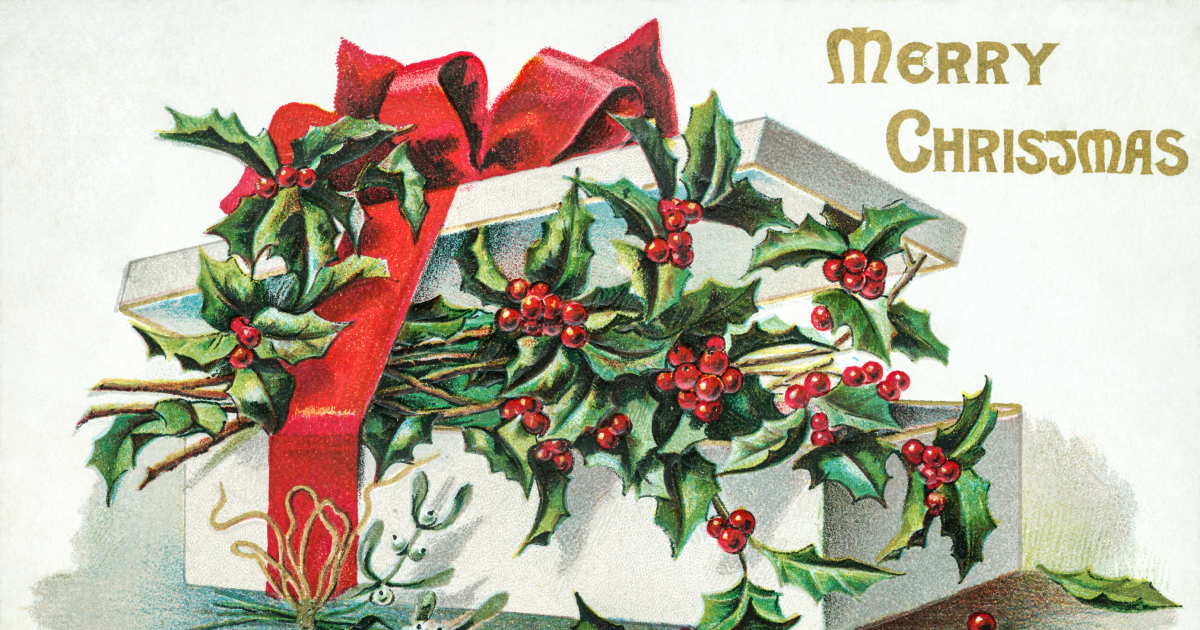
Another feature of quite recent vintage is the Christmas card. Bogle reminds us of C S Lewis’s parody of “the baffled time traveller visiting Britain and finding people buying squares of decorated cardboard and mailing them to one another”. Until about 1890, most Christmas cards featured holly, snow and bells, and the odd church steeple. But the real miracle, or at least the other miracle, was that they would be posted on Christmas Eve and arrive the next morning.

Although cards appear to have fallen from favour and have largely been replaced by calls, texts, Instagram, TikTok and Facebook, the exchange of greetings remains one of the feast’s abiding traditions. As Penne Restad has put it, Christmas “causes us to examine relationships with our families, our community, and our faith. At Christmastide we must, directly or even by omission, set our priorities, establish our tolerances and square our hopes with reality.” Flanders offers a similar reflection, suggesting that our Christmas rituals honour “not the lives we have, but the lives we would like to have, in a world where family, religion, and personal and social relationships are built on firm foundations”.

But the firmest foundation of all is Handel’s words: “Unto us a Son is given.”

From the earliest days, Christmas has been a curious, eclectic mix of the sacred and the secular. Not always competing but often overlapping and overwhelming: indulgence and incarnation, revelry and reverence. Much impressive scholarship has been undertaken in recent decades into the history of the holiest and happiest day of the year, among them Judith Flanders’s fascinating Christmas: A Biography (2017), which one reviewer described as having “more footnotes than there are presents under a Rockefeller Christmas tree”. Another is Penne L. Restad’s Christmas in America (1995).

The earliest evidence for the celebration of Christ’s birth comes from the fourth century, when Pope Julius I (337 to 352) decreed that the Nativity should be observed on 25 December. This is, of course, forty weeks after the Annunciation, Lady Day, but 25 March was also chosen as the date of Christ’s death. The coming of Our Lord and His death coincided.

Christmas is also linked to the winter solstice, the shortest day of the year, and some argue that 25 December was chosen because ancient Roman midwinter pagan festivals coincided with the solstice. Christian citizens of the Roman Empire could then turn from worshipping the Sun god to worshipping the Son of God.

But in the four centuries it took to proclaim Christ’s birthday, worldly appetites had enjoyed full rein. By 389, the Archbishop of Constantinople was warning against dancing and “feasting to excess”. In the mid seventh century, Theodore of Tarsus, the seventh Archbishop of Canterbury, reminded his flock that the Church frowned on gluttony.

It may have taken four hundred years to settle on a date, but it took more than a millennium for the central scene of the manger to come to the fore, when on Christmas Eve 1223 St Francis of Assisi set up the first one, with the blessing of Pope Honorius III.

Inspired by a visit to Bethlehem, Francis invited the villagers and friars of Greccio, Italy, to gather for Mass at his manger, wanting to foster love for the Christ Child and hoping that the Nativity, with ox and ass standing by the feeding trough turned crib, would underline the poverty and simplicity in which God’s Son came into the world.

That other symbol of Christmas, the tree, had a complex history. The Romans had used fir trees to decorate their temples to honour Saturn, the god of agriculture, while in northern Europe evergreens were thought to ward off illness and evil spirits and were erected during the solstice in anticipation of summer and new growth. There was also the Paradise tree, a fir strewn with apples reflecting the Garden of Eden on Adam and Eve’s Day, which fell on 24 December.

Another great saint, St Boniface, the eighth century Apostle to the Germans, tried to teach his people to worship not the tree but Christ, who died on a tree. By the late medieval period, the Church had embraced this green tradition, and holly and ivy were common in churches. Trees were being decorated in Freiburg with apples, wafers, tinsel and gingerbread as early as 1419.

In the sixteenth century, Germans and Latvians would parade trees through their streets and then set them alight. It is thought the first person to bring a tree indoors was none other than Martin Luther. In 1841, Coburg born Prince Albert set up a tree in Windsor Castle, and this became fashionable.

When Albert’s wife, Queen Victoria, ascended the throne only four years earlier, only some of the trappings of the modern festival were in place: family parties, mistletoe and holly, churchgoing, charity, turkey, plum pudding and mince pies. But there were no trees, no carols, no cards, no Father Christmas and no presents.

Interestingly, the United States proved the source of much Yuletide tradition. In fact, it was after his visit there in 1842 that Charles Dickens returned to write the classic festive fable A Christmas Carol and became, as it were, king of the family hearth.

America also provided that other personification of Yuletide, Santa Claus. Again, his origins were ancient but, like so many seasonal traditions, cumulative. The inspiration for Father Christmas was generally believed to be St Nicholas, a fourth century bishop from Myra in Asia Minor. His feast was celebrated in parts of Europe on 6 December. In 1616, Ben Jonson’s play Christmas His Masque featured an old bearded man entering through the chimney, accompanied by children named Carol, Misrule, Gambol, Minced Pie and Baby Cake. In 1822, Clement Moore penned A Visit from St Nicholas, introducing a sleigh led by eight reindeer landing on houses and filling stockings. Thomas Nash gave him a home, the North Pole, where he made toys and kept a great book recording which children were naughty or nice. The episcopal robes of red and white inspired his costume, but a Coca Cola advertisement finally immortalised him as a jolly, rotund, white haired figure in a red suit with white fur trim.

Perhaps the most evocative aspect of the feast of Christmas is the carol. While Judith Flanders has claimed that the lyrics of most medieval carols were consumed with food and drink, with only a nod to the sacred, the telegraph’s Christopher Howse points to Eamon Duffy’s classic The Stripping of the Altars (1992), which argues that many, while “designed for convivial use”, are pervasively indebted to liturgical hymnody. The Catholic scholar Joanna Bogle has observed that while many carols are medieval in origin, the seventeenth century produced “While Shepherds Watched”, and the nineteenth century gave us “Away in a Manger” and “O Little Town of Bethlehem”.

Another feature of quite recent vintage is the Christmas card. Bogle reminds us of C S Lewis’s parody of “the baffled time traveller visiting Britain and finding people buying squares of decorated cardboard and mailing them to one another”. Until about 1890, most Christmas cards featured holly, snow and bells, and the odd church steeple. But the real miracle, or at least the other miracle, was that they would be posted on Christmas Eve and arrive the next morning.

Although cards appear to have fallen from favour and have largely been replaced by calls, texts, Instagram, TikTok and Facebook, the exchange of greetings remains one of the feast’s abiding traditions. As Penne Restad has put it, Christmas “causes us to examine relationships with our families, our community, and our faith. At Christmastide we must, directly or even by omission, set our priorities, establish our tolerances and square our hopes with reality.” Flanders offers a similar reflection, suggesting that our Christmas rituals honour “not the lives we have, but the lives we would like to have, in a world where family, religion, and personal and social relationships are built on firm foundations”.

But the firmest foundation of all is Handel’s words: “Unto us a Son is given.”

share

subscribe to the catholic herald today

Our best content is exclusively available to our subscribers. Subscribe today and gain instant access to expert analysis, in-depth articles, and thought-provoking insights—anytime, anywhere. Don’t miss out on the conversations that matter most.
Subscribe