

March 30, 2026

Holy Week dispute resolved as Latin Patriarch regains access to the Church of the Holy Sepulchre

The Catholic Herald
More
Related
No items found.
Min read
share

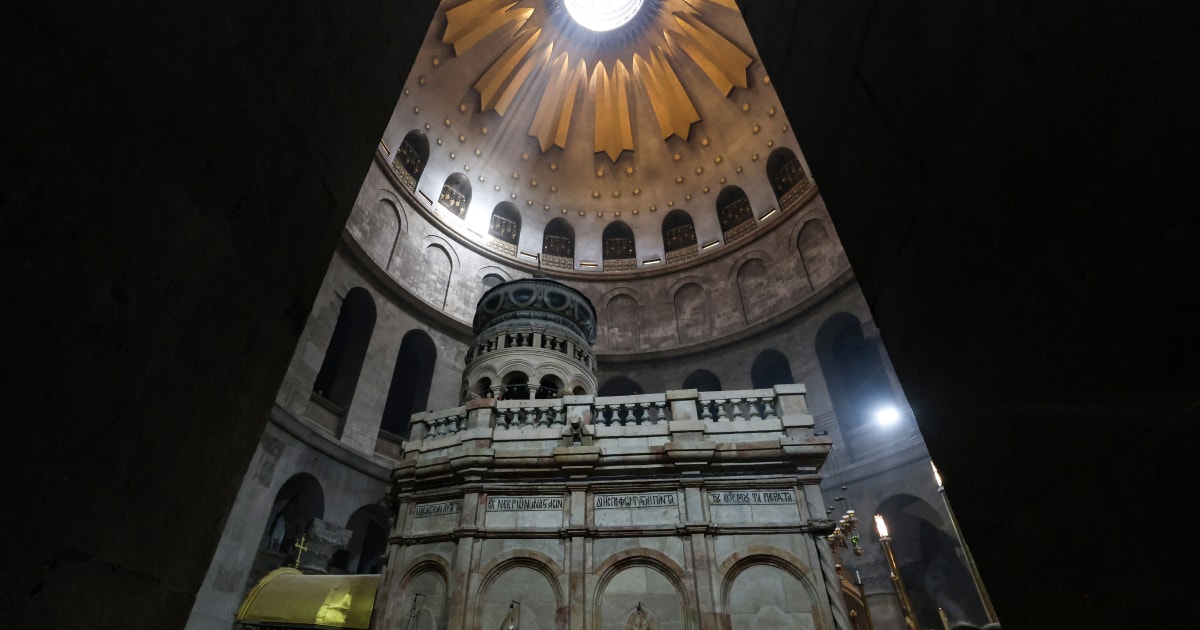
The Latin Patriarchate of Jerusalem and the Custody of the Holy Land have confirmed that a dispute over access to the Church of the Holy Sepulchre during Holy Week has been resolved.

In a joint press release issued on Holy Monday, the two bodies said: “The Latin Patriarchate of Jerusalem and the Custody of the Holy Land hereby confirm that the matters concerning the Holy Week and Easter celebrations at the Church of the Holy Sepulchre have been addressed and resolved in coordination with the relevant authorities.”
They added: “In agreement with the Israel Police, access for representatives of the Churches has been secured in order to conduct the liturgies and ceremonies and to preserve the ancient Easter traditions at the Church of the Holy Sepulchre.”

The statement made clear, however, that wider restrictions remain in place. “Naturally, and in light of the current state of war, the existing restrictions on public gatherings remain in force for the time being,” it said. “Accordingly, the Churches will ensure that the liturgies and prayers are broadcast live to the faithful in the Holy Land and throughout the world.”

The Latin Patriarchate and the Custody of the Holy Land confirmed that arrangements had now been agreed while acknowledging that wider restrictions remain in place.

They expressed gratitude to those involved in resolving the situation. “We express our sincere gratitude to His Excellency Mr Isaac Herzog, President of the State of Israel, for his prompt attention and valued intervention,” the statement said.

“We also extend our appreciation to the heads of state and officials who acted swiftly to convey their firm positions, many of whom personally reached out to express their closeness and support.”

The statement also reaffirmed the importance of religious freedom. “We wish to emphasize that religious faith constitutes a supreme human value, shared by all religions, Jews, Christians, Muslims, Druze and others,” it said.

The statement follows events on Palm Sunday morning, when Cardinal Pierbattista Pizzaballa was prevented by Israeli police from entering the church and celebrating Mass. Instead, he marked the beginning of Holy Week on the Mount of Olives, facing Jerusalem.

Preaching later that day, he said: “In this afternoon of Palm Sunday we gather without a procession, without palms waving through the streets. This absence is not merely a matter of formalities. It is the war that has interrupted our festive journey, making even the simple joy of following our King difficult.”

He continued: “Today Jesus weeps once more over Jerusalem. He weeps over this city, which remains a sign of both hope and sorrow, of grace and suffering. He weeps over this Holy Land, still unable to recognize the gift of peace. He weeps for all the victims of a war that seems without end: for divided families, for shattered hopes. But the tears of Jesus are never fruitless. They open our eyes, challenge us, and reveal the truth.”

In an interview later given to TV2000, the Patriarch said the situation had arisen amid confusion rather than confrontation. “There were no clashes, and we don’t want to force matters, but rather figure out what to do while respecting the right to prayer,” he said.

“We’re celebrating Easter in a low-key way. There were misunderstandings, we didn’t understand each other, and that’s what happened. It’s never happened before. It’s a shame this happened. This morning’s events are important, but we must consider the broader context. There are people who are much worse off than us who cannot celebrate for very different reasons. Once again, we are celebrating a subdued Easter.”

Israeli officials said the restrictions were linked to security concerns amid ongoing conflict in the region. A spokesman for the prime minister said: “Israel’s security arms are putting together a plan to enable church leaders to worship at the holy site in the coming days.”

Benjamin Netanyahu later intervened directly, stating: “I have instructed the relevant authorities that Cardinal Pierbattista Pizzaballa, the Latin Patriarch, be granted full and immediate access to the Church of the Holy Sepulchre in Jerusalem.”

He said the decision to restrict access had been taken in light of recent attacks. “Over the past several days, Iran has repeatedly targeted the holy sites of all three monotheistic religions in Jerusalem with ballistic missiles. In one strike, missile fragments crashed metres from the Church of the Holy Sepulchre.”

“To protect worshippers, Israel asked members of all faiths to temporarily abstain from worshipping at the Christian, Muslim and Jewish holy sites in Jerusalem’s Old City,” he said.

“Today, out of special concern for his safety, Cardinal Pizzaballa was asked to refrain from holding Mass at the Church of the Holy Sepulchre.”

He added: “Even though I understand this concern, as soon as I learned about the incident with Cardinal Pizzaballa, I instructed the authorities to enable the Patriarch to hold services as he wishes.”

The Latin Patriarchate of Jerusalem and the Custody of the Holy Land have confirmed that a dispute over access to the Church of the Holy Sepulchre during Holy Week has been resolved.

In a joint press release issued on Holy Monday, the two bodies said: “The Latin Patriarchate of Jerusalem and the Custody of the Holy Land hereby confirm that the matters concerning the Holy Week and Easter celebrations at the Church of the Holy Sepulchre have been addressed and resolved in coordination with the relevant authorities.”

They added: “In agreement with the Israel Police, access for representatives of the Churches has been secured in order to conduct the liturgies and ceremonies and to preserve the ancient Easter traditions at the Church of the Holy Sepulchre.”

The statement made clear, however, that wider restrictions remain in place. “Naturally, and in light of the current state of war, the existing restrictions on public gatherings remain in force for the time being,” it said. “Accordingly, the Churches will ensure that the liturgies and prayers are broadcast live to the faithful in the Holy Land and throughout the world.”

The Latin Patriarchate and the Custody of the Holy Land confirmed that arrangements had now been agreed while acknowledging that wider restrictions remain in place.

They expressed gratitude to those involved in resolving the situation. “We express our sincere gratitude to His Excellency Mr Isaac Herzog, President of the State of Israel, for his prompt attention and valued intervention,” the statement said.

“We also extend our appreciation to the heads of state and officials who acted swiftly to convey their firm positions, many of whom personally reached out to express their closeness and support.”

The statement also reaffirmed the importance of religious freedom. “We wish to emphasize that religious faith constitutes a supreme human value, shared by all religions, Jews, Christians, Muslims, Druze and others,” it said.

The statement follows events on Palm Sunday morning, when Cardinal Pierbattista Pizzaballa was prevented by Israeli police from entering the church and celebrating Mass. Instead, he marked the beginning of Holy Week on the Mount of Olives, facing Jerusalem.

Preaching later that day, he said: “In this afternoon of Palm Sunday we gather without a procession, without palms waving through the streets. This absence is not merely a matter of formalities. It is the war that has interrupted our festive journey, making even the simple joy of following our King difficult.”

He continued: “Today Jesus weeps once more over Jerusalem. He weeps over this city, which remains a sign of both hope and sorrow, of grace and suffering. He weeps over this Holy Land, still unable to recognize the gift of peace. He weeps for all the victims of a war that seems without end: for divided families, for shattered hopes. But the tears of Jesus are never fruitless. They open our eyes, challenge us, and reveal the truth.”

In an interview later given to TV2000, the Patriarch said the situation had arisen amid confusion rather than confrontation. “There were no clashes, and we don’t want to force matters, but rather figure out what to do while respecting the right to prayer,” he said.

“We’re celebrating Easter in a low-key way. There were misunderstandings, we didn’t understand each other, and that’s what happened. It’s never happened before. It’s a shame this happened. This morning’s events are important, but we must consider the broader context. There are people who are much worse off than us who cannot celebrate for very different reasons. Once again, we are celebrating a subdued Easter.”

Israeli officials said the restrictions were linked to security concerns amid ongoing conflict in the region. A spokesman for the prime minister said: “Israel’s security arms are putting together a plan to enable church leaders to worship at the holy site in the coming days.”

Benjamin Netanyahu later intervened directly, stating: “I have instructed the relevant authorities that Cardinal Pierbattista Pizzaballa, the Latin Patriarch, be granted full and immediate access to the Church of the Holy Sepulchre in Jerusalem.”

He said the decision to restrict access had been taken in light of recent attacks. “Over the past several days, Iran has repeatedly targeted the holy sites of all three monotheistic religions in Jerusalem with ballistic missiles. In one strike, missile fragments crashed metres from the Church of the Holy Sepulchre.”

“To protect worshippers, Israel asked members of all faiths to temporarily abstain from worshipping at the Christian, Muslim and Jewish holy sites in Jerusalem’s Old City,” he said.

“Today, out of special concern for his safety, Cardinal Pizzaballa was asked to refrain from holding Mass at the Church of the Holy Sepulchre.”

He added: “Even though I understand this concern, as soon as I learned about the incident with Cardinal Pizzaballa, I instructed the authorities to enable the Patriarch to hold services as he wishes.”

subscribe to
the catholic herald

Continue reading your article with a subscription.
Read 5 articles with our free plan.
Subscribe

subscribe to the catholic herald today

Our best content is exclusively available to our subscribers. Subscribe today and gain instant access to expert analysis, in-depth articles, and thought-provoking insights—anytime, anywhere. Don’t miss out on the conversations that matter most.
Subscribe