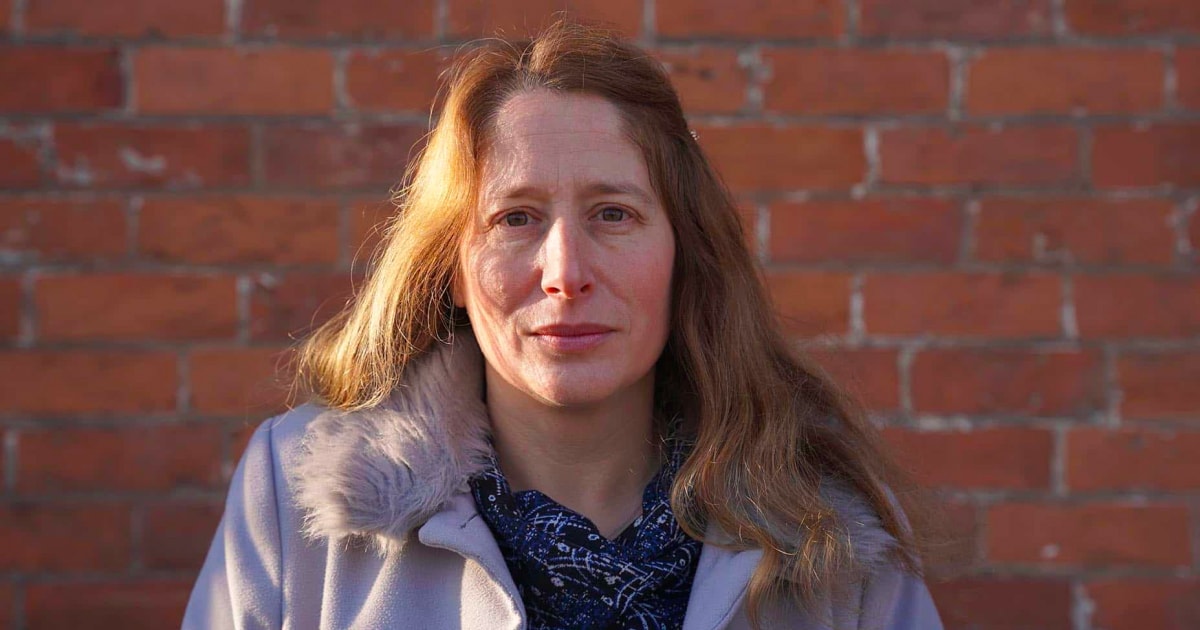

If there ever were a candidate for ante-mortem canonisation, and if such a thing were theologically possible, Isabel Vaughan-Spruce would be it. Her tireless defence of the unborn, combined with her equally resolute defence of freedom of speech and thought, has received international praise, while the state-administered sanctions imposed upon her have attracted equally fervent condemnation.
Raised in a Catholic family with five siblings, she was inclined towards pro-life beliefs before she became a figurehead in the movement. As a child, when a local facility housing mentally ill adults was closed down, leaving the patients without a home, Isabel’s father welcomed them into the family home. He also invited the homeless and those who had fallen on hard times, with people staying for months or even years. The children of the family would share a room and were taught to call the visitors “the guests”. This early experience taught Isabel to value people for who they are, created in the image of God and possessing inherent worth.
As a teenager, Isabel often read war stories, asking herself what she would do if she found herself in such difficult situations. She gradually realised that this was the wrong question. She should not be asking what she would do in those circumstances, but rather what she could do now to follow God in her life. She began to look for ways to live out her pro-life beliefs, which led her to travel to Birmingham to pray outside abortion centres with some of her siblings. Twenty years later, they are still doing the same.
In 2013, she, alongside other pro-life activists, marched through Birmingham for the first March for Life UK, an event which has taken place every year since and has now migrated to London. Attendance has grown from a few hundred to over ten thousand. Today, Isabel is co-director, working year-round running various projects and initiatives for the organisation.
By 2022, Isabel was propelled into the national and international spotlight. Despite a 2018 public consultation which did not recommend the introduction of buffer zones around abortion clinics, Birmingham’s local government decided to impose a Public Spaces Protection Order around an abortion clinic, preventing pro-life witness. Isabel was arrested for standing silently, with no placards or signs, no leaflets, and no interaction with those around her, after admitting that she may have been praying silently in her head. She was charged, but in early 2023 Birmingham Magistrates’ Court dismissed the case, finding insufficient evidence that she had breached the PSPO. She was arrested again in March 2023 in similar circumstances, but no charges were brought. In August 2024 Isabel received a £13,000 out of court settlement from police after she made a claim against them for wrongful arrest and breaching her human rights.
Despite the settlement, throughout 2025 various West Midlands’ Police Officers demanded that Isabel leave a buffer zone area citing different reasons including because she was the leader of a pro-life organisation. By December of the same year, she was criminally charged under the national buffer-zone law, with a court hearing set for 29 January 2026 and with a trial at a later date.
The national buffer-zone law is a dystopian reality of modern Britain. The government has made it a criminal offence to attempt to influence a person’s decision to access abortion services within 150 metres of an abortion clinic. According to the Home Office, such influence includes “silent prayer”. There are 366 abortion providers in England and Wales, according to the government’s own 2023 statistics. The combined area covered by these buffer zones therefore amounts to 25,870,710 square metres, or about 0.02 per cent of England and Wales. This means the government has imposed restrictions on the thoughts of people within 0.02 per cent of the country’s geographical area. Isabel is the first person to be charged under the law, but there will doubtless be more.
The case has received international attention. The Trump administration has taken particular offence at what it regards as state overreach. A State Department spokesperson told the Daily Telegraph: “The decision to prosecute a woman engaged in silent prayer is not only concerning in terms of its impact on respect for the fundamental freedoms of expression and religion or belief, but is also an unwelcome departure from the shared values that ought to underpin U.S.–U.K. relations.”
The spokesperson added: “We are monitoring Isabel’s case closely. It is common sense that standing silently and offering conversation should not constitute harm.”
Isabel’s case encapsulates many of the concerns raised by a society increasingly willing to constrain free speech. Yet it is important to remember that, at its centre, is simply a woman doing her best to serve God and her neighbour. Her love for mothers and babies is rooted in her love for God, not in any desire to act as a counter-cultural warrior. Her courage stands as an example to all.


.png)

.jpg)