


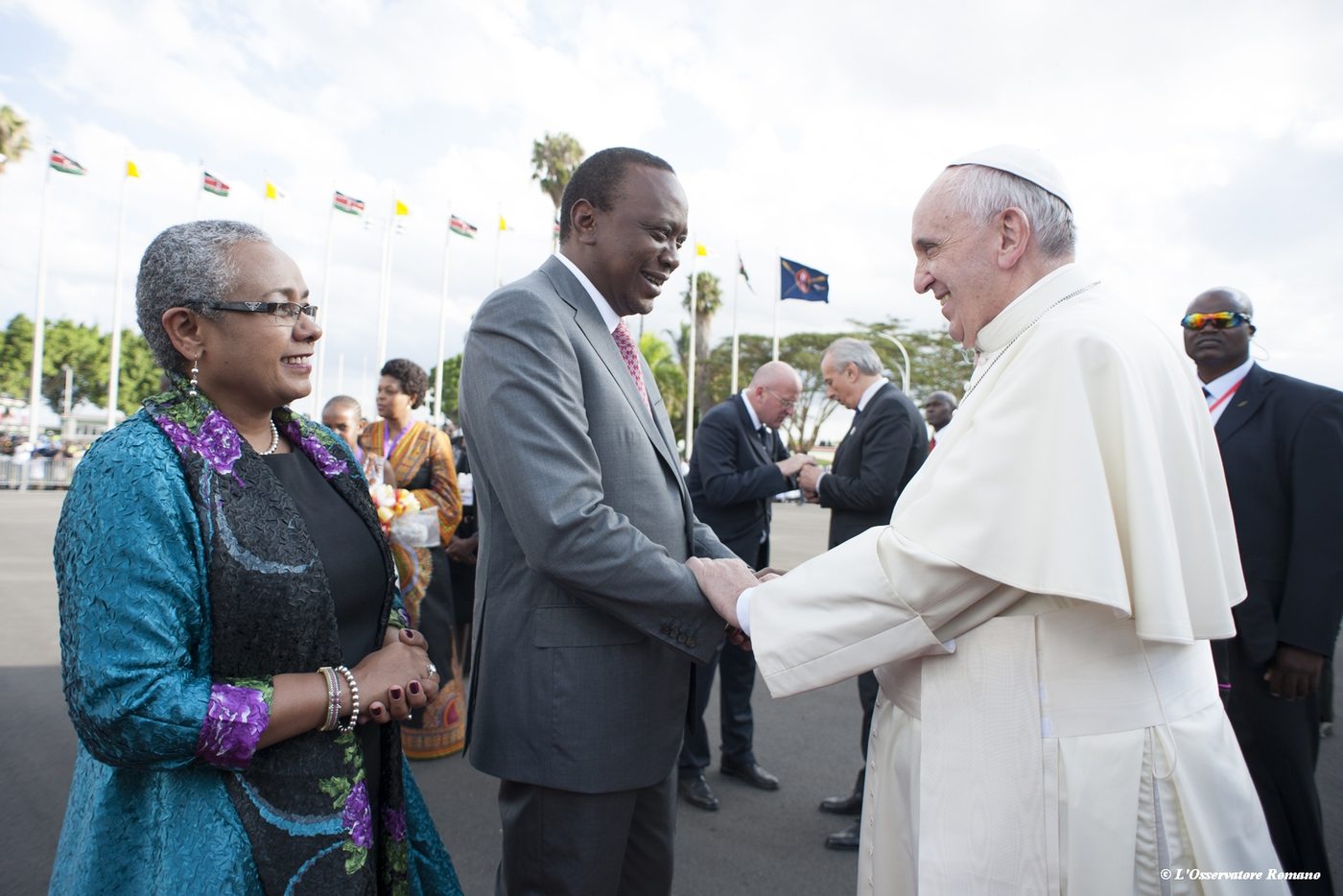
Kenya's Catholic bishops challenged the government to show commitment in fighting corruption, calling it a "cancer" that "is killing our country." "The ordinary men and women are bearing the burden of corruption," the bishops said in a statement issued at the end of a two-day meeting at St Thomas Aquinas Seminary. "The majority of Kenyans are wallowing in poverty and are unable to meet their basic needs," the bishops said. "They don't have access to proper medical care. They lack adequate educational facilities and enough teachers for quality education. The youth see no future because of unemployment and, even where there is the possibility of jobs, they have to pay bribes and kickbacks to secure those jobs." The bishops added that "unless (Kenyans) know somebody high up, nobody will consider them" for jobs. "The fact that the cancer has spread to all arms of government and is going on in both national and county governments, as well as other sectors of Kenyan society, tempts one to despair and to give up without a fight. We can't give up," the statement said. "Now is the time to rise and face this malignant disease with all the weapons we have." The bishops said that, during his late-November visit, Pope Francis urged Kenyans to declare war on corruption. "Nobody should be spared, beginning from the top to the bottom, the mighty or the least, those who have and those who have not. All those mentioned as kingpins of corruption must be investigated and prosecuted when facts are proven," they said, urging public officials linked with corruption to resign immediately. "The country is heading into a dangerous direction, and these issues must be addressed to save our nation," the bishops said in the statement which was read by the chairman of the Kenyan bishops' conference, Bishop Philip Anyolo of Homa Bay. In their statement, the bishops noted the International Criminal Court had dropped a case against William Ruto, deputy president of Kenya, and Joshua Arap Sang, a former radio journalist. The two were charged with crimes against humanity for inciting violence in late 2007 into 2008. During the postelection violence more than 1,100 people were killed and nearly 600,000 people displaced from their homes. The end of the case offered a chance for the country to start the process of reconciliation, the bishops said, noting that would only be possible if the victims of the violence were compensated. Bishop Cornelius Arap Korir of Eldoret said victims often were not compensated, and perpetrators were not prosecuted. In these areas, he said, Kenya has a "dark history as a nation and, although some strides have been made toward this direction, a quick glance at the present situation reveals some dangerous trends and practices that should worry anyone who loves this country." In his March 31 state-of-the-nation address, Kenyan President Uhuru Kenyatta promised Kenyans there would be no sacred cows in the war against graft.
2:02 PM
Kenyan bishops challenge government to put a stop to corruption
'The majority of Kenyans are wallowing in poverty and are unable to meet their basic needs,' the bishops said in a statement
Catholic News Service

3 min read



Already a subscriber? Sign in
5freearticles every month
Continue reading with a free account. No card needed.
- Five free articles every thirty days, on any device you sign in on
- The Catholic Herald newsletter, every morning
- Subscribe whenever you like for everything: every article and the magazine
Related articles
 Newsroom
Church leaders urge Drumcree dialogue: ‘Too much is at stake’
The Catholic and Church of Ireland Archbishops of Armagh have urged a renewed commitment to peace and reconciliation amid the Drumcree stand-off
Corrie Douglas-Young Newsroom
Thousands of Irish children to join global Rosary campaign
Corrie Douglas-Young Newsroom
TikTok priest urges young people to stand with persecuted Christians
Nathalie Raffray Newsroom
Baby born at 25 weeks reunites with neonatologist two years after leaving hospital
The Catholic Herald Newsroom
Joe Biden honoured by Planned Parenthood after defending abortion rights
Christine Rousselle
subscribe to the catholic herald today
Our best content is exclusively available to our subscribers. Subscribe today and gain instant access to expert analysis, in-depth articles, and thought-provoking insights—anytime, anywhere. Don’t miss out on the conversations that matter most.
Subscribe



