March 25, 2026

Lady Day: the forgotten Christian New Year

Fr Dwight Longenecker
More
Related
Min read
share

I wish my parishioners a happy new year three times a year. First on Advent Sunday, because a new liturgical year begins; second on January 1, because it is both the secular New Year celebration and the feast of Mary, Mother of God; and third on Lady Day – March 25. And here’s why:

The earliest records of a New Year celebration are from Mesopotamia in the time of Father Abraham – around 2000 BC. For the ancients, in an agricultural society, the new year was not heralded in midwinter, but at the spring equinox in mid-March. Following these already ancient customs, the first Roman calendar, which had only 10 months, also recognised mid-March as the beginning of the year. This is where September, October, November and December have their names: from March, they were the seventh, eighth, ninth and 10th months.

The second king of Rome, Numa Pompilius, added January and February to the calendar, and in 153 BC we have the first record of January 1 being celebrated as New Year’s Day. The change was decreed for civil reasons, because the consuls began their term at that time, but many people still recognised the ancient celebration of March as the real start of the year.

When Julius Caesar replaced the old lunar-based calendar with a solar calendar in 46 BC, he also formally established the beginning of January as New Year’s Day. As the Empire fell and Europe transitioned to the new religion and rule of Christianity, the remains of pagan culture were purged. New Year’s Day at the beginning of January was one of the vestiges of paganism that was officially eliminated at the Council of Tours in 567, and across Europe the start of a new year was celebrated variously at Christmas, Easter or, most commonly, March 25.

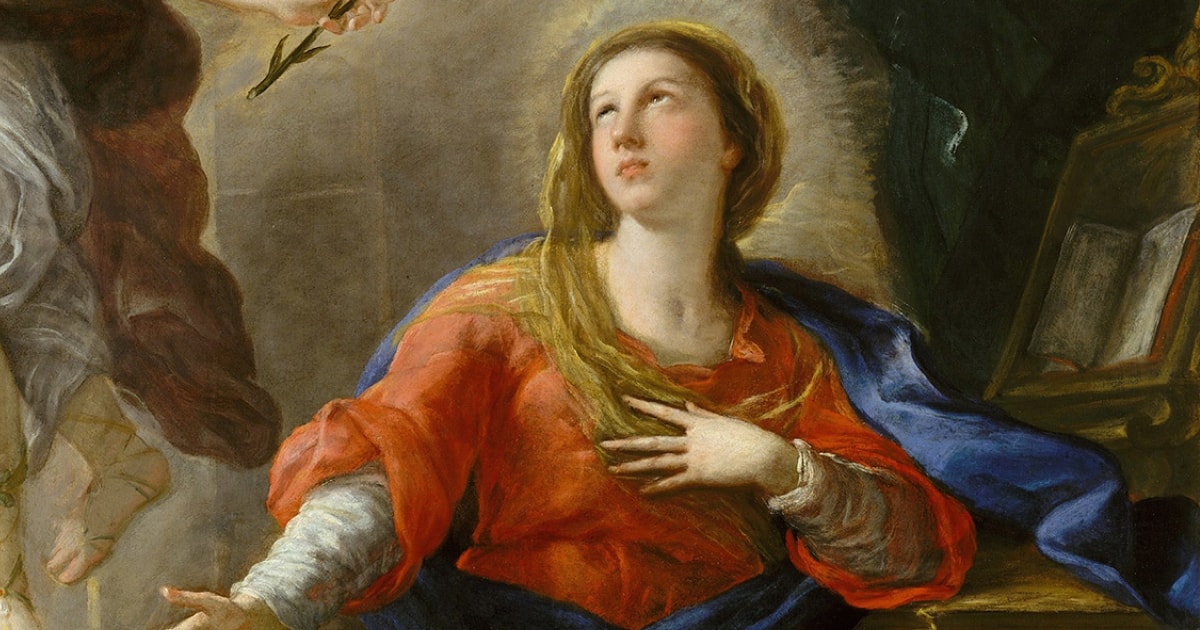
Connected with the most ancient celebrations of the new year at the spring equinox, in the Christian calendar March 25 is also the celebration of the Annunciation – the announcement by the Angel Gabriel to the Virgin Mary that she would bear a son. Thus the surge of new life in the springtime of the year mirrored the surge of new life in the womb of the Virgin.

The date of March 25 for the conception of the Lord was determined by the Jewish belief that great men were conceived on the same day of the year as their death. According to the Jewish calendar, the date for Jesus Christ’s Crucifixion was Nisan 15, or March 25 according to the Roman calendar. The early Christians, who were Jews, concluded that Jesus was therefore conceived on March 25. Incidentally, this is also the origin of the traditional date of Christmas: nine months from March 25.

Medieval Christians understood that the beginning of the life of the Son of God in the Virgin Mary’s womb was the beginning of God’s work among mankind, the restoration and redemption of the world and the beginning of a new creation. It was therefore theologically fitting that Lady Day – March 25 – should be celebrated as New Year’s Day. And so it was for a thousand years.

Then, in 1582, Pope Gregory XIII tinkered with Julius Caesar’s ancient calendar. Because of imprecise calculations, the date of Easter had been drifting, and the Pope decided it needed fixing. Part of the reform was to re-establish January 1 as New Year’s Day. Seeing this as papal presumption, the Eastern Orthodox rejected the reform. Seeing this as not only papal presumption, but paganism restored, the Protestants also rejected the new Gregorian calendar. The British did not adopt the new calendar until 1752. The Greeks held out until 1923. The monks of Mount Athos and various Eastern Orthodox and ‘Old Calendarist’ groups still hold on to the Julian calendar.

What about Frodo Baggins? JRR Tolkien was very sly in the way he wove his Catholic faith into his epic myth. The calendar of the Shire echoes both the ancient world and medieval Europe by celebrating March 25 as New Year’s Day, and Tolkien records the dates of the great events in the cycle of the Ring. The Fellowship leaves Rivendell on December 25, and we discover that it is on March 25 that the Ring of Power is cast into the fires of Mount Doom, bringing about the downfall of Gollum, the destruction of Sauron and a new beginning for Middle-earth. Thus Tolkien gives a nod to the venerable Christian tradition that Lady Day is the true New Year’s Day.

In commemoration of this mythical event, March 25 is also International Tolkien Reading Day, so get your friends together, pull a pint of ale, light up your pipeweed, put up your feet and share some excerpts from Tolkien’s epic.

Read Fr Longenecker’s blog, browse his books and be in touch at dwightlongenecker.com.

I wish my parishioners a happy new year three times a year. First on Advent Sunday, because a new liturgical year begins; second on January 1, because it is both the secular New Year celebration and the feast of Mary, Mother of God; and third on Lady Day – March 25. And here’s why:

The earliest records of a New Year celebration are from Mesopotamia in the time of Father Abraham – around 2000 BC. For the ancients, in an agricultural society, the new year was not heralded in midwinter, but at the spring equinox in mid-March. Following these already ancient customs, the first Roman calendar, which had only 10 months, also recognised mid-March as the beginning of the year. This is where September, October, November and December have their names: from March, they were the seventh, eighth, ninth and 10th months.

The second king of Rome, Numa Pompilius, added January and February to the calendar, and in 153 BC we have the first record of January 1 being celebrated as New Year’s Day. The change was decreed for civil reasons, because the consuls began their term at that time, but many people still recognised the ancient celebration of March as the real start of the year.

When Julius Caesar replaced the old lunar-based calendar with a solar calendar in 46 BC, he also formally established the beginning of January as New Year’s Day. As the Empire fell and Europe transitioned to the new religion and rule of Christianity, the remains of pagan culture were purged. New Year’s Day at the beginning of January was one of the vestiges of paganism that was officially eliminated at the Council of Tours in 567, and across Europe the start of a new year was celebrated variously at Christmas, Easter or, most commonly, March 25.

Connected with the most ancient celebrations of the new year at the spring equinox, in the Christian calendar March 25 is also the celebration of the Annunciation – the announcement by the Angel Gabriel to the Virgin Mary that she would bear a son. Thus the surge of new life in the springtime of the year mirrored the surge of new life in the womb of the Virgin.

The date of March 25 for the conception of the Lord was determined by the Jewish belief that great men were conceived on the same day of the year as their death. According to the Jewish calendar, the date for Jesus Christ’s Crucifixion was Nisan 15, or March 25 according to the Roman calendar. The early Christians, who were Jews, concluded that Jesus was therefore conceived on March 25. Incidentally, this is also the origin of the traditional date of Christmas: nine months from March 25.

Medieval Christians understood that the beginning of the life of the Son of God in the Virgin Mary’s womb was the beginning of God’s work among mankind, the restoration and redemption of the world and the beginning of a new creation. It was therefore theologically fitting that Lady Day – March 25 – should be celebrated as New Year’s Day. And so it was for a thousand years.

Then, in 1582, Pope Gregory XIII tinkered with Julius Caesar’s ancient calendar. Because of imprecise calculations, the date of Easter had been drifting, and the Pope decided it needed fixing. Part of the reform was to re-establish January 1 as New Year’s Day. Seeing this as papal presumption, the Eastern Orthodox rejected the reform. Seeing this as not only papal presumption, but paganism restored, the Protestants also rejected the new Gregorian calendar. The British did not adopt the new calendar until 1752. The Greeks held out until 1923. The monks of Mount Athos and various Eastern Orthodox and ‘Old Calendarist’ groups still hold on to the Julian calendar.

What about Frodo Baggins? JRR Tolkien was very sly in the way he wove his Catholic faith into his epic myth. The calendar of the Shire echoes both the ancient world and medieval Europe by celebrating March 25 as New Year’s Day, and Tolkien records the dates of the great events in the cycle of the Ring. The Fellowship leaves Rivendell on December 25, and we discover that it is on March 25 that the Ring of Power is cast into the fires of Mount Doom, bringing about the downfall of Gollum, the destruction of Sauron and a new beginning for Middle-earth. Thus Tolkien gives a nod to the venerable Christian tradition that Lady Day is the true New Year’s Day.

In commemoration of this mythical event, March 25 is also International Tolkien Reading Day, so get your friends together, pull a pint of ale, light up your pipeweed, put up your feet and share some excerpts from Tolkien’s epic.

Read Fr Longenecker’s blog, browse his books and be in touch at dwightlongenecker.com.

subscribe to
the catholic herald

Continue reading your article with a subscription.
Read 5 articles with our free plan.
Subscribe

subscribe to the catholic herald today

Our best content is exclusively available to our subscribers. Subscribe today and gain instant access to expert analysis, in-depth articles, and thought-provoking insights—anytime, anywhere. Don’t miss out on the conversations that matter most.
Subscribe