



April 3, 2026

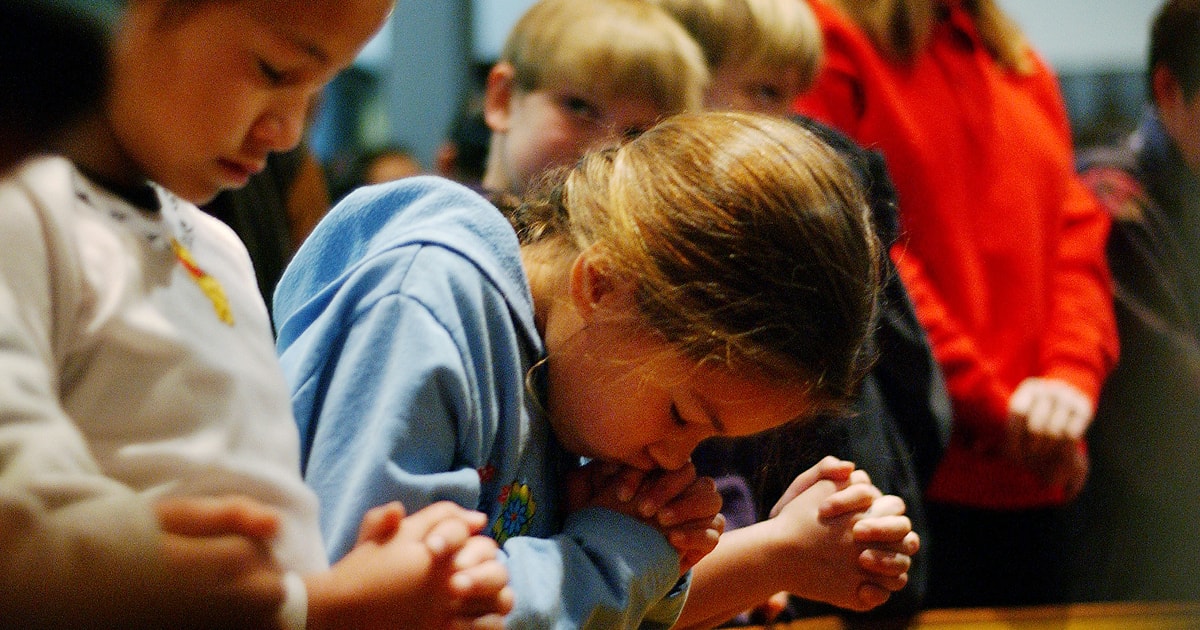
Leading children to the Cross with care and truth

Greg Finn
More
Related
Min read
share

I remember, as a young child, staring at the red-painted wounds on the hands and feet of the Sacred Heart statue in my bedroom. Sometimes I’d run my fingers over them and look at the kind face of Jesus. I often wondered how he could still be smiling. Didn’t he know he had holes in him?

I can also still picture the pages of my illustrated Bible: Jesus carrying his Cross through crowded streets, and then the striking double-page image of Mount Calvary. These were the pages I returned to most often, quietly pondering how much it must have hurt him.

These memories raise a question in me: what is an appropriate way to share the Passion of Our Lord with young children?

There is no escaping it. The events of Good Friday are brutal. The suffering and death of Jesus is distressing, even for us as adults. It is natural, therefore, to hesitate.

Should we wait until children are older, less likely to be frightened by the image of a crown of thorns or nails piercing flesh? Would it not be easier to focus on Palm Sunday’s joy or the wonder of the empty tomb, and quietly set the Cross aside for now?

It might be easier: but it also robs a child of a critical moment in their early faith formation.

Dr Sofia Cavalletti, founder of Catechesis of the Good Shepherd, observed that the deepest mysteries of our Faith are the most essential to share with young children. Her five decades of study proved that even the youngest children can be invited into the greatest mysteries. In a posture of wonder rather than analysis, we can welcome the young child to treasure the awe-inspiring truth of the Incarnation, of the Holy Trinity, the Eucharist and, yes, even the Paschal Mystery.

The question is not whether we share the Passion. It is how. In my experience, there are two common pitfalls when sharing the Passion with children.

The first is to underplay it. Out of a desire to protect children, we rush past the Cross or omit the suffering from it entirely. But in doing so, we risk depriving them of a profound encounter with the love of Jesus.

The second is to overemphasise the suffering. Children are naturally drawn to dramatic details, and they tend to remember what we emphasise. This can happen subtly. When reading the account of the anointing at Bethany (John 12), for example, if I stress that Judas was a thief, even through a little extra weight in my voice, children often remember that detail more clearly than Mary’s loving act of pouring perfume over the Lord’s feet. What we highlight shapes what they take away.

Early in my teaching career, I was asked to prepare a Holy Thursday Passion play. My Year 4 class would present to the whole school community. A few days before the performance, the deputy headteacher gently suggested removing a scene in which two pupils, dressed as Roman soldiers, cracked skipping ropes on the floor behind Jesus to represent the scourging.

I agreed only reluctantly, convinced we were missing an opportunity to show how much Jesus had suffered for us. With hindsight, and more than a decade of experience, it was sound advice. That moment could easily have been shocking, distracting or even unintentionally comical. Worse still, it might have overshadowed everything else.

More drama does not always lead to deeper prayer. I experienced this on a visit to Auschwitz and the site of Saint Maximilian Kolbe’s martyrdom. Our guide did not dramatise or embellish what had happened. He simply told us the facts, quietly and clearly. He did not need to do more. The truth carried its own weight. And my prayer was deeper because of his restraint.

When sharing the Passion with children, or any scripture for that matter, my guiding principle is simple: help children notice where the love of Jesus is most clearly revealed.

Recently, The Mark 10 Mission led an online Stations of the Cross for children. When writing the script, I avoided phrases such as, ‘I wonder how much that hurt,’ or ‘How terribly they treated Jesus’. Instead, I sought to direct children’s attention to Christ’s love and humility: ‘How did Jesus find the strength to stand?’ ‘How could he pray for those who were crucifying him?’

We also chose images that were not overly graphic, depicting sorrow and some blood, but not in a way that would distract from prayer. The Cross points to love, and it is the unstoppable, all-conquering love of Jesus that we want to shine through when we share the Passion with children.

One of the most powerful ways I have found to share the Paschal Mystery with young children is through the words of Jesus in John 10:

‘I am the Good Shepherd who lays down his life for the sheep.’

Here, the complexity of Good Friday becomes beautifully simple. I use a small Good Shepherd statue, some toy sheep and a wolf to provide a visual representation.

As I read ‘I lay down my life for the sheep’ (John 10:15), I touch the wolf to the shepherd and lay the statue down.

I lift the statue high as I say ‘I lay down my life that I may take it up again’ (John 10:17).

I then set the Bible aside and ask the children: ‘What did you hear?’

‘He loves the sheep,’ a five-year-old girl whispered to me recently.

‘The shepherd laid down to save the sheep,’ another child said with confidence.

Again and again, I find myself returning to this passage. Each time, I glimpse something of heaven as I explain to the children:

‘Jesus the Good Shepherd laid down his life when he died on the Cross to take away the sins of the world.’

As I slowly lift the crucifix and show it to the children, they watch in silence.

Then I continue:

‘On the third day, the Good Shepherd rose again to new life and is now with his sheep forever.’

Often, they smile.

Recently, a six-year-old girl even clenched her fists and quietly cheered.

Dr Cavalletti advised that, for the youngest children, the Crucifixion and Resurrection should always be presented together as one single moment. In doing so, we prevent the misconception that Jesus is still dead.

I witness constantly that young children possess a far greater capacity for faith than we often assume. Their prayer is quiet, attentive and deeply contemplative. They may not yet have the words to articulate what they are experiencing or understanding, but that matters little. Our hope as adults should not be that they can tell us the facts. Rather, our only aim should be to humbly facilitate an encounter with Christ. Our task is to lead them gently to the Cross, not with drama or graphic detail, but with reverence and care. To help them see not the horror, but the love.

The young child does not carry much sense of guilt or shame. Instead, they are rich in love. And so we lead them, thoughtfully and tenderly, to the Cross, where they can encounter the boundless love of their Good Shepherd.

Greg Finn leads The Mark 10 Mission, a Catholic ministry created to share the Gospel with children. Their content is viewed by tens of thousands of primary school children every week.

I remember, as a young child, staring at the red-painted wounds on the hands and feet of the Sacred Heart statue in my bedroom. Sometimes I’d run my fingers over them and look at the kind face of Jesus. I often wondered how he could still be smiling. Didn’t he know he had holes in him?

I can also still picture the pages of my illustrated Bible: Jesus carrying his Cross through crowded streets, and then the striking double-page image of Mount Calvary. These were the pages I returned to most often, quietly pondering how much it must have hurt him.

These memories raise a question in me: what is an appropriate way to share the Passion of Our Lord with young children?

There is no escaping it. The events of Good Friday are brutal. The suffering and death of Jesus is distressing, even for us as adults. It is natural, therefore, to hesitate.

Should we wait until children are older, less likely to be frightened by the image of a crown of thorns or nails piercing flesh? Would it not be easier to focus on Palm Sunday’s joy or the wonder of the empty tomb, and quietly set the Cross aside for now?

It might be easier: but it also robs a child of a critical moment in their early faith formation.

Dr Sofia Cavalletti, founder of Catechesis of the Good Shepherd, observed that the deepest mysteries of our Faith are the most essential to share with young children. Her five decades of study proved that even the youngest children can be invited into the greatest mysteries. In a posture of wonder rather than analysis, we can welcome the young child to treasure the awe-inspiring truth of the Incarnation, of the Holy Trinity, the Eucharist and, yes, even the Paschal Mystery.

The question is not whether we share the Passion. It is how. In my experience, there are two common pitfalls when sharing the Passion with children.

The first is to underplay it. Out of a desire to protect children, we rush past the Cross or omit the suffering from it entirely. But in doing so, we risk depriving them of a profound encounter with the love of Jesus.

The second is to overemphasise the suffering. Children are naturally drawn to dramatic details, and they tend to remember what we emphasise. This can happen subtly. When reading the account of the anointing at Bethany (John 12), for example, if I stress that Judas was a thief, even through a little extra weight in my voice, children often remember that detail more clearly than Mary’s loving act of pouring perfume over the Lord’s feet. What we highlight shapes what they take away.

Early in my teaching career, I was asked to prepare a Holy Thursday Passion play. My Year 4 class would present to the whole school community. A few days before the performance, the deputy headteacher gently suggested removing a scene in which two pupils, dressed as Roman soldiers, cracked skipping ropes on the floor behind Jesus to represent the scourging.

I agreed only reluctantly, convinced we were missing an opportunity to show how much Jesus had suffered for us. With hindsight, and more than a decade of experience, it was sound advice. That moment could easily have been shocking, distracting or even unintentionally comical. Worse still, it might have overshadowed everything else.

More drama does not always lead to deeper prayer. I experienced this on a visit to Auschwitz and the site of Saint Maximilian Kolbe’s martyrdom. Our guide did not dramatise or embellish what had happened. He simply told us the facts, quietly and clearly. He did not need to do more. The truth carried its own weight. And my prayer was deeper because of his restraint.

When sharing the Passion with children, or any scripture for that matter, my guiding principle is simple: help children notice where the love of Jesus is most clearly revealed.

Recently, The Mark 10 Mission led an online Stations of the Cross for children. When writing the script, I avoided phrases such as, ‘I wonder how much that hurt,’ or ‘How terribly they treated Jesus’. Instead, I sought to direct children’s attention to Christ’s love and humility: ‘How did Jesus find the strength to stand?’ ‘How could he pray for those who were crucifying him?’

We also chose images that were not overly graphic, depicting sorrow and some blood, but not in a way that would distract from prayer. The Cross points to love, and it is the unstoppable, all-conquering love of Jesus that we want to shine through when we share the Passion with children.

One of the most powerful ways I have found to share the Paschal Mystery with young children is through the words of Jesus in John 10:

‘I am the Good Shepherd who lays down his life for the sheep.’

Here, the complexity of Good Friday becomes beautifully simple. I use a small Good Shepherd statue, some toy sheep and a wolf to provide a visual representation.

As I read ‘I lay down my life for the sheep’ (John 10:15), I touch the wolf to the shepherd and lay the statue down.

I lift the statue high as I say ‘I lay down my life that I may take it up again’ (John 10:17).

I then set the Bible aside and ask the children: ‘What did you hear?’

‘He loves the sheep,’ a five-year-old girl whispered to me recently.

‘The shepherd laid down to save the sheep,’ another child said with confidence.

Again and again, I find myself returning to this passage. Each time, I glimpse something of heaven as I explain to the children:

‘Jesus the Good Shepherd laid down his life when he died on the Cross to take away the sins of the world.’

As I slowly lift the crucifix and show it to the children, they watch in silence.

Then I continue:

‘On the third day, the Good Shepherd rose again to new life and is now with his sheep forever.’

Often, they smile.

Recently, a six-year-old girl even clenched her fists and quietly cheered.

Dr Cavalletti advised that, for the youngest children, the Crucifixion and Resurrection should always be presented together as one single moment. In doing so, we prevent the misconception that Jesus is still dead.

I witness constantly that young children possess a far greater capacity for faith than we often assume. Their prayer is quiet, attentive and deeply contemplative. They may not yet have the words to articulate what they are experiencing or understanding, but that matters little. Our hope as adults should not be that they can tell us the facts. Rather, our only aim should be to humbly facilitate an encounter with Christ. Our task is to lead them gently to the Cross, not with drama or graphic detail, but with reverence and care. To help them see not the horror, but the love.

The young child does not carry much sense of guilt or shame. Instead, they are rich in love. And so we lead them, thoughtfully and tenderly, to the Cross, where they can encounter the boundless love of their Good Shepherd.

Greg Finn leads The Mark 10 Mission, a Catholic ministry created to share the Gospel with children. Their content is viewed by tens of thousands of primary school children every week.

subscribe to
the catholic herald

Continue reading your article with a subscription.
Read 5 articles with our free plan.
Subscribe

subscribe to the catholic herald today

Our best content is exclusively available to our subscribers. Subscribe today and gain instant access to expert analysis, in-depth articles, and thought-provoking insights—anytime, anywhere. Don’t miss out on the conversations that matter most.
Subscribe