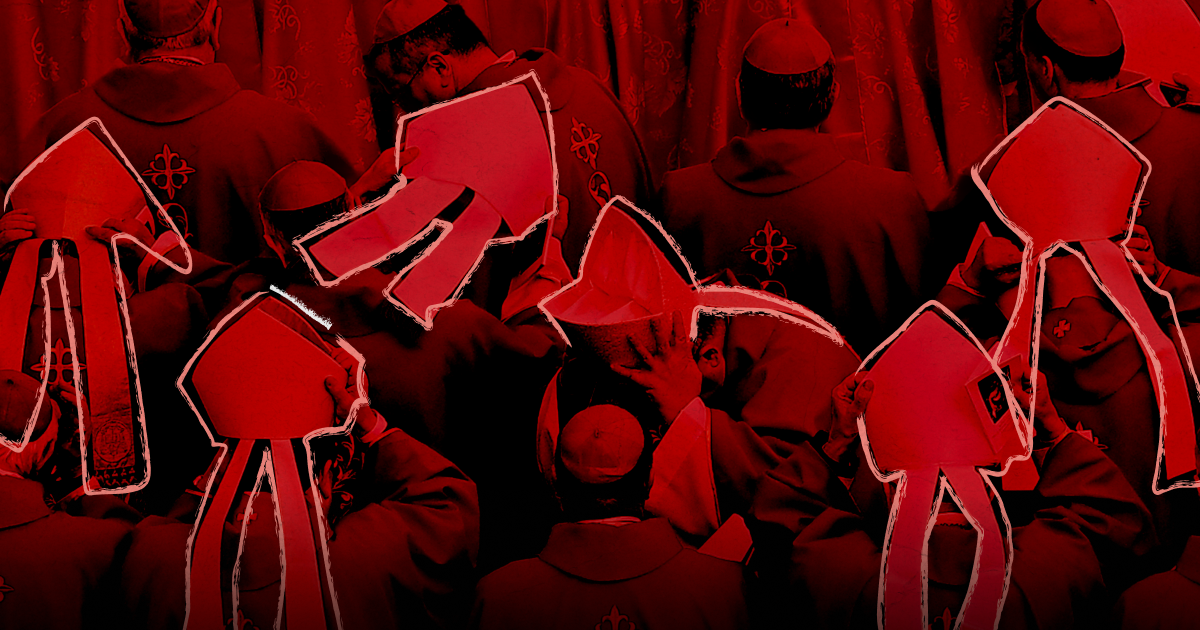


Less than twenty-four hours after formally closing the Holy Year itinerary he inherited from Pope Francis, Leo XIV will host a meeting that will be pivotal for his reign.
The extraordinary consistory of cardinals scheduled for January 7 and 8 will be the first since August 2022. Francis held only three such meetings during his reign, but he also created the significant majority of the College and expanded the Church’s global reach by creating cardinals as far afield as Tonga and Mongolia.
The huge geographical distances between cardinals meant many of them never met outside these extraordinary consistories, and during the May conclave many said they felt more frequent meetings were necessary in order to address issues in the Church.
The new year will mark a definitive beginning of Leo’s own chapter in the papacy. This year’s Jubilee has been run in the shadow of Francis, with events and audiences continuing in the manner he planned. As of January, that will all change for Leo.
But what is it that he might address with the cardinals, given the canonical rationale of such an affair being something “which is celebrated when particular needs of the Church or the treatment of more grave affairs suggests it”?
Leo has emphasised making “unity” one of his key goals as pontiff. Those who know him well have spoken of his ability to calm troubled waters, to listen to opposing factions and mediate successfully between them. Without doubt, the Church is in much need of both calm and unity, especially following the Francis pontificate, which saw many of his aides come in and out of favour.
In these first months of his reign, Leo’s unity and peace plan has appeared simple: meeting everyone and allowing different groups to have their say. To that end, he has met in private audience with Father James Martin SJ, but also Cardinals Raymond Burke and Robert Sarah.
He allowed a controversial LGBT Jubilee event to take place without hindrance, an event which prompted criticism from many observers, such as the former prefect of the Dicastery for the Doctrine of the Faith, Cardinal Gerhard Müller. But just as liberally, Leo gave Cardinal Burke permission to offer a traditional Mass in the Vatican for the annual Ad Petri Sedem pilgrimage, something that had been banned under Francis for the last two years.
In effect, “live and let live” has appeared to be the policy.
But this may have to change, and Vatican sources suggest that it may not be possible to reconcile opposites. In one corner there is Fr Martin blessing same-sex couples, while numerous bishops’ conferences and much of Africa reject the document sanctioning Martin’s actions. Cardinal Burke is granted papal permission for a traditional Mass in the Vatican, while many dioceses in the United States implement increasingly harsh restrictions on the same liturgy. The current unity seems based on contradictions.
Perhaps the “particular needs of the Church or the treatment of more grave affairs” — the canonical definition of the reasons for an extraordinary consistory of cardinals — might simply be the very survival of the faith. Leo might well invoke the words of his friend Cardinal Rolandas Makrickas, who told me in December that “nothing can be stronger than our direct testimony of our Christian, authentic life” when looking to spread the faith.
Leo XIV faces a College of Cardinals that is full of theological oppositions, as well as vastly differing opinions about the late Pope Francis’s legacy.
Yet, despite all this, Leo was the candidate chosen by a conclave comprised of cardinals who barely knew each other. Elected on just the fourth ballot, it placed him alongside Benedict XVI and John Paul I as the joint quickest candidate to be elected since the election of Pius XII. Whatever their differences, the cardinals quickly decided that Leo was the man they wanted.
There is no doubt that the American Pope has appeared to take everything in his stride so far, and his demeanour certainly suggests that he is unlikely to be perturbed by the plethora of crises and pressing issues that confront him.
Given his involvement and strong support for the synodal process, it is also quite likely that Leo will involve the cardinals much more than Francis did, perhaps invoking the method of “synodality” and “listening” while doing so. The answers to such speculation will no doubt be made clear on January 8, but in the meantime the various groups and parties inside the College of Cardinals will be privately convening — rather as they did before the conclave — in order to present a united front for whatever cause is most dear to them.
Leo’s governance is humane, quieter and calmer than Francis’s. But given that Francis’s legacy and synodal machine live on, the January extraordinary consistory will truly be pivotal in understanding Leo and the trajectory of his papal reign.
Michael Haynes is an English journalist working as part of the Holy See Press Corps. You can follow Michael on Twitter or via his website Per Mariam.