


IMPROVING THE 2018 INSTRUMENTUM LABORIS: PART ONE Cardinal Lorenzo Baldisseri, secretary general of the Synod of Bishops, seems to be a rather chippy mood these days, especially when he’s asked about Synod-2018’s working document, known in Vaticanese as the Instrumentum Laboris – a Latin formulation the late Fr. Richard John Neuhaus “re-translated” during his 1997 Synod experience as the “laborious instrument.” Thus criticisms of this year’s IL as too lengthy, stylistically turgid, insufficiently biblical, excessively downbeat, and reminiscent of the failed verities of the Catholic Seventies have been dismissed by Cardinal Baldisseri as vaguely treasonous and even dishonest. Why, the cardinal asks, were these criticisms not advanced in a timely fashion? Perhaps the answer to that has something to do with the fact that the IL was not released in a timely fashion, even to the Synod’s general council, and then only in Italian, which eight-tenths of one percent of the world population knows as a first language. Translations came later, when it was too late to propose serious changes. One imagines that none of this was accidental, as one imagines that the unconscionable delay in releasing the list of Synod participants was due less to typically Italianate Vatican incompetence than to tactical considerations by the Synod general secretariat. Then there was Cardinal Baldisseri’s evident confusion, at a pre-Synod press conference, about the IL’s most controversial locution, its reference to “LGBT youth” – a formulation that struck many as being in sharp contradiction to a Catholic understanding of the human person, which does not identify men and women by (or reduce people to) their sexual desires. Asked how that formulation got into the IL, the cardinal replied that it had been used in a document allegedly prepared by the young people at a pre-Synod meeting in March of this year. Informed by the inquisitive reporter that the phrase “LGBT youth” had not, in fact, been in that document, Cardinal Baldisseri was shocked, shocked: “It’s not there?” he asked. “Well, no,” the reporter replied. So what, was the eminent response: “I am not removing anything. The Synod fathers will discuss article by article…” It will be an interesting discussion. But “Basta!” (as they say here in Rome): enough of that truculent dismissiveness toward criticism and fraternal correction of the working document. Let’s get positive. What themes might be advanced, in synodal general debate and in the Synod’s language-based discussion groups to improve this year’s IL, which is important because it will, in theory, form the basis for the Synod’s Relatio Finalis ? Picking up a theme from the past two Synods, this year’s Synod might well discuss the crisis, indeed deconstruction, of family life over the past half-century. That crisis has created all sorts of psychological and emotional obstacles to human maturation – and to the evangelization of the young. Might some attention to the problems caused by divorce, contraception, infidelity, and a sex-obsessed cultural environment lead the Synod to re-affirm the Church’s ethic of human love, the Church’s convictions about the sacramentality of marriage, and the Lord’s injunction to never sunder what God has joined together – which is the fundamental basis of Catholic teaching about marriage and the family? The Synod fathers might also do what the IL assiduously avoids, and that is lift up, describe, and praise the virtue of chastity – a word completely missing from the working document, which prefers to speak of “discovering our sexuality.” Chastity is no easy business, as humanity has known since that unfortunate afternoon in the Garden of Eden. But living love chastely is integral to a truly human maturation of the person, for chastity helps us overcome our inclinations to selfishness and the self-absorption that expresses itself through the use of others. Here, John Paul II’s teaching on self-gift as the antidote to self-assertion might be revisited and then folded into the Synod’s Final Report. Too many poorly-catechized young people today think of Catholic teaching as analogous to an ideology, even a political program. Yet virtually every positive example of effective young-adult ministry in the Church today is based on a commitment to the full truth of Catholic faith: and Catholic faith understood as a comprehensive approach to the meaning of life, not a compendium of rules-and-regulations. Dumbed-down Catholicism interests no one; the western European Catholic experience over the past fifty years should have taught us that. So the Synod should consider young-adult ministry in terms of the Church’s offer of truth and meaning through Jesus Christ, which is the “accompaniment” a meaning-hungry and truth-starved generation is seeking. Some further themes for improving the Synod’s working document, with an eye to improving the Synod’s final report, will be offered tomorrow.
11:00 AM
Letters from the Synod-2018: October 4 – Commentary
Reports and Commentary, from Rome and Elsewhere, on the XV Ordinary General Assembly of the Synod of Bishops
Xavier Rynne II


8 min read



Already a subscriber? Sign in
5freearticles every month
Continue reading with a free account. No card needed.
- Five free articles every thirty days, on any device you sign in on
- The Catholic Herald newsletter, every morning
- Subscribe whenever you like for everything: every article and the magazine
Related articles
 Newsroom
Displaced Lebanese Christians hope olive harvest will pave way home
Around 100 people are ready to return to the southern Lebanese village, where residents say access to their olive groves could help restore hope to the community
Nathalie Raffray Newsroom
Victoria reports death after partner took unused assisted dying drugs
The Catholic Herald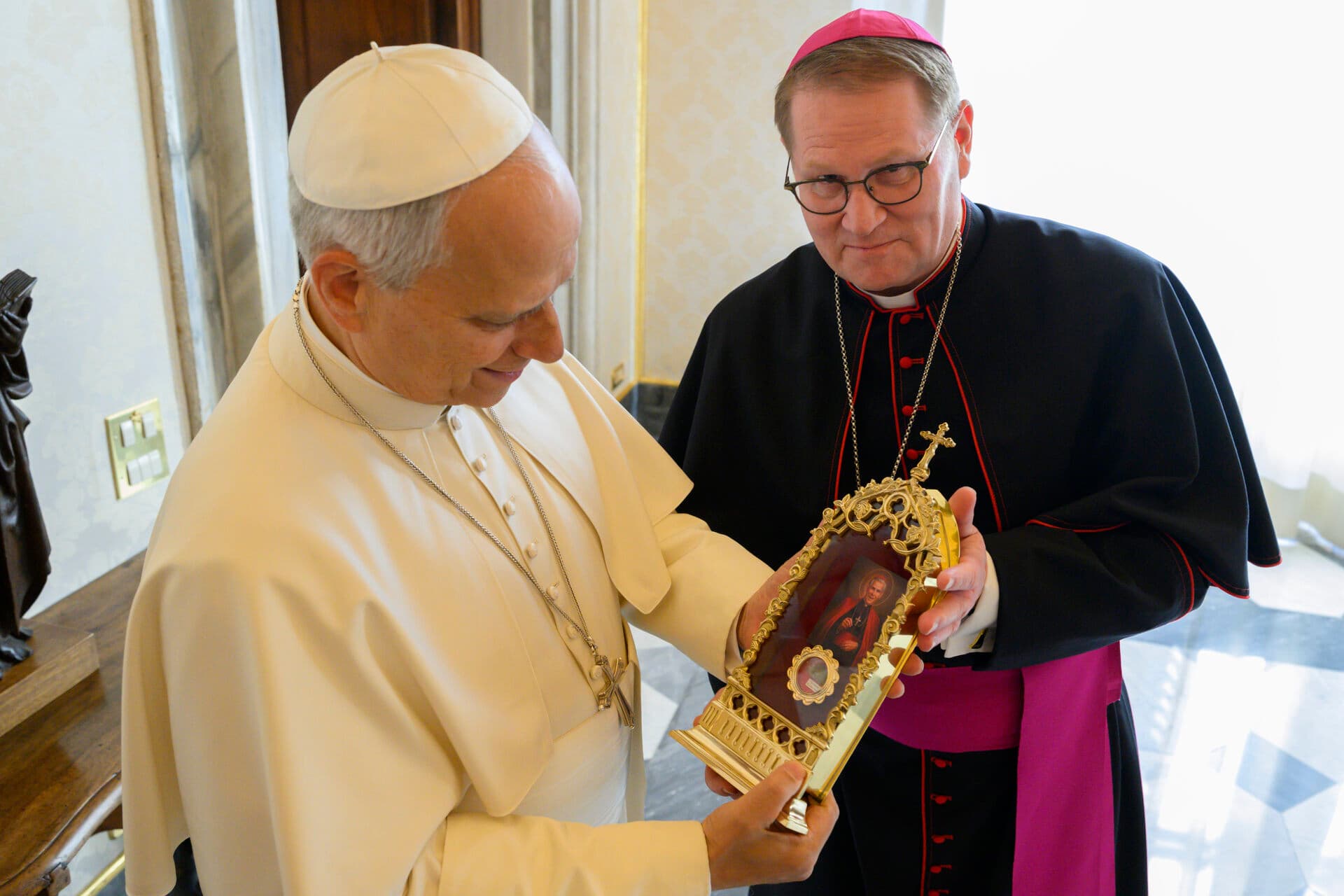 Newsroom
Bishop of Peoria presents Sheen relic to Pope Leo XIV
Christine Rousselle Newsroom
USCCB president calls planned livestream of execution ‘barbaric’
Christine Rousselle Newsroom
Ordinariate honours Newman with new statue and icon
The Catholic Herald
subscribe to the catholic herald today
Our best content is exclusively available to our subscribers. Subscribe today and gain instant access to expert analysis, in-depth articles, and thought-provoking insights—anytime, anywhere. Don’t miss out on the conversations that matter most.
Subscribe



