



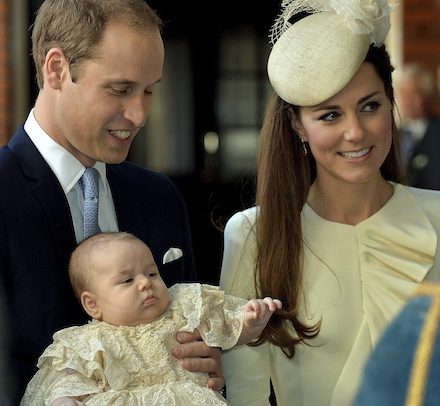
It seems to be a solid British tradition now: the annual debate about whether Mohammed is now the most popular boy’s name in Britain, or whether it’s Oliver. The issue comes down to whether one counts all spelling variations as one name, in which case Mohammed/Mohammad/Muhammed etc would be number one; or, as others argue, Oliver and Ollie would therefore be added together to take first place. The difference, however, is that Mohammed/Mohammad are variations of the same name, while Ollie and Harry are diminutives, which count as separate names in themselves. After all, lots of names started off as diminutives, which is part of the evolution of names: Jack from John, Lisa and Isabella from Elizabeth, and Daisy from Margaret. (The real issue of course is whether one is concerned about the growth of Islam in Britain, and this name debate is really just a little dance around that subject.) But there is another significant trend that doesn’t get so much attention – name diversification, which reflects numerous social trends, secularisation most of all. For centuries most people in England shared only a small number of given names. In the 16th century more than 95 per cent of men were called either William, Robert, Henry or John, and the most famous observers of the War of the Roses, the Paston family of East Anglia, reflect this slight lack of imagination. John Paston, the patriarch of the family, had two sons – both of whom he called John. By the later 19th century one in four women in Britain were called Mary, and in Ireland that was considerably higher, while more than one in ten Englishmen were called John. In contrast the top name from last year was Oliver, with 6,949 Olivers accounting for about one per cent of the 698,512 births across the country. This previous conservatism was partly due to naming patterns being quite simple; the first-born son was named after the father’s father, the second after the mother’s father and the third after the father, after which they were named after uncles. But it also reflected a common culture – most people were named after saints who were the idols, celebrities and rolemodels of a culture stretching from the Atlantic to the Urals. In his seminal work The Making of Europe, Robert Bartlett outlined how European civilisation emerged out of a region around the Frankish Empire of Charlemagne, an area often referred to as “core Europe” – France, western Germany, northern Italy, the Low Countries and southern England. From the turn of the millennium the culture of this region spread out, across central Europe, Spain, the Celtic lands and, less successfully, the Middle East, in the process homogenising into a common European culture. At the very heart of this "Frankish" world was the Latin Christian faith, and one of the symptoms of this development was the move away from locally-specific names. He writes:
1:37 PM
Never mind Mohammed, the main naming trend of 2014 is one of de-Christianisation
European-wide Christian names were a product of Christendom
Ed West

7 min read



Already a subscriber? Sign in
5freearticles every month
Continue reading with a free account. No card needed.
- Five free articles every thirty days, on any device you sign in on
- The Catholic Herald newsletter, every morning
- Subscribe whenever you like for everything: every article and the magazine
Related articles
 Newsroom
Church leaders urge Drumcree dialogue: ‘Too much is at stake’
The Catholic and Church of Ireland Archbishops of Armagh have urged a renewed commitment to peace and reconciliation amid the Drumcree stand-off
Corrie Douglas-Young Newsroom
Thousands of Irish children to join global Rosary campaign
Corrie Douglas-Young Newsroom
TikTok priest urges young people to stand with persecuted Christians
Nathalie Raffray Newsroom
Baby born at 25 weeks reunites with neonatologist two years after leaving hospital
The Catholic Herald Newsroom
Joe Biden honoured by Planned Parenthood after defending abortion rights
Christine Rousselle
subscribe to the catholic herald today
Our best content is exclusively available to our subscribers. Subscribe today and gain instant access to expert analysis, in-depth articles, and thought-provoking insights—anytime, anywhere. Don’t miss out on the conversations that matter most.
Subscribe



