

One hesitates to add to the tsunami of commentary that has followed the not unexpected announcement that the Society of St Pius X (SSPX) shall proceed to the consecration of new bishops on July 1. Too much of what has been said has blithely rehearsed old prejudices and has served to entrench divisions even further. “Here we go again,” we have heard far too often. One can imagine similar sighs in the corridors and offices of the relevant dicasteries of the Holy See: “Oh well, more excommunications”, etc.
Such a fatalistic approach is unworthy. And it is unacceptable. As a scholarly pope wrote in 2007: “Looking back over the past, to the divisions which in the course of the centuries have rent the Body of Christ, one continually has the impression that, at critical moments when divisions were coming about, not enough was done by the Church’s leaders to maintain or regain reconciliation and unity. One has the impression that omissions on the part of the Church have had their share of blame for the fact that these divisions were able to harden. This glance at the past imposes an obligation on us today: to make every effort to enable all those who truly desire unity to remain in that unity or to attain it anew.”
This is surely one such moment in history. July 1, 2026 could be a bitter moment in which divisions are deepened for decades – a disastrous repeat of the debacle of 1988 – or it could be the occasion to rejoice in an historic reconciliation that enhances the unity and communion of Catholic faithful throughout the world, strengthening the credibility of the Church’s witness and augmenting her missionary impact.
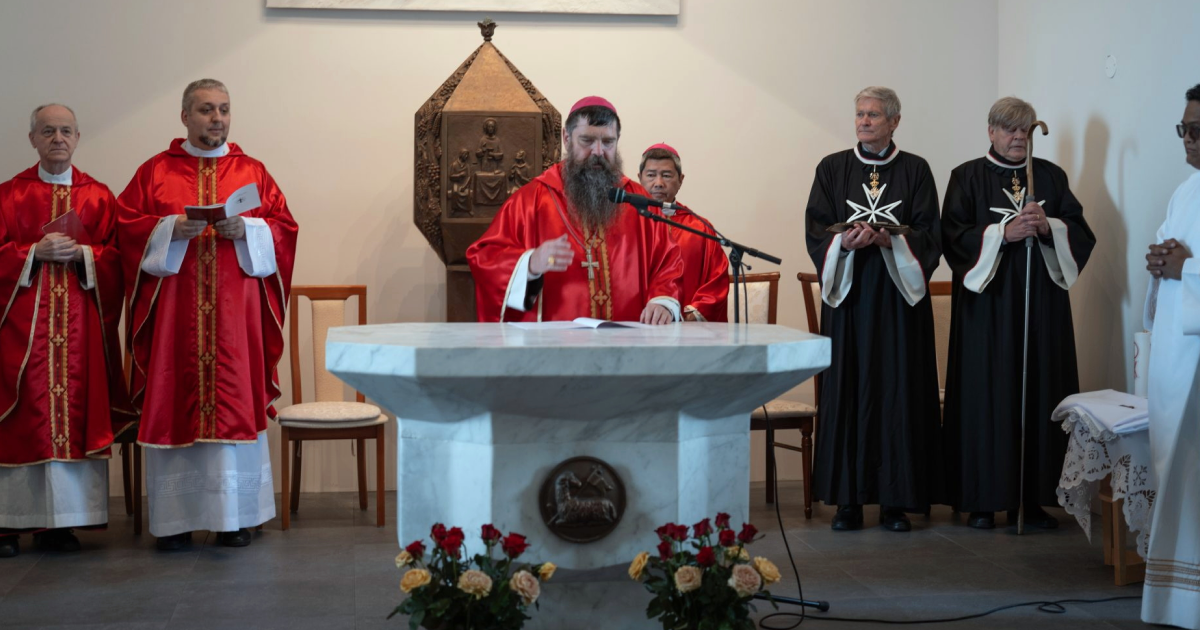
What many do not appreciate is the real pastoral need the SSPX have for new, younger bishops. With over 730 priests, more than 260 seminarians, various religious communities and almost 800 churches or chapels around the world, as well as vast numbers of faithful, which increased substantially during the Covid-induced abdication of ministry by many mainstream parishes, and which increased further after the pastorally disastrous implementation of the 2021 motu proprio Traditiones Custodes, the Society needs more bishops for Confirmations, Ordinations, Professions and other pontifical functions. Its two existing bishops are no longer young enough or sufficient in number to meet these increasing pastoral demands and the constant travel they require.
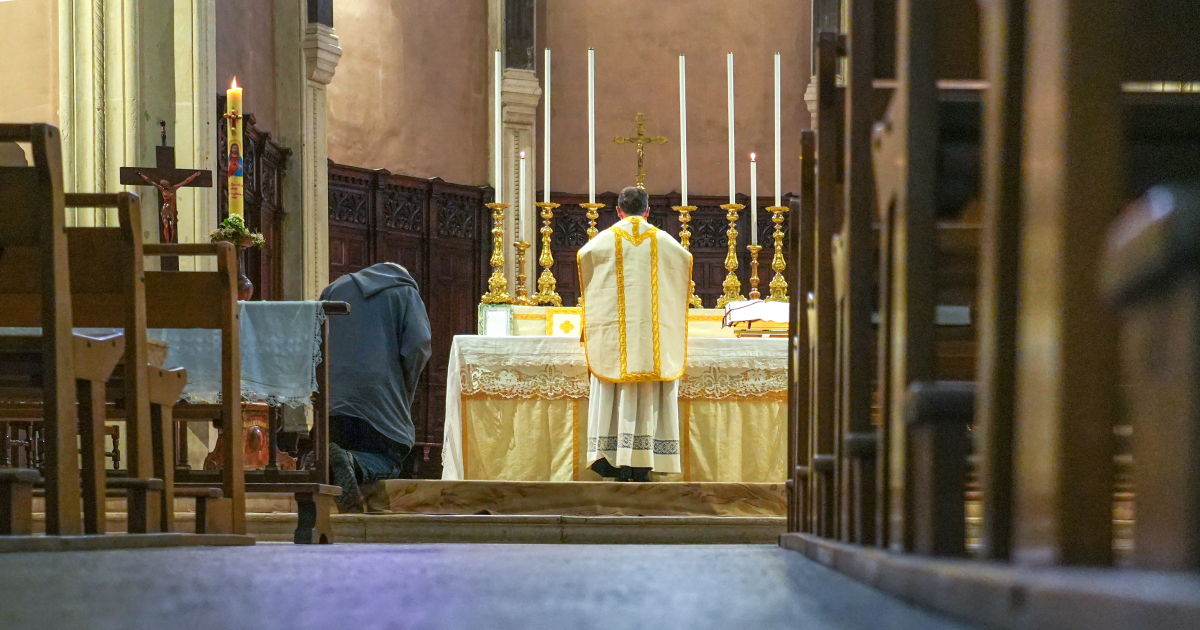
We would be wrong to view the episcopal consecrations that have been announced as some form of political manoeuvre or an attempt to augment the ceremonial splendour of the Society’s liturgies. The SSPX is rightly convinced that they are necessary for the sacramental life of the Catholic faithful who turn to them. Their bishops work harder than most and are truly missionary, motivated by the salvation of souls – not their own comfort or personal gain.
This is a profound matter of conscience for them, and in truth, it is hard to say that they are wrong when bishops and even popes and cardinals sometimes do all they can to close down apostolates using the traditional liturgical rites for the Mass and the sacraments, and when seminaries and religious houses empty and close one after the other. Demands to submit blindly to obedience such as have been thrown at the Society since the 1970s simply will not cut: the reversal of Pope Benedict XVI’s generous measures by Pope Francis have increased their fears and confirmed their mistrust in authority.
So too, the prospect that has been announced of the Superior General of the SSPX fruitfully sitting down with the current Prefect of the Dicastery for the Doctrine of the Faith – famed for being a drafter of Amoris Laetitia, for the infamous declaration permitting spontaneous blessings for same-sex couples, and for the utterly unnecessary and unhelpful recent document on Our Lady’s role in our Redemption – is hard to believe. If, as the Vatican press spokesman has suggested, “the meeting [is to] be an opportunity for an informal and personal dialogue, which may help identify effective instruments of dialogue that could lead to positive outcomes”, we shall need a miracle of sorts.
But we believe in miracles. And we have a new Pope – one who has spoken frequently and clearly about the importance and need for unity in the Church. He has not insisted on “uniformity” (the lies about this told by some curial heads in respect of the liturgy have been sufficiently exposed), but that unity which is a fruit of the common profession of the One, Holy, Catholic and Apostolic faith and which is lived in hierarchical communion with and under Peter and his successors.
This, then, is a crucial moment for the Holy Father. For he (and only he) can place the full weight of his authority behind measures that enhance the unity of the Church in respect of the SSPX at this critical moment of history – as did Pope St John Paul II in 1988, as Benedict XVI did throughout his pontificate, and as Pope Francis did in granting faculties to them for confessions and marriages.
The Holy Father might well have to “think outside the box”, as it were, for there exist those in his Curia whose entrenched rigidity and narrow mindedness will lead them to oppose any reconciliation by any means at their disposal. Surely the Pope can find a suitable cardinal or bishop and delegate him specifically to work zealously to bring about a canonical regularisation of the Society? Such men are available. What is needed is the will to place authority at the service of actually achieving the unity that we often hear is so fervently desired.
Certainly, this would involve the Society trusting the Pope, and they have, sadly, been handed reasons to hesitate in this respect. His Holiness himself would have to act to heal this wound, as it were, by word and by action.
So too, those who can see no place for the SSPX in a “synodal Church” would have finally to concede that “synodality” is not actually one of the marks of the Church of Christ and that it does not pertain to the nature of Catholic faith, just as they would have to accept that to continue to exclude these Catholics would in fact be the ultimate indictment of their own loud boast of “inclusivity”. Conservative or so-called “traditional” Catholics would also have to set aside their disdain for the past material disobedience of the Society and welcome back the prodigal brethren with a truly evangelical charity and rejoicing.
This is a big ask, but we do believe in miracles, and the Holy Father does have it in his power to move canonical mountains if he judges it apposite so to do. Our task – particularly with Lent just around the corner – is to pray, fast and work in whatever way we can so as to contribute to the building up of the Church’s unity in this moment of her history. It is time to celebrate the votive Mass pro Ecclesia unitate, and to have Masses offered for that intention. Above all, we must pray and offer sacrifices for the Holy Father.
July 1, 2026 will dawn, and with it shall come either joy or sorrow; the Church shall either rejoice in her greater unity with the new bishops, perhaps even with the participation of a consecrator delegated by the Pope, or she shall be wounded further by deeper division. Iam hora est – now is the time to make a difference.
Dom Alcuin Reid is the Prior of the Monastère Saint-Benoît in Brignoles, France, www.monasterebrignoles.org and a liturgical scholar of international renown. His principal work ‘The Organic Development of the Liturgy’ (Ignatius, 2005) carries a preface by Joseph Cardinal Ratzinger.