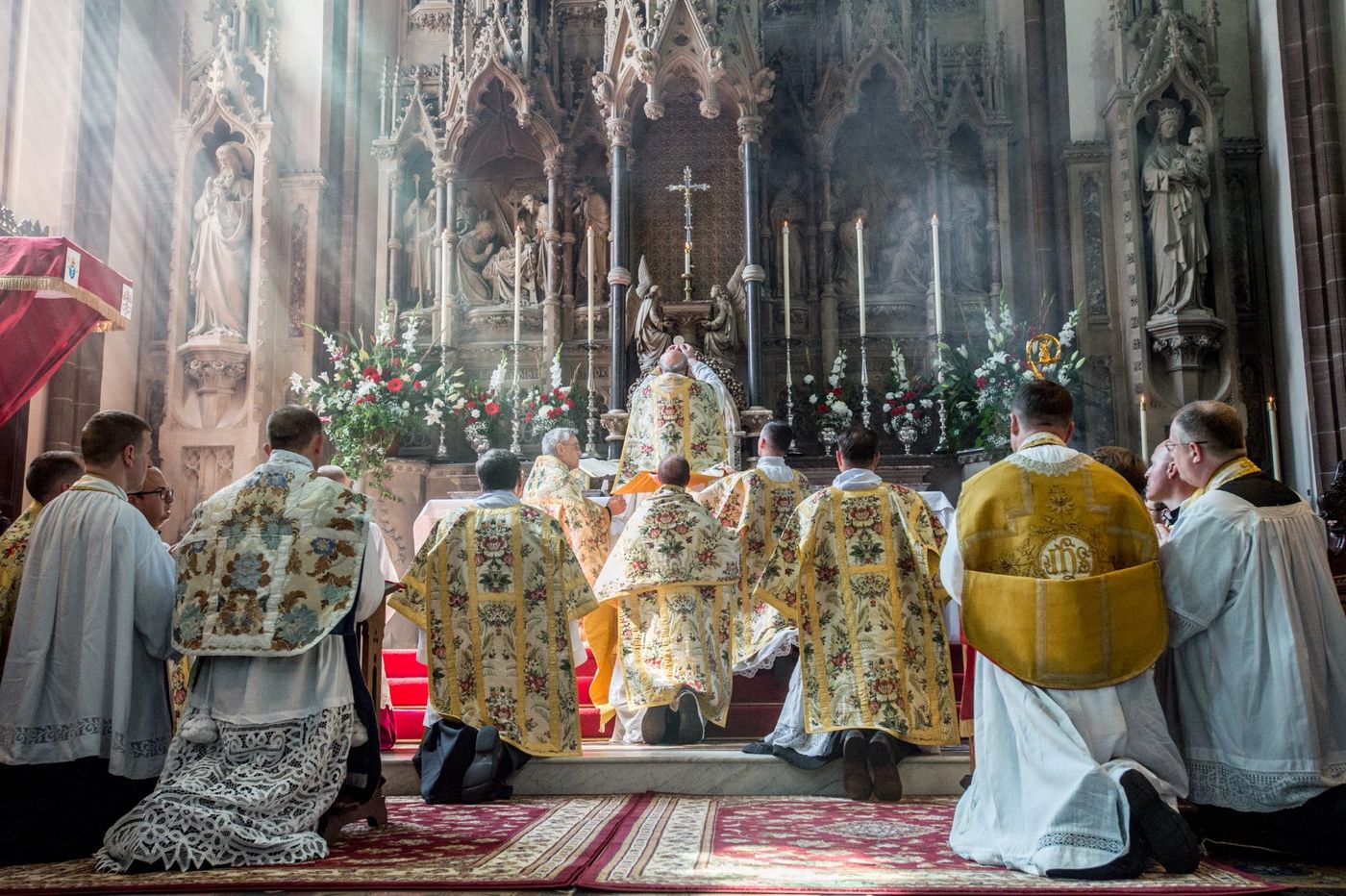


At noon Rome-time on 7th July 2007 it was my privilege to be present at the first solemn Mass of a recently ordained young priest. As a member of the Fraternity of Saint Peter he (licitly) sang the Mass according to the usus antiquior—the more ancient form of the Roman rite, as used prior to the reforms following the Second Vatican Council. It was a beautiful occasion, but one which harboured a lingering distraction.
For up until that time the faithful, lay men and women, religious and even clergy, did not have free access to the older liturgical rites. It was commonly (but erroneously) held that permission was required to celebrate them. Certainly, the Holy See had encouraged bishops to be generous in granting such permissions, but as many recall only too well and with no small amount of suffering, in many dioceses around the world this was not the case: the parsimony of a good number of prelates was immovable. One English liturgist even called for “a period of compulsory transition...for all priests ordained after 1970, with perhaps five years for them to prepare for the celebration of the Novus Ordo exclusively.”