March 30, 2026

Patriarch’s deft diplomacy outflanks Israeli police misstep

Michael Haynes
More
Related
Min read
share

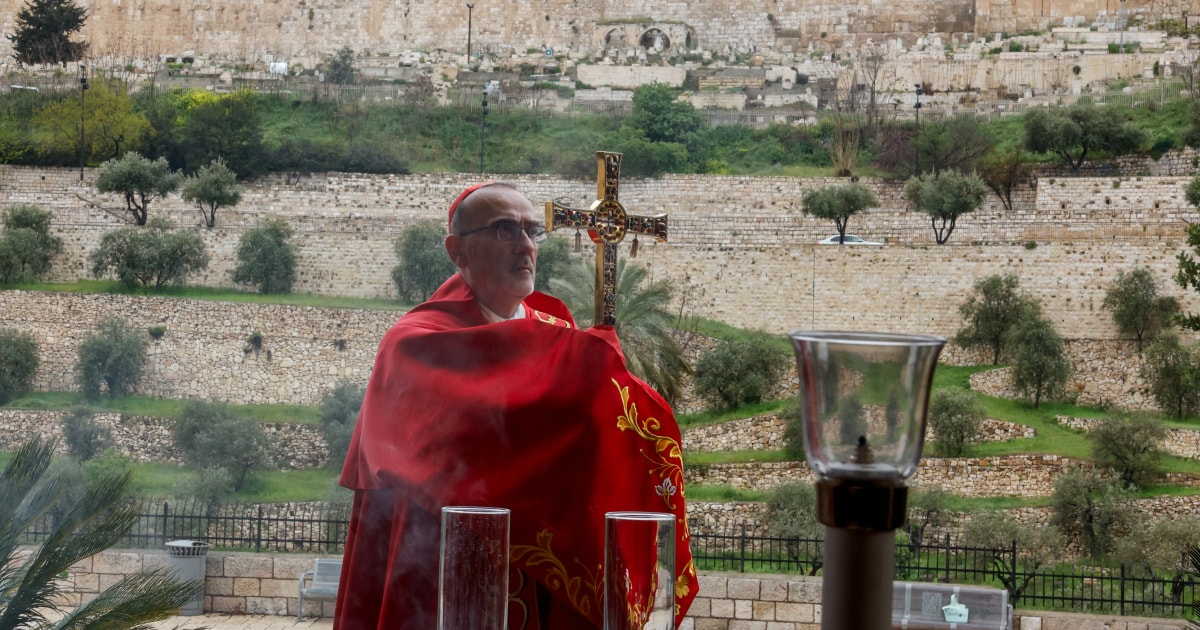
In preventing Cardinal Pizzaballa from accessing the Church of the Holy Sepulchre, Israeli officials garnered such instant and widespread condemnation that even when the government’s eventual U-turn arrived, it was too late to halt the court of public opinion.

As is now widely known, Cardinal Pizzaballa was blocked from reaching the Church of the Holy Sepulchre on Sunday as he made his way there privately with the Custos of the Holy Land. Officials defended the move as born out of concern for the cardinal’s safety, although Pizzaballa’s small group conformed to the regulations currently in place regarding public gatherings and public worship. These have been established in light of the war with Iran and the threat of missile strikes.
It was these same restrictions that had led to the forced cancellation of the traditional Palm Sunday procession up to the Mount of Olives, and in light of this Pizzaballa was due to livestream his Mass to the Patriarchate. Instead, the streets of Jerusalem remained quiet. Pizzaballa subsequently commented: ‘Today Jesus weeps once more over Jerusalem.’

Certainly, by Sunday night a resolution appeared to be under way. Prime Minister Benjamin Netanyahu stated that he had ‘instructed the relevant authorities’ to allow Pizzaballa – the Latin Patriarch of Jerusalem since 2020 – to be ‘granted full and immediate access to the Church of the Holy Sepulchre in Jerusalem’.

On Monday morning, the Latin Patriarchate issued a statement revealing that the various ‘matters concerning the Holy Week and Easter celebrations at the Church of the Holy Sepulchre have been addressed and resolved in coordination with the relevant authorities’.

Furthermore, their collaboration with the police had been fruitful enough to secure access for the various ecclesial representatives to hold the Easter ceremonies in the Church of the Holy Sepulchre.

Prior to this, on Sunday afternoon Pizzaballa spoke to the media outlet of the Italian bishops’ conference to offer something of an outstretched diplomatic arm to Israeli officials. ‘There were no clashes, everything was done in a very polite manner,’ he said of the incident earlier that day.

But there was a sense that by the time Netanyahu’s comment arrived on Sunday night, reversing the ban on Pizzaballa entering the church, it was too little and far too late. Already numerous governments had publicly condemned Israel’s actions. Spain, Portugal, Germany, Canada, Hungary, France, Poland, Italy and the US were among the many states critiquing the restriction of the practice of religious freedom. Italy summoned the Israeli ambassador for a meeting, and Spain did likewise.

A number of bishops’ conferences also noted their solidarity, and the Diocese of Rome – thus vicariously representing the Pope – described the restriction as ‘unjustified’.

In part, such a surprisingly swift reaction from many states – some of which in their own varied ways are no friends of Catholicism – was due to the media traction generated by the statement through which the news was issued. Indeed, the media optics of the entire affair point to the tense relationship between Israeli officials and the Catholic Church locally.

Just after 12.30pm local time on Sunday, the media office of the Latin Patriarchate of Jerusalem informed journalists of what had taken place that morning. It was described by Pizzaballa’s office as a ‘grave precedent’ that ‘constitutes a manifestly unreasonable and grossly disproportionate measure’.

This invites the question of why there was such a media campaign. For a cardinal who tries to stay focused on his duties and fastidiously eschewed the international media during the conclave, the press statement’s wording was notably strong, and appeared to be a very calculated move.

Within hours, millions had seen the news online, and the ensuing reaction was perhaps no great surprise to the Latin Patriarchate. Indeed, if the action of the police against Pizzaballa was just a simple misunderstanding and a polite action motivated purely by concern for his safety, then the Latin Patriarchate – mindful of the delicate diplomatic situation – would not have published such a strongly worded message.

Rather, it appeared as a deliberate appeal to the international community to highlight the ways in which, once again, Israeli officials have been quietly curtailing the practice of Christianity. Indeed, this is an uncomfortable reality that many in the West have to face and that the Latin Patriarchate has not been afraid to highlight.

Emphasising this aspect, President Macron – not especially known as a model Catholic – noted that Sunday’s restriction on the Church of the Holy Sepulchre ‘comes in the context of the alarming increase in violations targeting the status quo of the holy places in Jerusalem. Freedom to hold religious rites in Jerusalem must be ensured for all religions.’

Pizzaballa himself has been at pains not to imitate media outlets or politicians in declaring his allegiance to Israel, Gaza or anywhere else. Rather he has criticised all when necessary, knowing when to utilise his diplomatic weight for the good of those in his charge.

Perhaps it was this same astuteness that led to Pizzaballa offering a public sign of goodwill to the Israeli police on Monday, with official pictures showing him smiling and warmly greeting officers after access to the church was reinstated.

President Herzog also sought to pour cold water on the international flames, writing on Monday: ‘On behalf of the State of Israel, I extend my warmest wishes for the upcoming Easter holiday to the Latin Patriarch, to our Christian sisters and brothers in the Holy Land, and to our Christian friends across the Middle East and around the world.’

Sunday’s crisis blew to international proportions and now, less than 24 hours later, a temporary resolution has been reached. Yet it would be foolish to think that the two are separate. Thanks to the swift actions of the cardinal and the Patriarchate, the full weight of the international sphere was brought to bear upon the Israeli government in defence of the Church, but this is not always the case.

The day-to-day reality, as attested to by clergy on the ground, is much more involved and complicated than many of us far removed might wish to think. Christians are increasingly facing restrictions on their daily lives at the hands of the authorities, meaning that Pizzaballa may have won this particular skirmish, but a more pervasive and troubling reality remains further out of international view.

In preventing Cardinal Pizzaballa from accessing the Church of the Holy Sepulchre, Israeli officials garnered such instant and widespread condemnation that even when the government’s eventual U-turn arrived, it was too late to halt the court of public opinion.

As is now widely known, Cardinal Pizzaballa was blocked from reaching the Church of the Holy Sepulchre on Sunday as he made his way there privately with the Custos of the Holy Land. Officials defended the move as born out of concern for the cardinal’s safety, although Pizzaballa’s small group conformed to the regulations currently in place regarding public gatherings and public worship. These have been established in light of the war with Iran and the threat of missile strikes.
It was these same restrictions that had led to the forced cancellation of the traditional Palm Sunday procession up to the Mount of Olives, and in light of this Pizzaballa was due to livestream his Mass to the Patriarchate. Instead, the streets of Jerusalem remained quiet. Pizzaballa subsequently commented: ‘Today Jesus weeps once more over Jerusalem.’

Certainly, by Sunday night a resolution appeared to be under way. Prime Minister Benjamin Netanyahu stated that he had ‘instructed the relevant authorities’ to allow Pizzaballa – the Latin Patriarch of Jerusalem since 2020 – to be ‘granted full and immediate access to the Church of the Holy Sepulchre in Jerusalem’.

On Monday morning, the Latin Patriarchate issued a statement revealing that the various ‘matters concerning the Holy Week and Easter celebrations at the Church of the Holy Sepulchre have been addressed and resolved in coordination with the relevant authorities’.

Furthermore, their collaboration with the police had been fruitful enough to secure access for the various ecclesial representatives to hold the Easter ceremonies in the Church of the Holy Sepulchre.

Prior to this, on Sunday afternoon Pizzaballa spoke to the media outlet of the Italian bishops’ conference to offer something of an outstretched diplomatic arm to Israeli officials. ‘There were no clashes, everything was done in a very polite manner,’ he said of the incident earlier that day.

But there was a sense that by the time Netanyahu’s comment arrived on Sunday night, reversing the ban on Pizzaballa entering the church, it was too little and far too late. Already numerous governments had publicly condemned Israel’s actions. Spain, Portugal, Germany, Canada, Hungary, France, Poland, Italy and the US were among the many states critiquing the restriction of the practice of religious freedom. Italy summoned the Israeli ambassador for a meeting, and Spain did likewise.

A number of bishops’ conferences also noted their solidarity, and the Diocese of Rome – thus vicariously representing the Pope – described the restriction as ‘unjustified’.

In part, such a surprisingly swift reaction from many states – some of which in their own varied ways are no friends of Catholicism – was due to the media traction generated by the statement through which the news was issued. Indeed, the media optics of the entire affair point to the tense relationship between Israeli officials and the Catholic Church locally.

Just after 12.30pm local time on Sunday, the media office of the Latin Patriarchate of Jerusalem informed journalists of what had taken place that morning. It was described by Pizzaballa’s office as a ‘grave precedent’ that ‘constitutes a manifestly unreasonable and grossly disproportionate measure’.

This invites the question of why there was such a media campaign. For a cardinal who tries to stay focused on his duties and fastidiously eschewed the international media during the conclave, the press statement’s wording was notably strong, and appeared to be a very calculated move.

Within hours, millions had seen the news online, and the ensuing reaction was perhaps no great surprise to the Latin Patriarchate. Indeed, if the action of the police against Pizzaballa was just a simple misunderstanding and a polite action motivated purely by concern for his safety, then the Latin Patriarchate – mindful of the delicate diplomatic situation – would not have published such a strongly worded message.

Rather, it appeared as a deliberate appeal to the international community to highlight the ways in which, once again, Israeli officials have been quietly curtailing the practice of Christianity. Indeed, this is an uncomfortable reality that many in the West have to face and that the Latin Patriarchate has not been afraid to highlight.

Emphasising this aspect, President Macron – not especially known as a model Catholic – noted that Sunday’s restriction on the Church of the Holy Sepulchre ‘comes in the context of the alarming increase in violations targeting the status quo of the holy places in Jerusalem. Freedom to hold religious rites in Jerusalem must be ensured for all religions.’

Pizzaballa himself has been at pains not to imitate media outlets or politicians in declaring his allegiance to Israel, Gaza or anywhere else. Rather he has criticised all when necessary, knowing when to utilise his diplomatic weight for the good of those in his charge.

Perhaps it was this same astuteness that led to Pizzaballa offering a public sign of goodwill to the Israeli police on Monday, with official pictures showing him smiling and warmly greeting officers after access to the church was reinstated.

President Herzog also sought to pour cold water on the international flames, writing on Monday: ‘On behalf of the State of Israel, I extend my warmest wishes for the upcoming Easter holiday to the Latin Patriarch, to our Christian sisters and brothers in the Holy Land, and to our Christian friends across the Middle East and around the world.’

Sunday’s crisis blew to international proportions and now, less than 24 hours later, a temporary resolution has been reached. Yet it would be foolish to think that the two are separate. Thanks to the swift actions of the cardinal and the Patriarchate, the full weight of the international sphere was brought to bear upon the Israeli government in defence of the Church, but this is not always the case.

The day-to-day reality, as attested to by clergy on the ground, is much more involved and complicated than many of us far removed might wish to think. Christians are increasingly facing restrictions on their daily lives at the hands of the authorities, meaning that Pizzaballa may have won this particular skirmish, but a more pervasive and troubling reality remains further out of international view.

subscribe to
the catholic herald

Continue reading your article with a subscription.
Read 5 articles with our free plan.
Subscribe

subscribe to the catholic herald today

Our best content is exclusively available to our subscribers. Subscribe today and gain instant access to expert analysis, in-depth articles, and thought-provoking insights—anytime, anywhere. Don’t miss out on the conversations that matter most.
Subscribe