



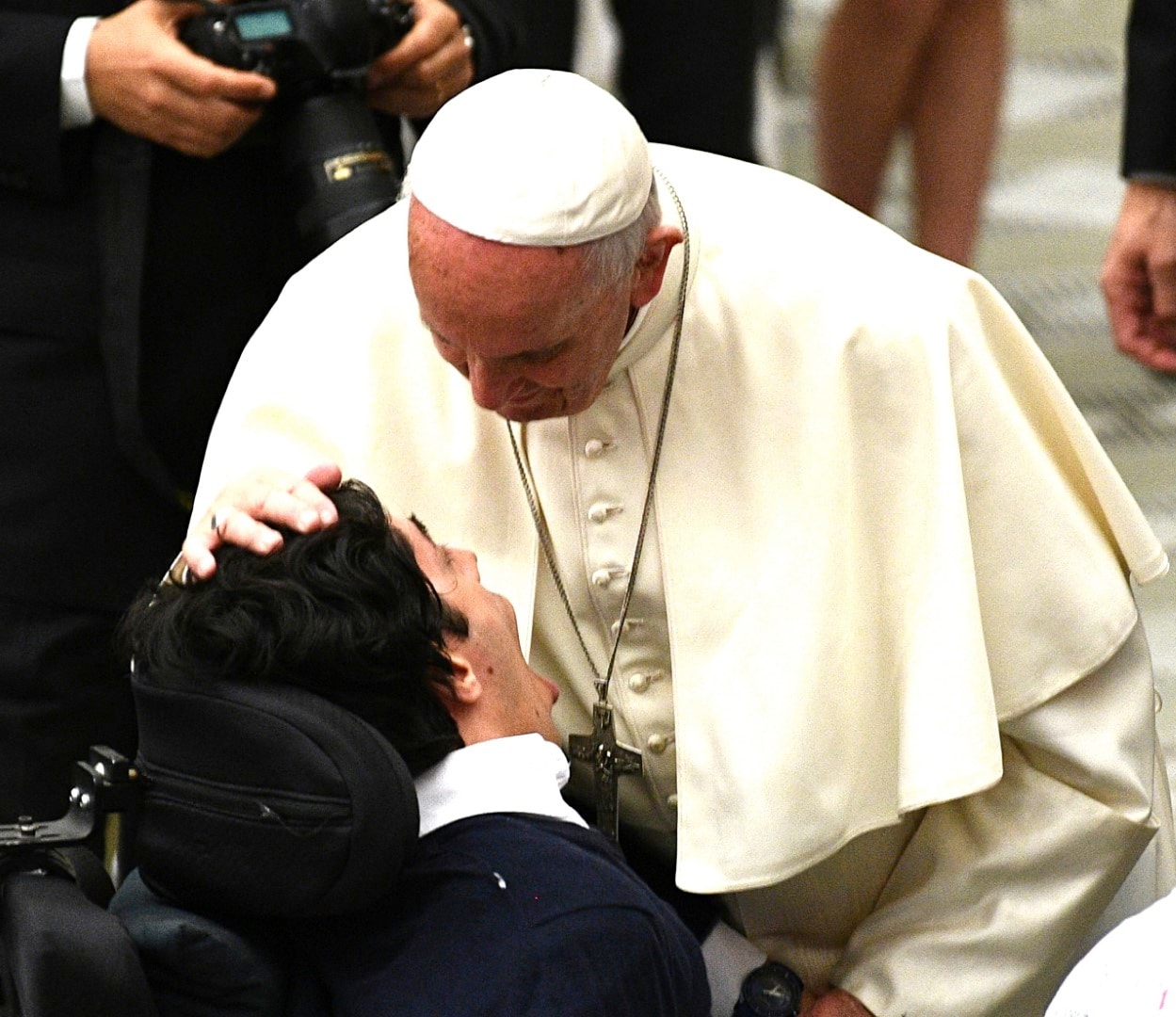
Franklin Soto will develop Huntington’s disease (HD), a lethal genetic disorder that causes progressive mental and physical deterioration and for which there is no cure. His two sisters already have it. His wife died of the disease last year, and his three-year-old daughter has a 75 per cent chance of developing it. Franklin comes from Lake Maracaibo in Venezuela, where he scrapes a living carrying boxes of crabs. Every day is a struggle and the deteriorating political situation in his country makes things worse. But for a few minutes yesterday, Franklin forgot all his troubles as Pope Francis took him in his arms and told him not to be afraid. Franklin’s was among a number of South American families who travelled to Rome this week for an audience with the Pope. The Pontiff thus became the first head of state and major religious leader to mention HD, which is thought to affect nearly one million people worldwide. The actual prevalence of the disease is unknown, because families often hide it, and are forced to live in fear and isolation far from the treatment and support they need. The irony is that it was families from Lake Maracaibo who contributed to the research that led to the identification of the gene responsible for HD in 1993. As a result of that breakthrough, a diagnostic test now exists that means that those at risk can determine whether or not they will develop HD. If they carry a mutation in the gene in question, they will certainly do so, but usually not until middle age.
10:40 AM
Pope Francis's words of compassion for Huntington's sufferers have been a long time coming
'You are precious in God’s eyes, and you are precious to the Church,' Pope Francis said
Laura Spinney

3 min read



Already a subscriber? Sign in
5freearticles every month
Continue reading with a free account. No card needed.
- Five free articles every thirty days, on any device you sign in on
- The Catholic Herald newsletter, every morning
- Subscribe whenever you like for everything: every article and the magazine


subscribe to the catholic herald today
Our best content is exclusively available to our subscribers. Subscribe today and gain instant access to expert analysis, in-depth articles, and thought-provoking insights—anytime, anywhere. Don’t miss out on the conversations that matter most.
Subscribe



