

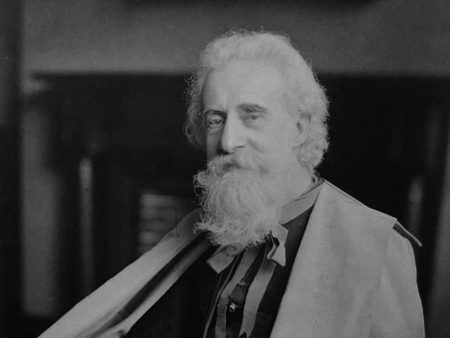
A priest who died of cold and hunger in a Communist prison will be beatified as a martyr in Romania. Archbishop Ioan Robu of Bucharest, president of the Romanian bishops' conference, said the sanctity of Mgr Vladimir Ghika had "given us an important new example of a life lived for Church and faith". Cardinal Angelo Amato, prefect of the Vatican's Congregation for Saints' Causes, is scheduled to celebrate the beatification Mass in Bucharest's Romexpo exhibition centre on Saturday. Archbishop Robu said that Mgr Ghika would represent many other "unknown and unrecognised Christian martyrs" who died in Romania during four decades of Communist rule, which ended in December 1989. "This latest beatification proves the Church doesn't forget those who generously gave their lives in this way, whose testimonies can still be understood and valued by contemporary society," the archbishop said. Mgr Ghika was born on December 25, 1873, in Istanbul, where his father was Romania's representative at the Ottoman court. He was one of six children in an Orthodox family. He studied in Paris and in Toulouse, France, his mother's home country, and received a theology doctorate in 1898 at Rome's Dominican College. He was received into the Catholic Church on April 15, 1902, but was persuaded by Pope Pius X, whom he knew personally, to remain a lay man in order to evangelise more effectively among non-Catholics. After aiding the sick in Thessaloniki, Greece, he moved to Bucharest, where he founded Romania's first free clinic, as well as a hospital and sanatorium, before returning to France to care for the displaced and wounded during the First World War. In 1921, he was awarded the Legion of Honor for helping restore France's diplomatic ties with the Holy See. On October 7, 1923, he was ordained in Paris and was authorised to conduct liturgies in both the Latin and Eastern Catholic rites. He befriended prominent Catholics such as writers Jacques Maritain and Paul Claudel while ministering in the rough quarter of Villejuif. In the 1930s, he also travelled widely in Europe, Asia and the Americas as a representative of Pope Pius XI. Mgr Ghika returned to Romania at the outbreak of the Second World War to organise help for refugees and bombardment victims. Having rejected advice to leave the country after the Communists seized of power, he was arrested on November 18, 1952, for refusing to break ties with the Vatican, and survived more than 80 violent interrogations before being sentenced to three years' incarceration at Romania's infamous Jilava prison, where he died, emaciated, on May 16, 1954. May 16 will be celebrated as his feast day. "Although these terrible events happened long ago, I think a story like this still speaks to us today," Archbishop Robu said. "Martyrdom isn't just a phenomenon of Christianity's first centuries – people gave their lives for the faith in recent memory and are still doing so in large numbers now." The archbishop said it had taken much effort to document Mgr Ghika's case because of the systematic destruction of evidence and erasing of records under Communism. "Fortunately, the Church has a long memory, although there'll always be many other martyrs whose stories won't be recorded," he said.
11:34 AM
Priest who died of hunger in Communist prison to be beatified
Mgr Vladimir Ghika died after three years of imprisonment
Jonathan Luxmoore

3 min read



Already a subscriber? Sign in
5freearticles every month
Continue reading with a free account. No card needed.
- Five free articles every thirty days, on any device you sign in on
- The Catholic Herald newsletter, every morning
- Subscribe whenever you like for everything: every article and the magazine
Related articles
 Newsroom
Injured priest tells Poles: ‘Do not blame Ukraine’ for convent attack
Fr Adrian Mantykiewicz, who was injured in the attack that killed a fellow priest, has urged Catholics to pray for the assailant and not blame Ukrainians for his actions
Corrie Douglas-Young Newsroom
Church leaders urge Drumcree dialogue: ‘Too much is at stake’
Corrie Douglas-Young Newsroom
Thousands of Irish children to join global Rosary campaign
Corrie Douglas-Young Newsroom
TikTok priest urges young people to stand with persecuted Christians
Nathalie Raffray Newsroom
Baby born at 25 weeks reunites with neonatologist two years after leaving hospital
The Catholic Herald
subscribe to the catholic herald today
Our best content is exclusively available to our subscribers. Subscribe today and gain instant access to expert analysis, in-depth articles, and thought-provoking insights—anytime, anywhere. Don’t miss out on the conversations that matter most.
Subscribe



