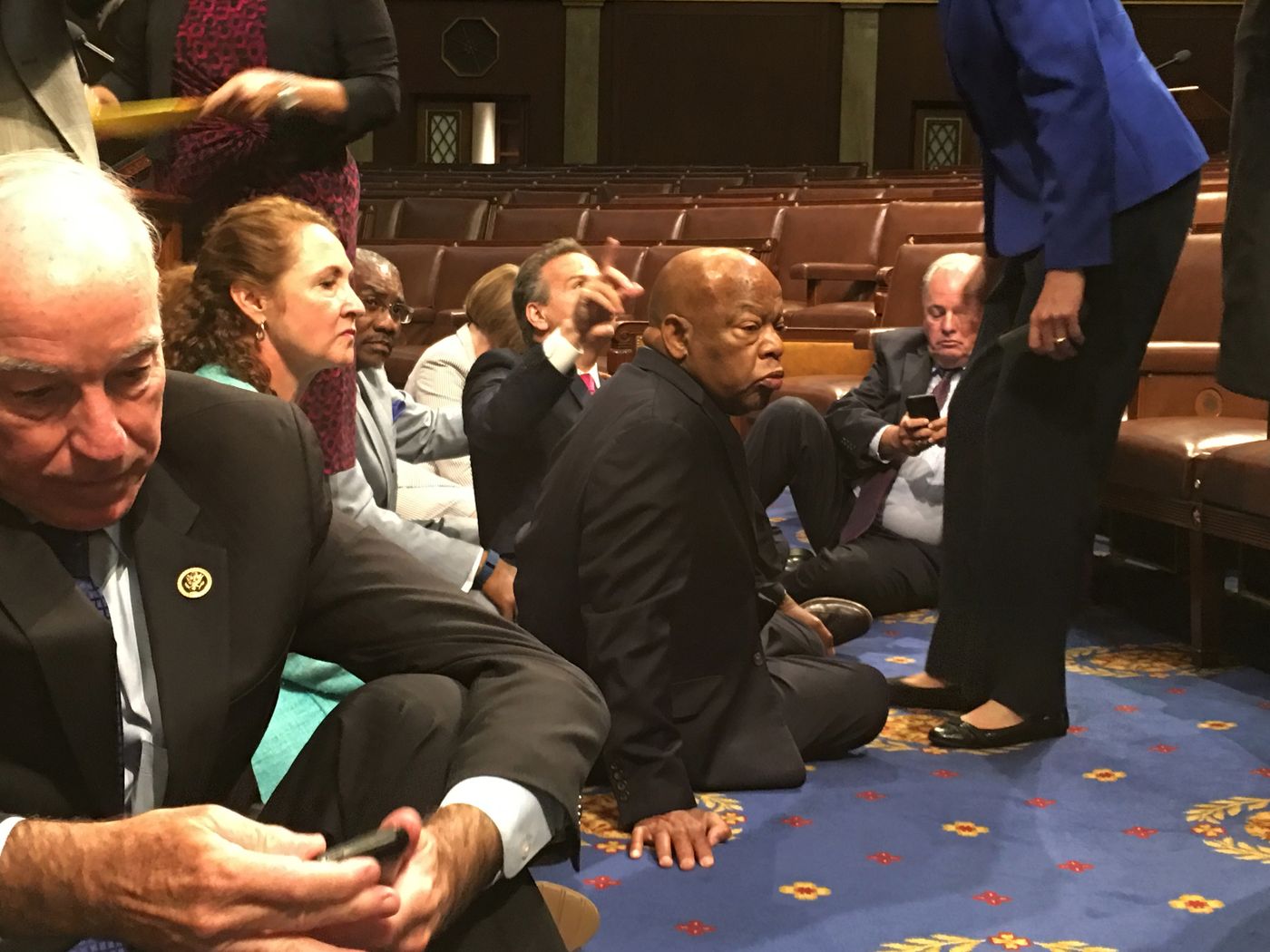



I reserve some pity for anyone who still thinks politics is a war of ideas. Consider one telling spectacle from the American political scene last week: Democrats, led by Georgia congressman John Lewis, staged a "sit-in" revolt in the House of Representatives. Having failed to force a Republican vote on new gun-control legislation, Lewis and other politicians sat on the floor of the lower house in protest for almost 26 hours.
Now, for many observers this will appear to be nothing more than moral exhibitionism. But who says that isn't effective? At least in our postmodern era, symbolism is more powerful than ideas. Why? The United States, according to some anthropologists, is a guilt culture: we are kept in line socially by the guilt one feels when one breaches some convention. My own opinion, as a thoroughly unqualified theorist in this area, is that the US today blends aspects of both guilt and shame cultures. The point is that guilt, shame, and social ostracism — not ideas or principles — figure most prominently in our contemporary politics. And the use of symbolism is an efficient way to evoke those feelings in an opponent.