


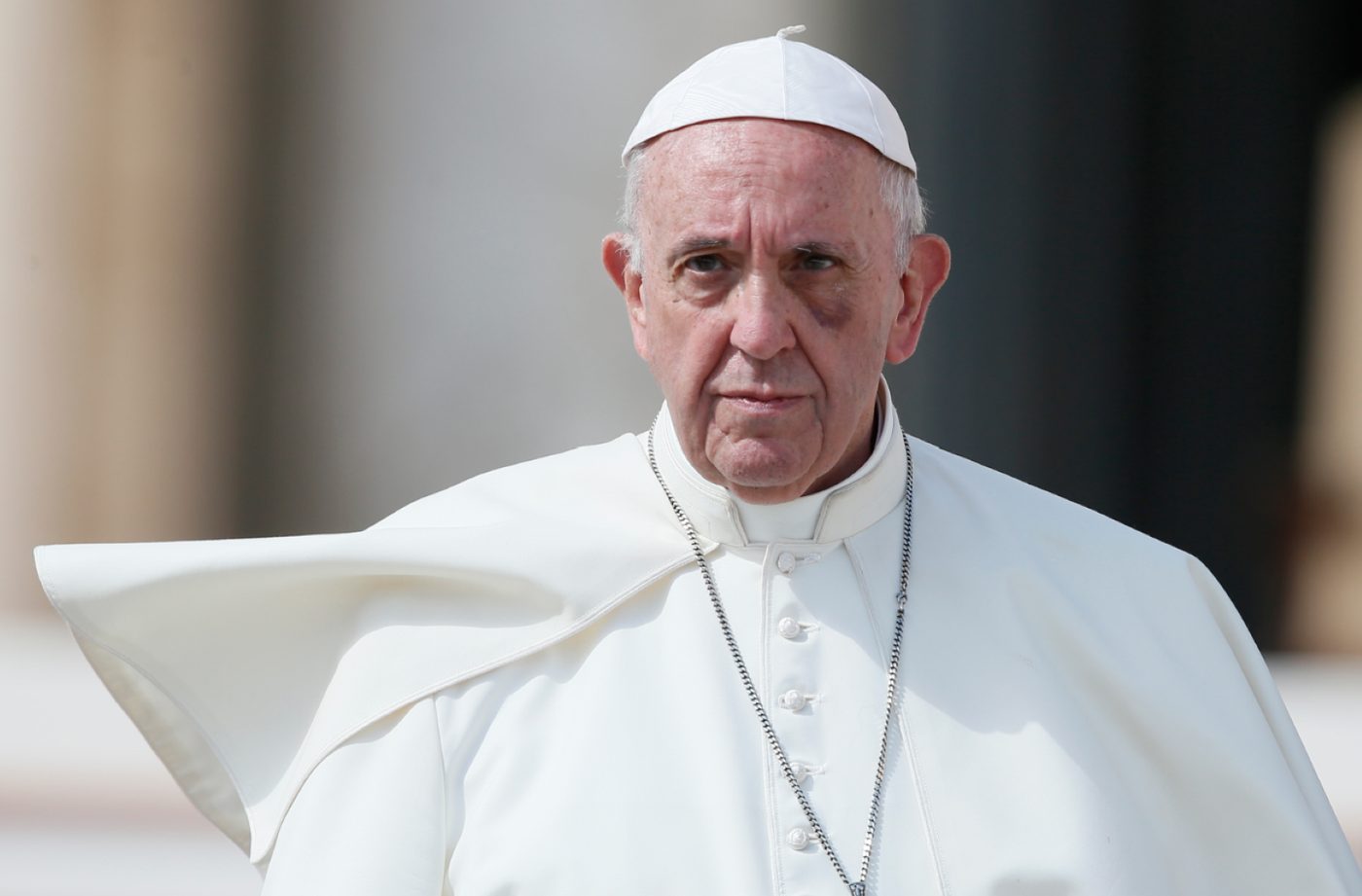
Sixty-two scholars and priests have issued a “filial correction” of Pope Francis, saying that his words and actions risk leading Catholics into false doctrines. The signatories emphasised that they do not accuse the Pope of committing the personal sin of heresy, or the canonical crime. But they claimed that the publication of Amoris Laetitia, and the Pope’s subsequent words and actions, have led to the spread of “heresies and other errors”. Most of the document’s first signatories were academics. They include Mgr Prof Antonio Livi, formerly rector of the Pontifical Lateran University in Rome; Prof Thomas Stark, who teaches at the Benedict XVI Academy of Philosophy and Theology in Austria; and Claudio Pierantoni of the University of Chile. Bishop Bernard Fellay, superior general of the SSPX, is also a signatory, as is Ettore Gotti Tedeschi, former Vatican bank president. Others have since added their names to the letter, including retired US Bishop René Henry Gracida, a friend of St John Paul II and Mother Angelica, and Fr Andrew Pinsent, a priest-scientist who teaches at Oxford University. The text, which was sent to the Pope a month ago, addresses him in language unprecedented in modern Catholic history: “With profound grief, but moved by fidelity to our Lord Jesus Christ, by love for the Church and for the papacy, and by filial devotion toward yourself, we are compelled to address a correction to Your Holiness on account of the propagation of heresies effected by the apostolic exhortation Amoris Laetitia and by other words, deeds and omissions of Your Holiness.” The signatories say that they are permitted to address the Pope because of natural law – which allows a subject to correct a superior – and by canon law, which permits the faithful to make known their views to their pastors. They also cite the example of St Paul rebuking St Peter in Galatians 2. Amoris Laetitia has provoked diverse interpretations. Several bishops have said that it is compatible with the Church’s teaching, reaffirmed several times in recent years, that the divorced and remarried cannot receive Communion, except possibly when they resolve to live “as brother and sister”. However, other bishops have contradicted this teaching. The bishops of Malta said that, since avoiding sex outside marriage might be “impossible”, Communion should not be withheld from those who felt “at peace with God”. The scholars’ letter notes that these guidelines were published in L’Osservatore Romano, the official newspaper of the Holy See. Addressing Pope Francis, the letter says: “This publication was an official act of the Holy See that went uncorrected by yourself.” The letter lists several other ways in which the Pope has allegedly encouraged error. The signatories say there is a dual “danger” for Catholics: they will either be led to affirm false doctrines, or they will be led to deny the Pope’s unique prerogatives as Supreme Pontiff. The signatories themselves affirm that “Your Holiness possesses the charism of infallibility, and the right of universal jurisdiction over Christ’s faithful, in the sense defined by the Church.” But they observe that Vatican I and Vatican II both “noted that the powers of the Roman pontiff are limited in many ways”, so that some statements – for instance, the most controversial passages in Amoris Laetitia – are not infallible. The words of the correction, which are in Latin, identify seven errors which Amoris Laetitia and other papal actions could perpetrate. These include: that those who have remarried can receive Communion without a firm resolution to avoid sexual relations; that God might permit or even ask someone to have sexual relations outside marriage; and other connected propositions related to the Church’s teaching on marriage, grave sin and the Eucharist. Archbishop Bruno Forte, a papal advisor, told Avvenire that the letter “scorned the spirit of the Second Vatican Council”.
1:00 PM
Scholars issue ‘correction’ of Pope Francis
Staff writers

4 min read



Already a subscriber? Sign in
5freearticles every month
Continue reading with a free account. No card needed.
- Five free articles every thirty days, on any device you sign in on
- The Catholic Herald newsletter, every morning
- Subscribe whenever you like for everything: every article and the magazine
Related articles
 Newsroom
Church leaders urge Drumcree dialogue: ‘Too much is at stake’
The Catholic and Church of Ireland Archbishops of Armagh have urged a renewed commitment to peace and reconciliation amid the Drumcree stand-off
Corrie Douglas-Young Newsroom
Thousands of Irish children to join global Rosary campaign
Corrie Douglas-Young Newsroom
TikTok priest urges young people to stand with persecuted Christians
Nathalie Raffray Newsroom
Baby born at 25 weeks reunites with neonatologist two years after leaving hospital
The Catholic Herald Newsroom
Joe Biden honoured by Planned Parenthood after defending abortion rights
Christine Rousselle
subscribe to the catholic herald today
Our best content is exclusively available to our subscribers. Subscribe today and gain instant access to expert analysis, in-depth articles, and thought-provoking insights—anytime, anywhere. Don’t miss out on the conversations that matter most.
Subscribe



